Dermal Anchor or Surface Piercing: Which Should You Choose

Both of these put jewellery on a flat plane of skin where there is no edge or fold to pierce through, and both are asking your body to accept something it would rather push out.
The honest starting position is that neither is permanent in the way an ear or a navel piercing can be. Rejection rates are high for both over a period of years. Anybody selling you either as a lifetime piercing is not being straight with you.
That said, they are different from each other in ways that matter, and one of them is considerably more practical than the other.
How Each One Actually Works
A Surface Piercing:
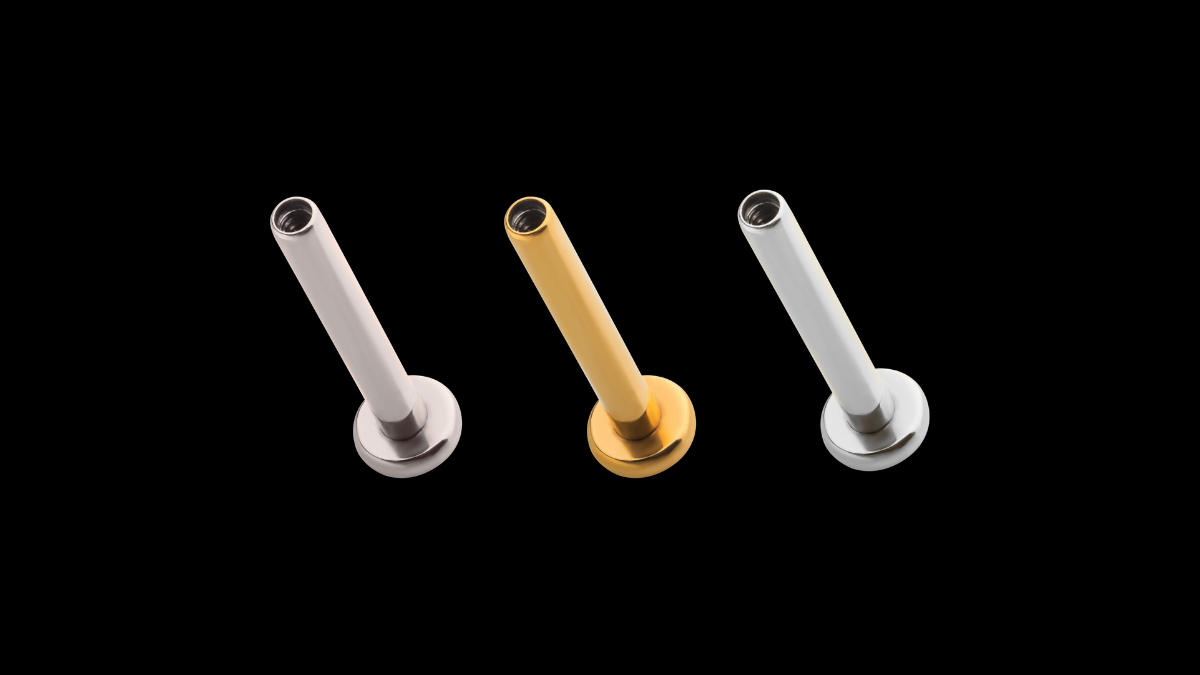
uses a bar shaped like a staple, with two right-angle bends and a flat section that sits under the skin. It enters at one point, runs beneath the surface, and exits at another, with a decorative end at each opening. Two holes, one piece of jewellery, both ends visible.
A Dermal Anchor:
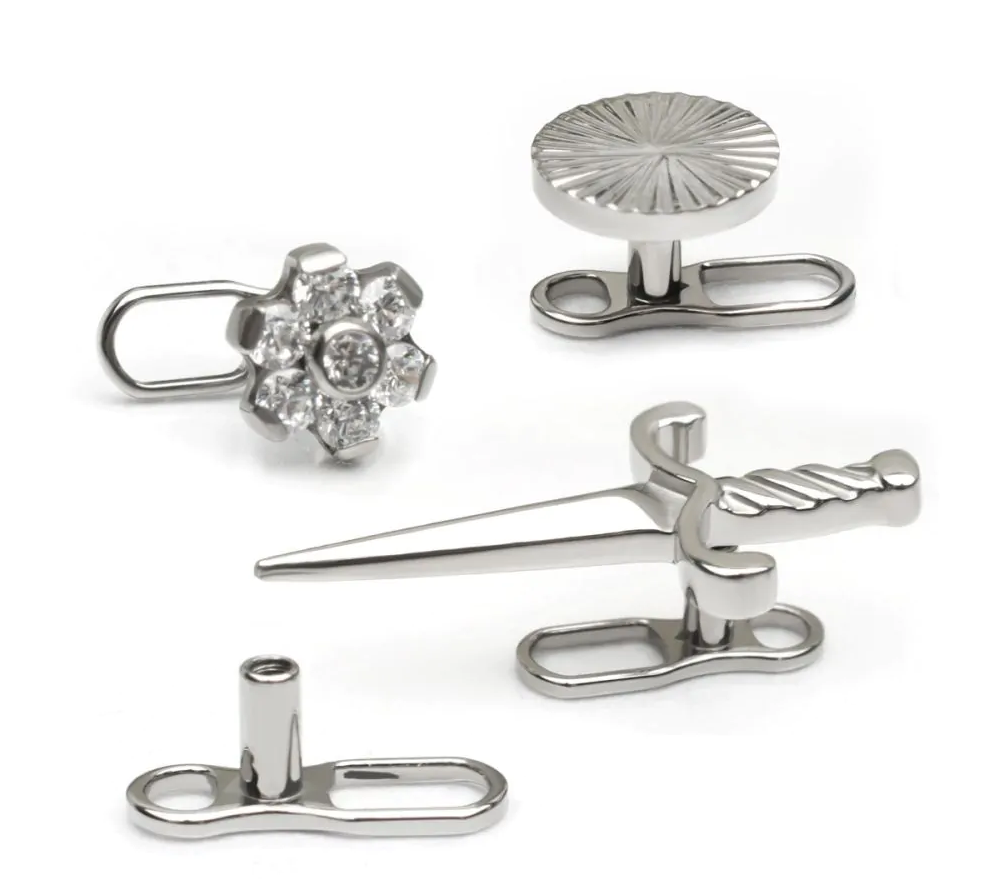
sometimes called a microdermal or single point piercing, has only one opening. A small flat plate with holes in it sits under the skin, and a post rises from it through a single opening to hold a decorative top. The plate is what holds it in, because tissue grows through those holes and locks it in place.
That single difference decides almost everything else.
Rejection, the Main Event
Surface piercings reject more. A staple bar sits at a shallow, fixed depth across a plane of skin, and every movement of that skin applies pressure at both ends. Your body responds by laying tissue behind the bar and pushing it towards the surface. Many surface piercings do not last more than a couple of years, and plenty are gone within one.
Dermals reject less, because they are anchored differently. Tissue growing through the holes in the plate gives the body something to hold rather than something to expel. A well placed dermal in a low movement area can last many years.
Neither is immune. Both are considerably more likely to reject than a piercing through an edge or a fold, and where you put them matters enormously. Anywhere that bends, rubs against clothing or gets knocked is a bad site for either.
Migration looks the same on both. More jewellery visible than there used to be, the skin above thinning, the openings becoming slit shaped, soreness returning after months of quiet. Act at the first sign, because a dermal that is working its way out is far easier to remove tidily early than late.
Healing
Dermals take around six months, sometimes longer. The single opening heals as one small wound.
Surface piercings also take about six to twelve months, because there are two openings healing at once and a rigid bar transmitting every disturbance from one to the other.
Both are highly sensitive to being knocked. Both hate seatbelts, waistbands, bag straps and sleeping positions. Neither tolerates being played with.
Jewellery and Changing It
Dermal tops unscrew from the anchor beneath, so you can change the visible part without touching what is holding it in. Do not change a dermal top yourself early, and be careful even later, because unscrewing a stubborn top can twist the anchor beneath and disturb the tissue holding it.
Surface bars are one piece, with two ends. Each end unscrews so you can change them.
Removal,the Important Difference
A surface bar comes out easily. It is a bar through two openings, and taking it out is straightforward whether you or a piercer does it. Two small scars remain.
A dermal does not. The anchor plate is held in place by tissue grown through it. Removing one properly is a small procedure, done by a piercer, and depending on how long it has been in and how well anchored it is, it can require a small incision from a healthcare professional to release the plate.
That is not a reason to avoid dermals. It is a reason to know it before you get one, and a reason to have it removed properly rather than pulling at one yourself. A dermal that has partly rejected and is hanging by a thread should still be removed by somebody who knows what they are doing.
Scarring
Both leave marks. Dermals typically leave a single small scar, sometimes slightly indented. Surface piercings leave two, and a rejected surface piercing can leave a visible raised line joining them where the bar worked its way out.
Where Each One Works
Dermals suit flat areas with minimal movement and minimal contact. The most popular placement is on the cheekbone.
Surface piercings suit very few places genuinely well. The most popular place to put a surface bar is on the side of your face. It's called a "Surface Tragus" and sits where your sideburns are, next to the tragus. The tragus is the small, fleshy piece of cartilage located right in front of the ear canal
Neither suits anywhere that bends, anywhere clothing sits, anywhere that gets knocked, or anywhere you sleep on.
Why Flat Skin is the Hard Case
Everything about these two piercings follows from one fact, and it is worth understanding rather than taking on trust.
Ordinary piercings go through an edge or a fold. A lobe, a helix, a septum, a navel, a nostril. In every one of those the jewellery passes through tissue and comes out the other side into open air, and the body's job is simply to line the tunnel between the two.
Flat skin offers no such route. There is no other side. So both of these piercings have to sit under the surface and stay there, and the body reads anything sitting under the surface as something to be dealt with.
The two designs are two different answers to that problem. A surface bar tries to survive by spanning the distance with as little tension as possible. A dermal tries to survive by giving tissue something to grow into and hold.
The dermal approach works better because it recruits the body rather than resisting it. The surface bar is fighting a process that never stops.
This also explains why placement matters so much more here than elsewhere. On an ear, poor placement gives you a piercing that heals awkwardly. On flat skin, poor placement gives you a piercing that leaves.
What Actually Kills Them
In order of how often we see it.
Clothing. Waistbands over hip dermals, bra straps over chest dermals, collars over nape work. Constant, unnoticed, and the single largest cause.
Sleeping. Anything on the front of the body gets pressed into a mattress every night. Anything on the back gets pressed into it too.
Seatbelts, which cross exactly the part of the chest people most often choose.
Bags. A shoulder strap crosses the chest and the collarbone.
Knocks and catches. Towels, jewellery, hairbrushes, doorframes for hand dermals.
Impatience with the top. Changing a dermal top too early or too forcefully twists the anchor beneath it.
Weight change, which stretches the skin the plate is sitting in.
Notice that almost none of these are about hygiene or aftercare. These piercings do not usually fail because of infection. They fail mechanically, and that means the way to protect one is to think about your clothes, your bag and your sleeping position rather than about cleaning harder.
A Realistic Picture of their Lifespan
Because nobody gives numbers, here is an honest range with the caveat that placement changes everything.
A well placed dermal, in a low movement area, on somebody who protects it, can last many years. Five is common. Longer happens.
A dermal in a poor site can be gone within months, and the site will not usually take a second one because the tissue is now scarred.
A surface piercing in a good site may give you two or three years.
A surface piercing in a poor site frequently rejects within a year.
The variance is enormous, and it is almost entirely down to where it is. Two people can have the same piercing done by the same piercer on the same day, and the one who sleeps on their back with a chest dermal keeps it while the one who sleeps face down loses it.
Which is why the most useful thing that happens at a consultation is somebody looking at your proposed site and asking what you wear, how you sleep and what you do for a living.
The Alternatives Worth Considering First
Before committing to either, it is worth knowing that a lot of people asking for one of these actually want an effect that can be achieved more durably.
Two dermals instead of a surface bar. If the appeal is two points of metal a set distance apart, two separate dermals give you that with far better odds. They heal independently, they can be replaced individually if one fails, and each has the anchor advantage.
A piercing through an edge nearby. Sometimes the look somebody wants can be achieved a few centimetres away, through tissue that has a natural edge to work with, and that piercing will outlast a surface one by years.
A tattoo. Not a flippant suggestion. Where somebody wants a small permanent decorative point on flat skin, particularly somewhere that moves or rubs, a small tattoo does what they want without a rejection timeline. Plenty of people arrive asking about a dermal and leave having booked something else entirely, quite happily.
Nothing, for now. If the site you want is one that clothing crosses or you sleep on, and you are not willing to change either, the honest answer is that this piercing will not last and the money is better kept.
A studio that offers those alternatives rather than simply taking the booking is a studio worth using. It is also why we would rather look at the site in person than quote for one over a message.
Verdict
Choose a dermal if you want something on flat skin. Accept that removal is a small procedure rather than pulling out a bar, and that it will probably not last forever.
Choose a surface piercing rarely, and only with realistic expectations. Higher rejection, longer healing, worse scarring when it fails.
Choose neither if the site moves, rubs or gets slept on. No amount of good technique overcomes a bad location, and a piercer telling you a site will not work is giving you the most valuable part of the appointment.
And be honest with yourself about the timeline. These are piercings you enjoy for a few years rather than a lifetime. Plenty of people are entirely happy with that. The people who are unhappy are the ones who were told otherwise.
Come in and let us look at the site before you decide. Placement is the whole of it.
FAQ
What is the difference between a dermal and a surface piercing?
A dermal has one opening and is held by a small plate under the skin that tissue grows through. A surface piercing has two openings joined by a bar shaped like a staple running beneath the surface.
Which lasts longer?
Dermals, generally, because the anchor plate gives the body something to hold rather than something to push out. Neither should be considered permanent.
Do they hurt?
Both are quick and comparable to other piercings. The sensation is a firm pressure rather than a sharp sting, and it is over in seconds.
Can I take a dermal out myself?
No. The anchor is held by tissue grown through the plate and removal is a small procedure done by a piercer, sometimes needing a tiny incision.
Will they scar?
Both leave marks. A dermal usually leaves one small scar. A surface piercing leaves two, and a rejected one can leave a raised line between them.
Why do surface piercings reject so often?
A rigid bar sits at a shallow fixed depth across moving skin, applying pressure at both ends constantly. The body responds by pushing it out.
Can I get a dermal anywhere?
No. It needs a flat area with minimal movement, minimal friction and no pressure from clothing or sleeping. Site selection decides the outcome more than anything else.
What if my dermal starts coming out?
Come in early. A partly rejected dermal is far easier to remove tidily before the tissue above it has thinned, and leaving it makes the scar worse.