Ear Piercing in Kitchener and Waterloo

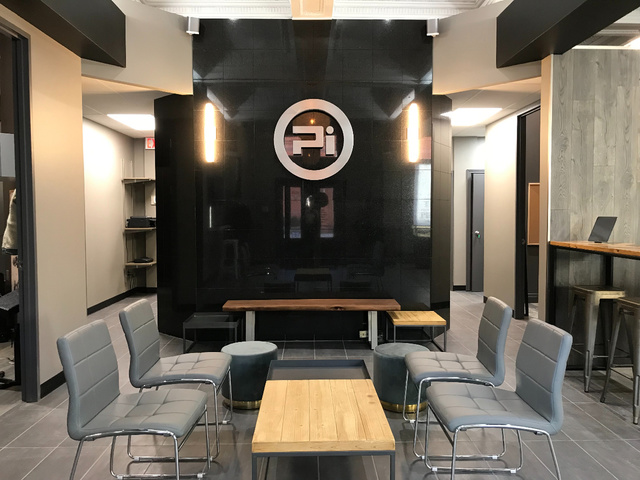
Perfect Image is on the corner of King and University in Waterloo, directly next to the 7-Eleven, sitting in the middle of the triangle formed by the University of Waterloo, Wilfrid Laurier and Conestoga's Waterloo campus.
If you are in Kitchener, we are about ten minutes up the road and on the bus route. There is no separate Kitchener studio, and there does not need to be. Two of the three people who would pierce you live in Kitchener and Cambridge.
Our Three Piercers
This is the largest of our six studios!
Shantal Lyddiatt (she/her), from Kitchener.
Stacey Small (she/her), from Cambridge.
Cass Matos (she/her), from Waterloo.
Three matters for two practical reasons. Somebody is almost always free, which is why walk-ins here usually work rather than being a gamble. And if you come back for a downsizing or a jewellery change and the person who pierced you is not in, somebody who works alongside them every day can look at it.
Where We Are
12 University Ave E, Waterloo, ON N2J 2V7 (519) 886-1212
On the corner of King and University, next door to the 7-Eleven, between Conestoga Mall and Uptown Waterloo.
Hours: Monday to Saturday, 10 a.m. to 8 p.m. and Sunday, 11 a.m. to 7 p.m.
Getting Here
Grand River Transit routes 7, 8, 12, 28 and 202 all stop near us. The ION light rail stops in Uptown Waterloo, about fifteen minutes on foot. GO Transit route 25 stops nearby. From most of Kitchener, you are on a single bus or a ten-minute drive.
Parking. Limited on site, with more nearby. If you are driving in at a busy time, Uptown has paid lots within a short walk and they are usually the easier bet.
Accessibility. Ground-level entrance, wide doors, no stairs anywhere in the studio, rooms wide enough for a wheelchair, and an accessible bathroom.
Coming from Cambridge, Guelph or Further out.
We are the closest studio of this kind for a wider area than the address suggests, and it is worth knowing the honest travel picture before you set off.
Cambridge is roughly twenty minutes by car and on the GRT network. One of our piercers, Stacey, is from Cambridge.
Guelph is around twenty-five to thirty minutes by car. There is no direct bus that makes it pleasant, so this is a drive.
Stratford, Woodstock and Brantford are each around forty minutes. If you are in Brantford, our own Brantford studio on Dalhousie Street is much closer and is the one to use.
Toronto and the GTA people do make this trip, usually for a specific placement, and it is a straightforward drive down the 401.
If you are travelling in, phone first. Turning up from Guelph on a day when our piercer is busy is a bad afternoon that a two minute phone call prevents.
Knowing What You Want
People frequently arrive knowing what they want it to look like and not what it is called, which is completely normal. Here is the vocabulary.
Lobe. The soft part at the bottom. Heals in weeks rather than months, takes almost any jewellery once settled, and is the only ear placement where healing is genuinely quick.
Helix. The outer rim, anywhere along the curve. The most requested cartilage piercing there is.
Forward helix. The small ridge at the very front of the ear where it meets your head, usually done as one, two or three in a row.
Tragus. The little flap in front of the ear canal.
Conch. The large bowl in the middle of the ear. Can be inner or outer, and it is one of the few placements that takes a large hoop well once healed.
Rook and snug. Both are folds inside the upper ear, and both depend entirely on whether you have the fold. A good number of ears do not.
Daith. The small fold just above the ear canal. Popular, and again it needs the right anatomy.
Flat. The flat area of cartilage inside the upper rim, above a conch.
Industrial. Two piercings through the upper ear joined by a single straight bar. It needs a particular ear shape to sit correctly and it is worth being assessed for rather than booked blind.
Come in with a photograph if that is easier. Nobody minds, and a photograph is clearer than a name.
What We Will Not Do
Worth saying, because a studio that agrees to everything is not doing you a favour.
We will not pierce cartilage with no structure to hold jewellery. If the fold is not there, we will show you rather than take the money and let it migrate out over six months.
We will not pierce through an existing lump, an unhealed piercing, or scar tissue that has not settled.
We will not fit jewellery we would not stand behind. Wear what you like once you are healed. A fresh channel is not where you find out how a piece behaves.
And we will not tell you cartilage heals in six weeks to make it sound easier than it is.
Needle, Not a Gun
You have probably been offered a gun somewhere, usually by somebody who is not a piercer.
A needle is hollow and sharp. It removes a small core of tissue and leaves a clean channel with room to heal. A gun does not cut. It forces a blunt stud through by pressure, crushing tissue apart to make space. In a soft lobe that is an annoyance. In cartilage, which has little blood supply and no tolerance for damage around the edges of a hole, it is the difference between a piercing that settles and one that does not.
There is also the equipment itself. A gun is largely plastic and cannot go into an autoclave, the machine that sterilizes with pressurized steam. It gets wiped down. Our needles are single use, sterile, opened in front of you and dropped into a sharps bin afterwards.
Getting Pierced Here
We look at your ear first and tell you honestly what it supports. Not every ear takes every piercing. A daith needs a fold to sit in, a rook needs a ridge, and if yours is not there we will show you in the mirror rather than take the booking and let it migrate out over six months.
You choose jewellery. Everything that goes into a fresh piercing is implant-grade titanium, nickel free, with the standard printed by the maker.
We mark it, you check it, we adjust until you are happy, and then it takes a second or two.
Downsizing
Your first piece of jewellery is deliberately longer than you need, because the ear swells for a few days and that length gives the swelling somewhere to go.
Once the swelling settles, the extra length becomes the problem. A post with slack tips and rocks every time your hair, a pillow or a finger touches it, and cartilage does not tolerate movement. Most piercings that never quite settle, sit crooked, or grow a stubborn bump beside them were never shortened.
Five minutes, included, due somewhere between six weeks and three months. Put it in your calendar when you leave.
Jewellery
Two decisions get made and only one changes how the piercing behaves.
The metal decides the healing. Implant-grade titanium, ASTM F136, is what goes into anything fresh. No nickel, light, and the least likely to cause trouble. "Surgical steel" with no grade attached is a phrase, not a specification. Our article on titanium, steel or gold has the full picture.
The shape decides daily life. Every ear piercing here is fitted with a flat back, meaning a smooth disc behind your ear rather than the butterfly clutch on ordinary earrings. That clutch is what catches hair, presses in on a pillow and slides inward. Changing it removes most of the problems people blame on the piercing.
Hoops are what most people actually want and they are not for healing in. A hoop swings and rotates, and a healing channel does not survive being dragged at. Come back once it has been quiet for several weeks and we will size one on your ear rather than guessing.
Aftercare
Sterile saline twice a day and almost nothing else. No alcohol, no peroxide, no tea tree oil, no ointment, no homemade salt water. Do not twist the jewellery, do not pick crust off dry, and do not clean it more often because it looks unhappy. Cleaning it more disturbs it more, and disturbance is the main obstacle.
Our article on why piercings reject and migrate explains what is actually happening when one goes wrong, and it is almost always mechanical rather than a hygiene failure.
Afterwards
There is a Starbucks down the street, which is where most people end up for the twenty minutes afterwards while their ear settles down. For something better, head Uptown, where we are fond of Champa Kitchen, Ethel's Lounge, or Daldongnae Korean BBQ. If somebody has travelled in with you, the Delta Hotel in Waterloo has Proof Kitchen and Lounge downstairs.
Bottom Line
Three piercers, open seven days, walk-ins usually possible, needles only, implant-grade titanium as standard, and downsizing included. Ten minutes from most of Kitchener and on the bus route. Corner of King and University, or phone (519) 886-1212.
FAQ
Is there a Perfect Image in Kitchener?
Not a separate studio. Our Waterloo studio at King and University is about ten minutes from most of Kitchener and on the bus route, and two of our three piercers live in Kitchener and Cambridge.
Do you use a piercing gun?
No, and we do not own one. Needles only, single-use, opened in front of you.
Can I walk in?
Yes! Phone ahead if you need an estimated wait time.
How long does cartilage take to heal?
Commonly six to twelve months. Lobes settle in about 3 months. Plan around that if you are a student.
Which buses go there?
Grand River Transit 7, 8, 12, 28 and 202. The Ion light rail stops in Uptown, about fifteen minutes on foot. GO route 25 stops nearby.
Can I get it downsized somewhere else over the summer?
Yes. Ask us for your gauge and bar length before you go and write it down, and any competent piercer can work from that.
Can you change jewellery I bought elsewhere?
Yes. Bring it in and we will tell you honestly whether it is something we would put in a piercing.
How much is it?
It depends on the placement and the jewellery, and the jewellery is usually the larger part. Phone and we will give you a real figure rather than a headline price.