Traditional & Floating Navel Piercings

Thinking about a navel piercing? Your belly button anatomy plays a big role in determining which style will work best for you. In this post, we’ll break down the two most popular options—traditional navel piercings and floating navel piercings—and why navel piercings aren't one-size-fits-all.
The Best Piercing for You Will Suit Your Body's Anatomy
Anatomy is defined as the study of the structure or internal workings of something.
Every belly button is unique, and that’s why not every piercing style suits everyone. When you visit us for a piercing, our experienced piercers will assess your anatomy to recommend the best placement and jewelry style for your body.
During your consultation, your piercer will check for:
Skin fold above the navel – A prominent flap of skin (upper rim) provides a secure spot for jewelry.
Navel depth – A deep enough navel helps jewelry sit comfortably.
Scar tissue – Old piercings or surgical scars may affect placement and healing.
Skin movement – How your skin stretches when you sit, stand, or bend.
Symmetry – Ensures the piercing looks balanced and centred.
These factors determine whether a traditional or floating navel piercing is the safer, more aesthetic option. Understanding these differences can be useful as part of your overall consultation and care to ensure the piercing suits your unique anatomy and lifestyle.
Traditional Navel Piercings
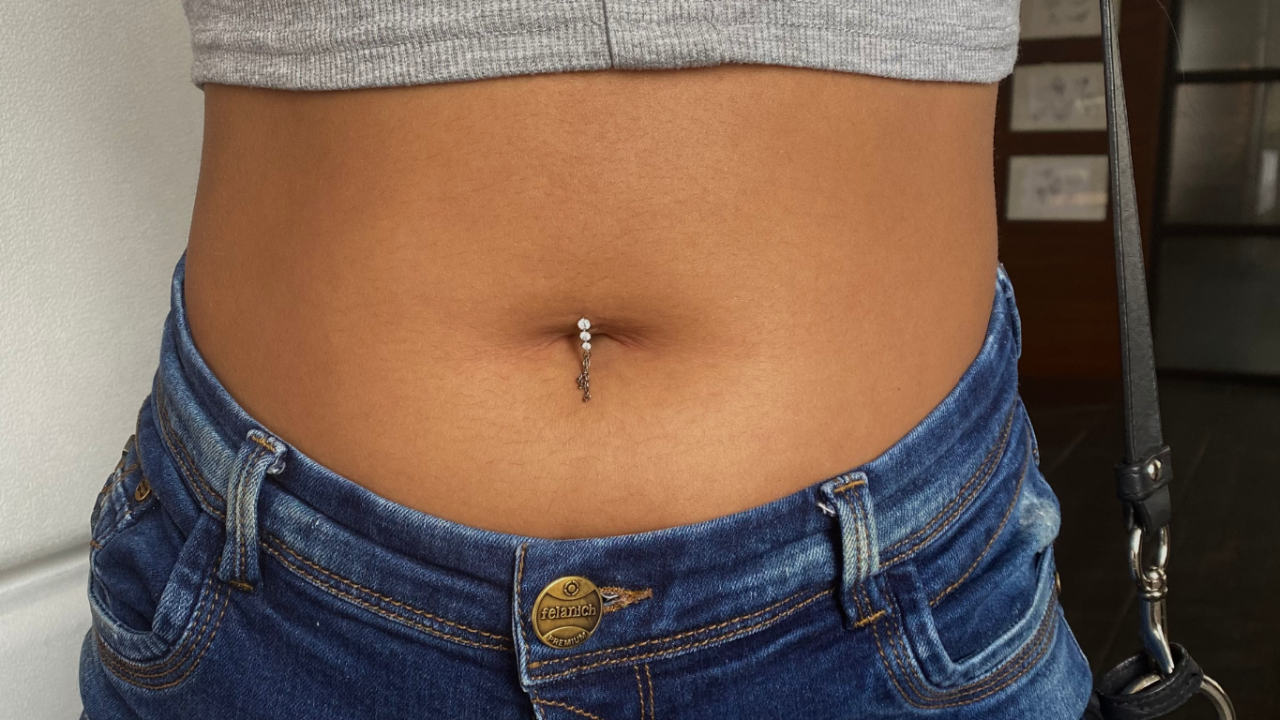
The traditional belly button piercing is a classic option. It involves piercing the skin just above the navel and placing jewelry that sits vertically through the upper rim.
✔ Best for:
A defined upper rim or fold above the belly button.
Moderate to deep navels that provide enough tissue for secure placement.
✔ Jewelry style:
Curved barbells or rings with decorative ends that sit above and below the navel.
Learn more about choosing the right jewelry for your initial piercing here, or start shopping for your new belly button jewelry.
Floating Navel Piercings
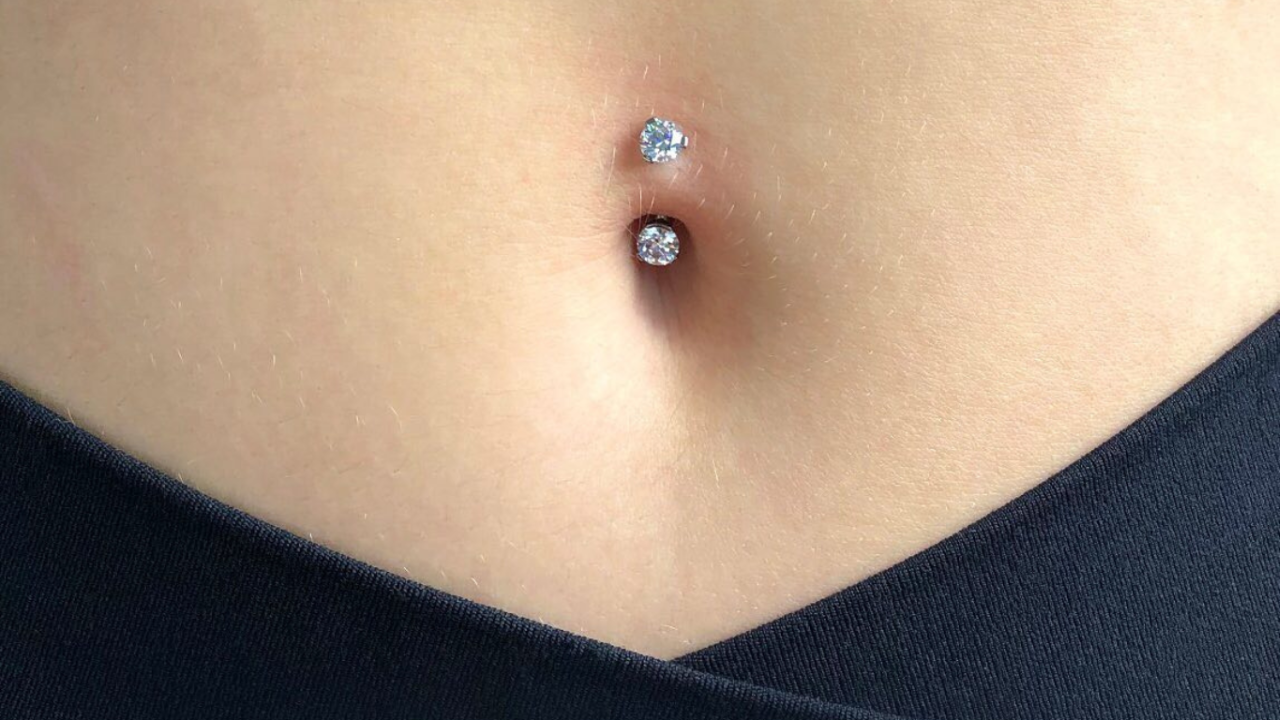
A floating navel piercing (also called inverse navel piercing) works differently. Instead of jewelry showing both above and below, the piece sits flush against the skin at the top of the navel, creating the illusion of “floating” jewelry.
✔ Best for:
Shallow or flat navels without a pronounced upper rim.
✔ Jewelry style:
A curved barbell with a small disk base and a decorative top, minimizing pressure on the piercing channel for easier healing.
Which Style Should You Choose?
Whether you should get a traditional and a floating navel piercing depends entirely on your anatomy. A consultation with a professional piercer is the best way to figure out which option will heal well and look great.
Ready to Get Your Piercing?
Our team is here to guide you every step of the way. Get expert advice on the perfect navel piercing for your body and find a location near you here.
Frequently Asked Questions
Who is a floating navel piercing best for?
A floating navel piercing is best for people whose belly buttons fold in when they sit, those with less defined upper navel lips, or anyone who experiences pressure or irritation from a standard curved barbell. It’s designed to work with your body instead of against it.
Who is a traditional navel piercing best for?
A traditional navel piercing works best for people with a well-defined, sturdy upper fold of skin (the “lip”) that can securely hold the jewelry. If your belly button doesn’t collapse when you sit and you don’t have excess pressure on the piercing area, you’re likely a good candidate for a traditional style with a curved barbell.
How do I know if I need a floating navel vs a traditional navel piercing?
The best way is to get a professional anatomy check from a piercer. If your navel collapses when you sit, the upper lip is thin or shallow, or traditional jewelry causes constant pressure or irritation, you likely need a floating navel. If your anatomy is sturdy and holds jewelry comfortably without pressure, a traditional navel piercing is usually the better choice.
Is a floating navel piercing easier to heal?
It can be easier to heal for people with non-traditional anatomy because the jewelry reduces rubbing, pressure, and friction on the piercing channel. That doesn’t mean it heals instantly; most navel piercings take 6 months. But if a traditional style is irritating your piercing, switching to floating jewelry can help improve the healing experience.
Can I switch from floating navel jewelry to traditional belly button jewelry later?
In some cases, yes, once the piercing is fully healed and your anatomy supports it. However, this should only be done after consulting with a professional piercer.
What jewelry is used for a floating navel piercing?
A floating navel piercing uses specialty jewelry designed so the decorative top appears to float above the navel. The backing is a flat disc or plate that sits discreetly inside the upper fold of your belly button instead of a visible bottom bead. This reduces pressure and creates a sleek, seamless look.
What are the signs that a navel piercing may be rejecting?
Common signs include the jewelry becoming more visible over time, the piercing moving from its original spot, thinning skin around the entry or exit, recurring redness or irritation, and the jewelry no longer sitting flush to the skin. If you notice these changes, have a professional piercer assess the piercing as soon as possible.