Irritated or Infected, and How to Tell the Difference

An irritated piercing and an infected piercing are two different things, not two points on the same scale. That is the single most useful thing to understand, because the correct response to each is almost opposite.
Irritation is your piercing reacting to something being done to it. Something is pressing, catching, moving or touching it repeatedly. Remove the cause and it settles.
Infection is bacteria multiplying in the tissue. It does not resolve by removing a cause and it needs a doctor.
The reason this matters is that the overwhelming majority of piercing problems are irritation, and almost all of them get treated as infection. People reach for antiseptics, tea tree oil, antibiotic cream and salt soaks that make things worse, when the actual answer was that a bar was too long or they had been sleeping on it.
What Irritation Looks Like
Localized redness, right at the piercing rather than spreading outward.
Tenderness that comes and goes, often worse after a specific event. You knocked it, you slept badly, you caught it on a jumper.
A bump beside the piercing, on one side rather than both, often on whichever side the pressure is coming from.
Clear or pale straw coloured fluid that dries into a crust. This is lymph fluid and it is a normal part of healing, not pus.
No fever, no heat, no spreading. You feel completely well. The piercing is the only thing that knows anything is happening.
It tracks with a cause. This is the giveaway. Irritation gets worse on days you did the thing and better on days you did not.
What Infection Looks Like
Redness spreading outward from the piercing, sometimes as streaks moving away from it.
Heat you can feel without touching, or that is obviously warmer than the surrounding skin.
Swelling that is increasing rather than reducing, particularly after the first week when it should be going the other way.
Genuine pain, throbbing rather than tender, often enough to be distracting.
Thick discharge that is yellow, green or grey, and often smells.
Feeling unwell. Fever, chills, generally rough. This is the one that decides it. Irritation does not make you feel ill.
If you have several of those, particularly a fever or spreading redness, see a doctor. Today rather than tomorrow. This is not a piercer's job.
The Most Important Thing
Do not take the jewellery out of a piercing you think is infected.
It is the instinct almost everybody has and it makes things considerably worse. The jewellery is holding the channel open. Remove it and the surface closes over within hours, which traps the infection inside with nowhere to drain. A treatable surface problem becomes an abscess under the skin.
Leave it in and go to a doctor. If the jewellery genuinely needs to come out, a medical professional will make that call and manage what happens next.
The Bump
Most people arriving at this article have a bump beside a cartilage piercing and are frightened it is a keloid. Almost none of them have a keloid.
An irritation bump appears next to the piercing, stays roughly the same size, is often slightly soft, and responds to removing whatever is pressing on the piercing. It may take weeks or months to go entirely, and it does go.
A keloid is a genuinely different tissue response. It grows beyond the original wound, keeps growing, is firm, and does not resolve on its own. They are uncommon, they run in families, and they need medical treatment rather than aftercare. Our article on keloids and piercing goes through the distinction properly.
What causes an irritation bump is mechanical, essentially always. Work through this list before doing anything else, because the answer is usually on it.
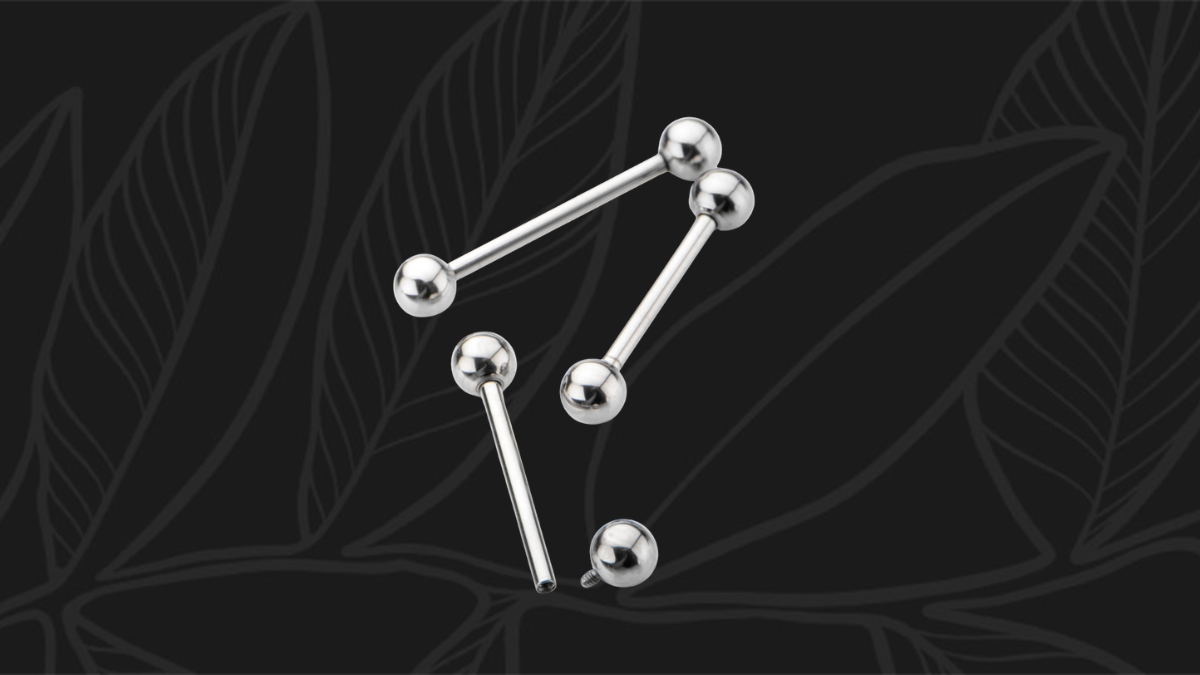
- Jewellery that is still at its longer starter length and was never downsized
- Sleeping on that side
- Earbuds, for a tragus. Over-ear headphones, for a helix or rook
- Phone pressed against that ear during calls
- Hair catching, particularly when tying it up
- A jumper or towel snagging it
- Turning or twisting the jewellery, which is old advice that is now understood to cause damage
- Over-cleaning, which is more common than under-cleaning
- Jewellery material that is not implant grade
Find the cause, remove it, and be patient. A bump that took two months to appear takes more than a week to go.
Things that make irritation worse, which people do because they seem sensible
This list matters because every item on it is something well meaning people apply to a piercing that was going to be fine.
Tea tree oil. Strong, drying, and a common sensitizer. It is one of the most frequent causes of a piercing that was mildly irritated becoming badly irritated.
Alcohol and hydrogen peroxide. Both kill the healing cells you need alongside anything else. They belong nowhere near a healing piercing.
Antibiotic ointment. Thick, occlusive, and it seals the channel rather than letting it breathe. It also does nothing useful for an irritation, since there is no infection to treat.
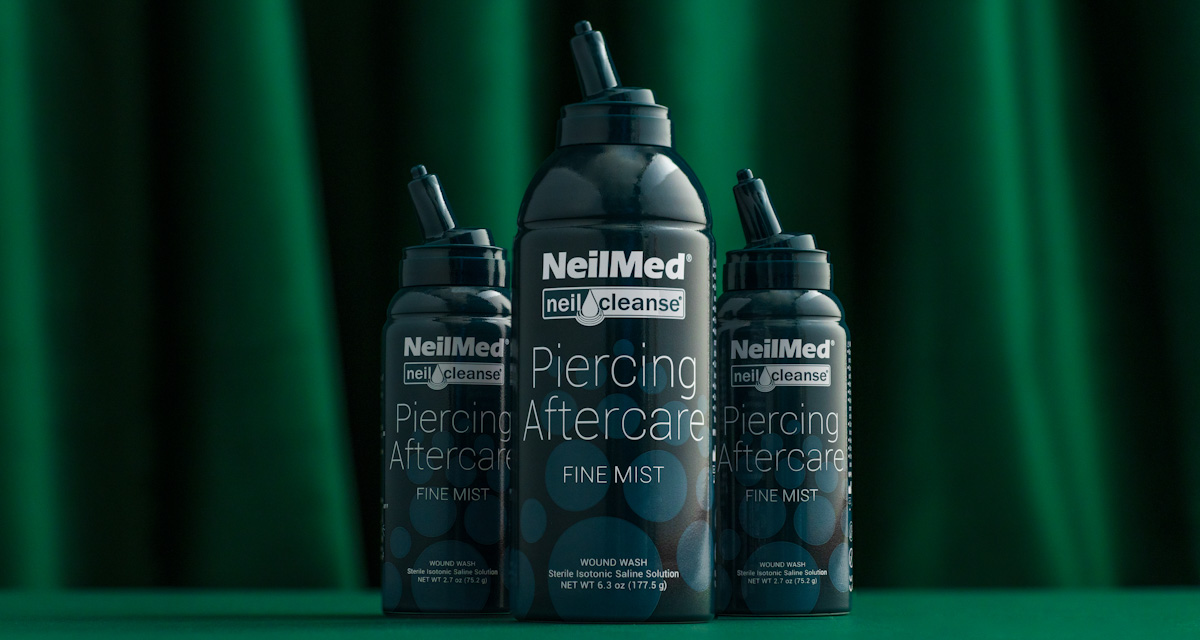
Homemade salt soaks. The concentration is almost never right, and too salty is a chemical burn on healing tissue. Sterile saline made for wound care is cheap and correct.
Cleaning more often. Twice a day is right. Six times a day keeps the tissue permanently wet and permanently disturbed, which is precisely the mechanical irritation you are trying to stop.
Rotating the jewellery. Standard advice a generation ago, now understood to tear the delicate lining your body is trying to build. Leave it alone.
Changing the jewellery to something prettier. Understandable and one of the most common ways a settled piercing becomes an angry one. Wait until it is fully healed.
What to do About Irritation
Find the cause and stop it. Nine times out of ten this is the entire treatment.
Check the jewellery length. If you never went back for the downsize, that is very likely your answer. It is a short appointment.
Keep the routine simple. Sterile saline twice a day. Nothing else on it.
Give it time. Irritation resolves slowly. Weeks, sometimes a couple of months, and the bump is always the last thing to go rather than the first. Judging it after four days and adding a new product is how people cycle through five different remedies in a fortnight and end up blaming the piercing for what the remedies did.
Come and have it looked at. This is genuinely quicker than working through it alone. A piercer looking at your piercing for thirty seconds can usually name the cause, because they have seen the same five causes several thousand times and they can see things about the angle, the jewellery fit and the tissue that you cannot see in a mirror. It is a conversation rather than an appointment and there is no charge for it.
We would far rather see something at three weeks than at three months. Early, most of these are a jewellery change and some patience. Left for months, an irritation that was never addressed can leave a permanent thickening in the tissue even after it settles, and that is the outcome worth avoiding.
What Normal Healing Looks Like
Half the anxiety on this subject comes from not knowing what ordinary looks like. Here it is.
First few days. Tender, a little swollen, pink at the entry and exit. Clear or pale fluid. It is aware of itself and it does not stop you doing anything.
First few weeks. Swelling reduces. Crusting continues on and off, which is entirely normal and not a sign anything is wrong. It stops being something you think about constantly.
Weeks to months, depending on placement. Long, quiet, unremarkable. It looks finished considerably before it is finished, and this is where most people cause themselves trouble by changing jewellery or stopping the routine early.
Occasional flare-ups are normal, particularly in cartilage. A piercing that has been fine for two months can be tender for a week after you slept on it badly. That is not a relapse and it does not mean you are back to the start.
The direction of travel is what matters more than any single day. Something that is gradually improving over weeks, with the occasional bad day, is healing. Something that is steadily getting worse over days is not, and that is when the two lists at the top of this article become useful.
When it is neither, and something else is going on
Two situations that are neither irritation nor infection and get confused with both.
Migration. The piercing is slowly moving as the body pushes it toward the surface. The signs are that the amount of tissue over the jewellery is visibly reducing and the entry and exit points are getting closer together. It is not painful, it does not look infected, and it is not going to stop on its own, which is exactly why it gets ignored until it is too late to do anything about. Our article on why piercings reject and migrate covers it, and catching it early is the whole game.
The reason it belongs in this article is that migration and irritation frequently arrive together. A piercing under constant pressure gets irritated and migrates for the same underlying reason, so a bump that keeps coming back in a piercing that is slowly moving is telling you two things at once.
A metal reaction. Redness, itching and irritation that never quite settles, in a piercing with no obvious mechanical cause, sometimes points at the jewellery material rather than at anything you are doing. Anything containing nickel is the usual suspect. Our comparison of titanium, steel and gold explains why implant grade titanium is the straightforward answer.
Why Over-Cleaning is the Single Most Common Mistake
It deserves its own section because it is so counterintuitive and so widespread.
Almost everybody who arrives with a struggling piercing is cleaning it more than they should, not less. The logic is understandable. Something looks wrong, cleaning feels like doing something, so more cleaning must be better.
What actually happens is threefold.
Healing tissue needs to be left alone to build. Your body is constructing a delicate lining inside the channel. Every clean disturbs it slightly. Twice a day it recovers between disturbances. Six times a day it never gets the chance.
Permanently damp tissue is weaker tissue. Skin that is repeatedly soaked stays soft and fragile, and soft fragile tissue tears more easily and reacts more readily to everything else.
More cleaning usually means more touching. Every clean involves hands near the piercing, cotton pads dragging across it, and jewellery being moved. That mechanical disturbance is frequently the actual cause of the problem the cleaning is meant to solve.
The instruction is genuinely as boring as it sounds. Sterile saline, twice a day, and then leave it entirely alone. If it seems irritated, the answer is almost never to add a step. It is to remove one.
Bottom Line
Irritation is localized, it tracks with a cause, the fluid is clear, and you feel completely well. Infection spreads, brings heat and thick coloured discharge, and makes you feel ill.
If it is irritation, the cure is almost always removing something mechanical rather than applying something. Check the jewellery length first, then your sleeping side, then whatever presses on it daily.
If it is infection, see a doctor promptly, and leave the jewellery in until they tell you otherwise.
And if you cannot tell which it is, that is exactly what we are here for. Bring it in and let somebody look. It takes a minute, it costs nothing, and it is a far better use of your time than another forum thread.
FAQ
Is crusting normal?
Yes. Clear or pale straw coloured fluid drying into a crust is lymph and it is a normal part of healing. Thick yellow or green discharge is not the same thing.
How do I know if my bump is a keloid?
Almost certainly it is not. Irritation bumps stay roughly the same size and respond to removing whatever presses on the piercing. Keloids grow beyond the original wound, keep growing, and are uncommon. Have it looked at rather than guessing.
Should I take the jewellery out if it is infected?
No. It holds the channel open so the infection can drain. Removing it lets the surface close and traps the infection inside. Leave it in and see a doctor.
Can I use tea tree oil?
We would strongly advise against it. It is drying and a common sensitizer, and it is one of the most frequent reasons a mildly irritated piercing becomes badly irritated.
How long does an irritation bump take to go?
Weeks, sometimes a couple of months, once the cause is removed. It will not go while whatever caused it is still happening, which is why finding the cause matters more than treating the bump.
Should I clean it more if it is irritated?
No, and this is a common mistake. Over-cleaning keeps the tissue wet and disturbed. Twice a day with sterile saline is right whether it is settled or irritated.
What if it has been months and it is still not right?
Come in. A piercing that has not settled after months is telling you something specific, usually about jewellery, material or placement, and that is diagnosable in person rather than online.
When should I go to a doctor instead of a piercer?
Spreading redness, heat you can feel, increasing swelling, thick coloured discharge, or any fever. Any of those means a doctor, promptly. A piercer handles jewellery, placement and irritation. Infection is medical.