Medication and Health Conditions: What Your Artist Needs to Know

The medical questions on a consent form are not a formality and they are not there to protect the studio from you. They are there because a handful of common conditions and medications genuinely change how a tattoo or piercing goes, and knowing in advance lets us do the work properly rather than discovering the problem halfway through.
Almost nothing on this list means you cannot be tattooed. Most of it means we approach it differently, or we ask you to speak to your doctor first, or we pick a better week. The only thing that causes real trouble is finding out afterwards.
Here is what matters and why.
Blood Thinners
This is the most common one and the most immediately relevant.
Tattooing causes bleeding, which is normal and manageable. Bleeding more than usual causes two specific problems. Blood pushes pigment back out of the skin as it is being placed, so ink does not settle as well and the piece heals patchier. It also makes the artist's job considerably harder, because they are working on a surface that will not stay clear.
Prescribed anticoagulants are the obvious case and are a conversation with your doctor before anything else. Do not stop taking a prescribed medication for a tattoo. Ask your doctor whether being tattooed is sensible and follow what they say.
The everyday version catches more people. Ordinary anti-inflammatory painkillers thin the blood, and so does alcohol. Taking a couple of tablets before your appointment because you are worried about the pain is a genuinely bad idea, and drinking the night before is worse. Both make you bleed more, both make the tattoo heal less cleanly, and alcohol also dehydrates you, which makes the whole experience harder.
If you want something for the pain, ask us rather than guessing. Paracetamol does not thin the blood and is the usual answer.
Diabetes
Plenty of people with diabetes have tattoos and there is no reason not to. What changes is that healing can be slower and infection risk is higher, particularly where blood sugar is not well controlled and particularly on the feet and lower legs where circulation is often poorer.
Tell us, so we can talk about placement and about timing. Avoid areas you use for injections or monitoring. Eat properly beforehand, because a long session on an empty stomach is harder for anyone and considerably harder if your blood sugar is already a variable.
If your control is currently unstable, the honest advice is to wait until it is not.
Autoimmune conditions and immunosuppressants
Conditions that affect the immune system, and the medications used to manage them, change healing in both directions. Healing can be slower, and infection risk is higher because the system that would normally handle a minor problem is deliberately dialled down.
Some conditions also flare in response to skin trauma. Psoriasis is the clearest example, where new patches can appear at the site of an injury, and a tattoo is an injury. That does not rule out tattooing but it does mean placement, timing and expectations all need discussing.
The right sequence is to speak to whoever manages your condition first, then come and talk to us. We are not going to tell you what is safe for your specific illness and we should not.
Skin Conditions
Eczema, psoriasis and dermatitis all affect whether an area can take a tattoo well.
The rule is straightforward. We do not tattoo over skin that is currently flaring, broken, inflamed or raw. Healed skin between flares is usually workable, and a lot depends on how often that particular patch of skin plays up.
Bring it up at the consultation rather than the appointment, because it may change where the piece sits, and choosing a spot that rarely flares is easier before a design has been drawn to fit somewhere else.
Moles are a separate matter. We do not tattoo over them. A mole needs to remain visible so that any change to it can be seen, and covering one in ink means losing that. A good artist designs around it, and that is a small adjustment rather than a problem.
Acne Medication
Isotretinoin, prescribed for severe acne, is the one that surprises people.
It changes how skin behaves substantially, making it thinner, more fragile and slower to repair. Tattooing skin in that state carries a real risk of poor healing and scarring, and the recommendation is to wait until well after a course has finished. How long is a question for your prescriber, and the usual answer is several months rather than several weeks.
If you are on it now, book the consultation and plan the piece, then do the tattoo later. Nothing is lost by designing in the meantime.
Pregnancy and Breastfeeding
We do not tattoo or pierce during pregnancy. That is the standard position across the trade and it is not because anyone has proven harm. It is because the risk, however small, is not one to take on somebody else's behalf, and because the body changes so much during pregnancy that placement and healing are both unpredictable.
Breastfeeding is treated the same way by most studios, for the same reason.
If you are trying to conceive, that is worth mentioning too, particularly for anything on the abdomen or chest.
Heart Conditions and Implanted Devices
Some heart conditions come with advice about preventing infection during procedures that break the skin. If you have been given any such guidance, or you have an implanted device such as a pacemaker, tell us and check with your cardiologist first.
Allergies
Tell us about any allergy to metals, latex, adhesives, or topical anaesthetics.
Nickel is the one that matters most for piercing, which is why implant-grade titanium is what goes into every fresh piercing we do. Adhesive sensitivity matters for the dressing that goes over a fresh tattoo, and there are alternatives.
Reactions to tattoo pigment itself are uncommon and are most often associated with red. They tend to show up as persistent itching, raised texture or scaling confined to one colour and nowhere else in the piece. If you have reacted to a tattoo before, tell us which colour.
Epilepsy, Fainting and Needle Anxiety
Not medical restrictions so much as things worth us knowing.
If you have epilepsy, tell us. If you faint at needles or during blood tests, tell us, because we will lay you down rather than sitting you up and the session will be far less eventful. If you get anxious, say so, and we will talk you through what is about to happen in order, which settles most people faster than reassurance does.
None of this is embarrassing and all of it is common.
Why We Ask
There is a fair question underneath all of this, which is why a tattoo studio needs a medical history at all when it is not a medical practice.
The answer is that we are the only people in the room who know what is about to happen to your skin, and you are the only person in the room who knows what your body is currently doing. Neither of us can work it out alone.
We are not diagnosing anything and we will never tell you whether a treatment is right for you. What we do is recognize the handful of situations where the plan needs to change, and route you to the right person for everything else. A studio that asks nothing is not being relaxed, it is choosing not to know.
It also protects the work. A piece that heals patchily because somebody was bleeding heavily, or that scars because the skin was fragile from a medication nobody mentioned, gets remembered as a bad tattoo. It was not. It was a good tattoo done in circumstances nobody had been told about.
The Things People Leave Off the Form, and Why They Matter
Certain things get left blank almost every time, usually because they do not feel like medical information.
Supplements. Fish oil, vitamin E, ginkgo, turmeric and several others thin the blood to a noticeable degree. People list prescriptions carefully and never think to mention a supplement they have taken daily for years.
Recreational drugs. Some raise blood pressure and heart rate substantially, some thin the blood, and several make it considerably harder to sit still for hours. We are not interested in judging anyone and we are not reporting anything. We are trying to avoid a session that goes badly.
Recent illness. Being tattooed while your body is already dealing with something takes resources away from both jobs. A heavy cold in the last few days is worth mentioning and often worth rescheduling for.
Recent vaccinations. Being tattooed over or very near a recent injection site is best avoided, and a body that is mounting an immune response is not at its best for healing.
Previous problems with tattoos or piercings. If something scarred badly, reacted to one colour, or took a year to heal, that is the single most predictive piece of information you can give us and it almost never appears on a form.
Anxiety and past fainting. Not medical restrictions, but the difference between a calm appointment and a difficult one.
If you are unsure whether something belongs on the form, put it on the form. We would far rather read something irrelevant than miss something that mattered.
What Happens When We Say Wait
Occasionally the answer is not now.
That is not a rejection and it is not a judgement. It usually means a course of medication is finishing, a flare is settling, blood sugar is being brought back under control, or a doctor needs to weigh in first.
When it happens, the useful thing is to keep the momentum rather than lose the plan. Book the consultation anyway. Get the design drawn, the size settled and the placement agreed. Then the tattoo happens when the timing is right rather than starting from scratch months later.
Nobody has ever regretted waiting six weeks for a piece they will have for fifty years.
What to Do Before Your Appointment
Eat a proper meal. Drink water. Sleep. Skip alcohol the night before entirely. Do not take anti-inflammatory painkillers, and if you take medication regularly, take it as normal unless a doctor has told you otherwise.
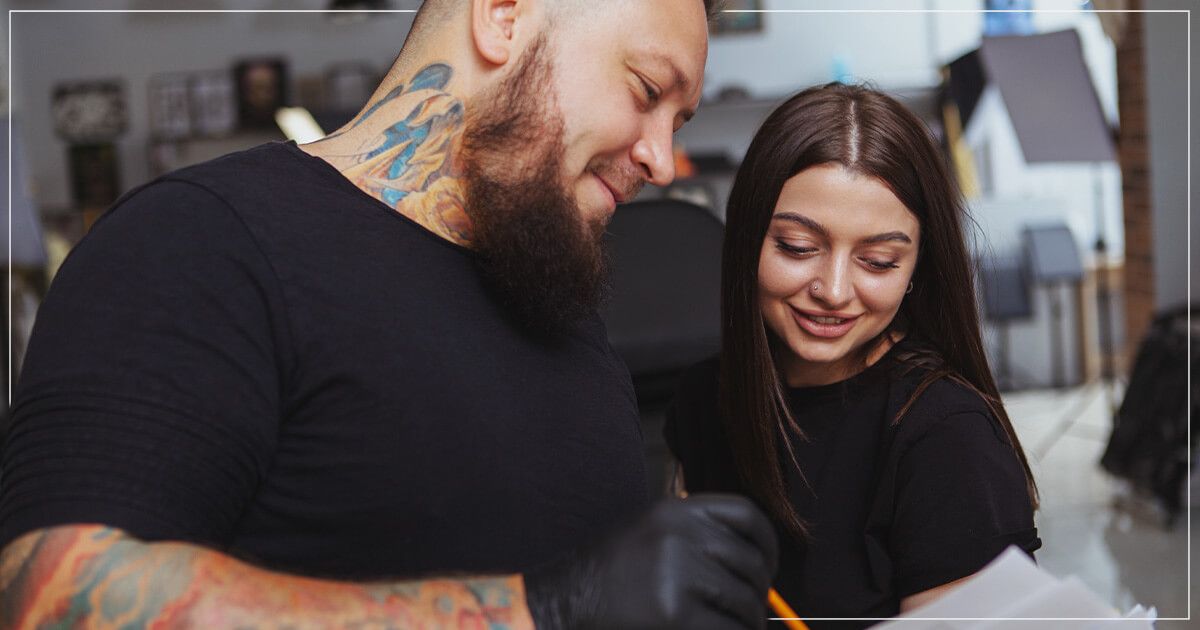
Fill in the medical section of the form honestly, including the things you are not sure are relevant. It takes two minutes and it is the only chance we get to know.
If anything has changed since you booked, say so when you arrive.
One sentence for the person skimming:
If you take anything that thins your blood, have anything that slows your healing, are on acne medication, are pregnant, or have a skin condition where the piece is going, tell us before you book rather than on the day, and almost every one of those still ends with you getting the tattoo.
If You are Booking For Somebody Else
Occasionally a person books an appointment as a gift, or a parent books for a teenager, or a friend organizes a group session for a birthday.
Whoever is being tattooed has to fill in their own form and answer their own questions. Nobody can do that on their behalf, however well they know them, because the answers include things people do not tell their friends. A group booking where one person fills in five forms is a group booking where at least one of those forms is wrong.
It also means the person being tattooed needs to be part of the conversation before the day. A surprise appointment for somebody on a medication nobody thought to ask about is a wasted trip and an awkward moment for everyone.
Gift vouchers avoid all of this neatly, which is why we suggest them for anything intended as a surprise.
Bottom Line
Almost no condition rules out being tattooed. What conditions do is change the plan, and a plan made in advance is a good tattoo while a surprise discovered mid session is not.
Anything thinning your blood, anything slowing your healing, anything affecting your immune system, anything happening to the skin where the piece is going, and anything you are allergic to. Those are the five categories, and if you are unsure whether something fits, tell us anyway and let us decide.
Where the question is really medical, we will send you to your doctor first, and that is us doing our job rather than avoiding it.
FAQ
Can I take painkillers before my tattoo?
Not anti-inflammatories, because they thin the blood and cause more bleeding and patchier healing. Paracetamol is usually fine. Ask us rather than guessing.
Can I drink the night before?
Better not to. Alcohol thins the blood and dehydrates you, and both make the session harder and the healing worse.
I take a prescribed blood thinner. Can I be tattooed?
Speak to your doctor first and do not stop taking it. If they are content, tell us, and we will plan around more bleeding than usual.
Can I be tattooed if I have diabetes?
Usually yes. Healing may be slower and infection risk is higher, so placement and timing matter more, and stable control matters most.
I am on acne medication. Do I need to wait?
Isotretinoin makes skin fragile and slow to repair, and the usual advice is to wait several months after finishing a course. Ask your prescriber for the specific timing.
Will you tattoo over a mole?
No. A mole needs to stay visible so any change to it can be noticed. We design around it.
Can I be tattooed while pregnant or breastfeeding?
No. It is the standard position across the trade, based on not taking even a small risk on somebody else's behalf.
I faint at needles. Should I still book?
Yes, and tell us when you arrive. We will lay you down rather than sitting you up, which prevents most of the problem.