What Actually Damages a Healed Tattoo

Once a tattoo has healed you can more or less live normally with it. That is worth saying first, because a great deal of advice on this subject reads as though a healed tattoo is a fragile object requiring permanent management.
It is not. It is skin. The things that damage it are the things that damage skin, and one of them matters enormously while the rest matter far less than people think.
Here is the honest ranking.
Sun Exposure
Ultraviolet light is responsible for more tattoo degradation than everything else on this list put together.
It works in two ways. The obvious one is that it breaks pigment particles into smaller fragments, and smaller fragments are exactly what your immune system can finally carry away. Pigment that was too large to move becomes pigment that can be removed, which is the fading you see.
The less obvious one is that ultraviolet damages the collagen and elastin in the dermis, which is the structure holding the pigment in position. Damaged structure means pigment drifts more freely, so heavy sun exposure does not only lighten a tattoo, it blurs it.
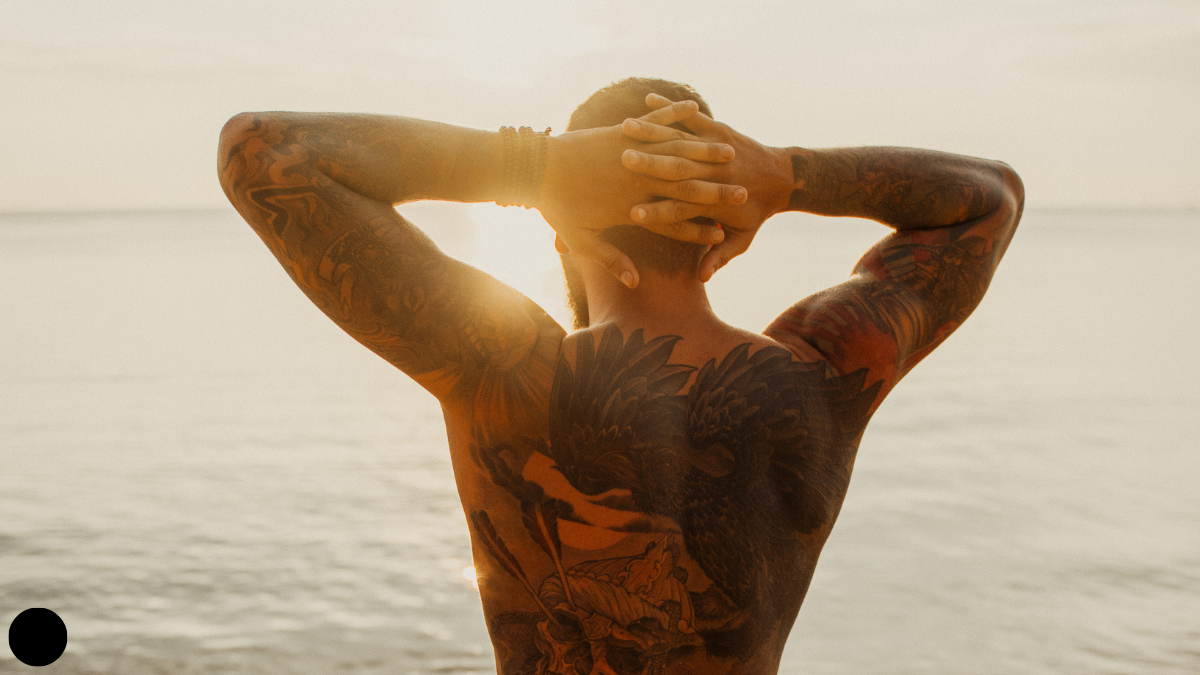
Two identical tattoos, one on a shoulder that has spent thirty summers uncovered and one on a thigh that has spent them under clothing, will not look remotely alike. Same ink, same artist, same day.
What to do. Sunscreen on it whenever it is exposed, from the moment it has fully healed and for the rest of its life. A high factor, applied properly and reapplied, on the tattoo specifically. If you are going to be out all day, clothing beats sunscreen and shade beats both.
This is the single most useful habit in this entire article and it takes ten seconds.
Tanning beds are worse than sun, because the exposure is concentrated and deliberate. If you use them, cover the tattoo.
Chlorine
Swimming pools come up constantly and the concern is largely misplaced for a healed tattoo.
Chlorine is a mild bleaching agent and it does dry the skin considerably. Repeated, prolonged exposure over years, of the kind a competitive swimmer gets, will contribute to a tattoo looking duller. For somebody swimming a couple of times a week it is a minor factor at most, and the drying effect is the real issue rather than any bleaching of the pigment itself.
The pigment sits in the dermis. Chlorinated water does not reach it. What chlorine reaches is the epidermis above it, and dry, rough, sun damaged epidermis is what makes a tattoo look dull.
What to do. Rinse afterwards and moisturize. That is genuinely the whole intervention.
On a fresh tattoo, chlorine is a different matter entirely and pools are out until it has fully closed over, for infection reasons rather than fading ones.
Salt Water and the Sea
Same answer as chlorine and for the same reasons, with one addition. A day at the beach usually means a day in strong sun, and the sun is doing the damage rather than the water.
People come back from a week away convinced the sea has faded their tattoo. It was almost certainly the eight hours a day of unprotected ultraviolet light.
What to do. Rinse, moisturize, and take the sunscreen seriously.
Friction
Skin that is rubbed repeatedly in the same place thickens and the surface becomes rougher, which scatters light and makes the tattoo underneath look hazy. Over years, constant friction can also physically wear at the outer layers enough to affect how crisply the ink reads.
The usual culprits are waistbands over hip tattoos, bra straps over shoulder pieces, watch straps, backpack straps, and shoes over foot tattoos. Foot tattoos suffer worst because footwear is unavoidable.
What to do. Very little, honestly, beyond being aware of it when choosing placement. If you are deciding between two spots and one of them lives under a strap all day, that is a real point in favour of the other.
Weight Change and Pregnancy
Skin stretches and slackens, and a tattoo stretches and slackens with it.
Gradual, moderate changes usually have little visible effect. Large or rapid changes distort a design, particularly on the abdomen, hips, upper arms and thighs. Pregnancy affects abdominal tattoos noticeably and it is unpredictable, since some pieces return close to normal and others do not.
What to do. Nothing preventative that is worth organizing your life around. If you are planning a pregnancy in the near future, it is a reasonable point to raise with your artist about placement, but plenty of people get tattooed on the stomach and are perfectly happy afterwards.
Skin that has been kept well moisturized and elastic copes better with stretch than skin that has not, which is one more small argument for looking after it.
Ageing Skin
Skin thins with age, loses collagen, and holds pigment less crisply. That is happening regardless of anything you do, and it is the reason a fifty year old tattoo looks like a fifty year old tattoo.
It is also the reason bold designs age better. A design whose structure survives some softening still reads. A design that depends on very fine distinctions does not.
The Things That do Not Matter as Much as People Think
Ordinary soap and shower gel. Fine on a healed tattoo. Heavily fragranced products can irritate sensitive skin, which is a skin issue rather than an ink issue.
Moisturizer brand. Any decent unscented moisturizer is fine. There is no cream that preserves pigment and any product marketed as tattoo specific is selling convenience rather than chemistry.
Saunas, hot tubs and steam rooms. No meaningful effect on a healed tattoo. They are off limits during healing only.
Exercise and sweat. No effect. Friction from equipment is the only relevant factor.
Blood donation. Not damage to the tattoo, but worth knowing that there is usually a waiting period after being tattooed before you can donate. Check the current rules with the blood service rather than with us, because they change.
Why a Tattoo Can Look Worse Without Having Faded at All
This is the most useful thing in the article for most people, and it is the thing nobody says.
You are not looking at your tattoo. You are looking at your tattoo through the outer layer of your own skin, which is a few dozen cells thick and completely replaces itself every month or so. That layer is what changes, and it changes far faster than pigment does.
When it is well hydrated it is smooth and relatively clear, and light passes through it cleanly to the ink and back out. When it is dry, the surface is rough and slightly raised in places, and light scatters off it instead of passing through. Scattered light reads as haze, and haze over a tattoo reads as faded.
That is why a piece can look sharp in summer and dull in February, or dull all week and noticeably better an hour after moisturizing. Nothing has happened to the ink at all. The window has fogged.
We see people come in convinced a piece has faded badly who simply have very dry skin over it. Two weeks of daily moisturizer and they are surprised at how much came back. Before you book a touch up, spend a fortnight moisturizing properly and look again.
The corollary is worth stating too. If a tattoo looks dull no matter how well hydrated the skin is, and the linework itself has thickened and softened, then the ink genuinely has moved and a refresh is the answer.
The Fiirst Summer, and The First Winter
Two moments catch people out.
The first summer after a new tattoo is when most avoidable damage happens. The piece is healed, it looks good, it is new enough that you want it visible, and it goes out into strong sun repeatedly with nothing on it. A tattoo can lose noticeable crispness in a single badly protected summer, and that loss does not come back on its own.
If you get tattooed in spring, be deliberate about the months that follow. It is the highest risk window a tattoo ever has.
The first winter is a different problem. Indoor heating is drying, and the haze described above sets in. People conclude the tattoo has faded within months and panic about the quality of the work. It has not. Moisturize more in winter than you think you need to.
A Note on Cover Ups and Old Work
If you have an old piece you are unhappy with, the same principles decide what is possible.
A tattoo that has faded and softened is easier to cover than one that is still dense and dark, because a cover up works by placing new, darker work over old. Very heavy black work is the hardest to cover and often needs some laser lightening first to give an artist anything to work with.
Sun damaged skin is harder to tattoo cleanly than skin that has been protected, which is one more argument for the sunscreen habit even on a piece you are not especially attached to.
And an old tattoo in reasonable condition is often better refreshed than replaced. Bring us a photograph and we will tell you honestly which of the three you are looking at.
The Maintenance That is Actually Worth Doing
Three things, and none of them takes effort.
Sunscreen on it. Every time it is exposed. If you do nothing else, do this.
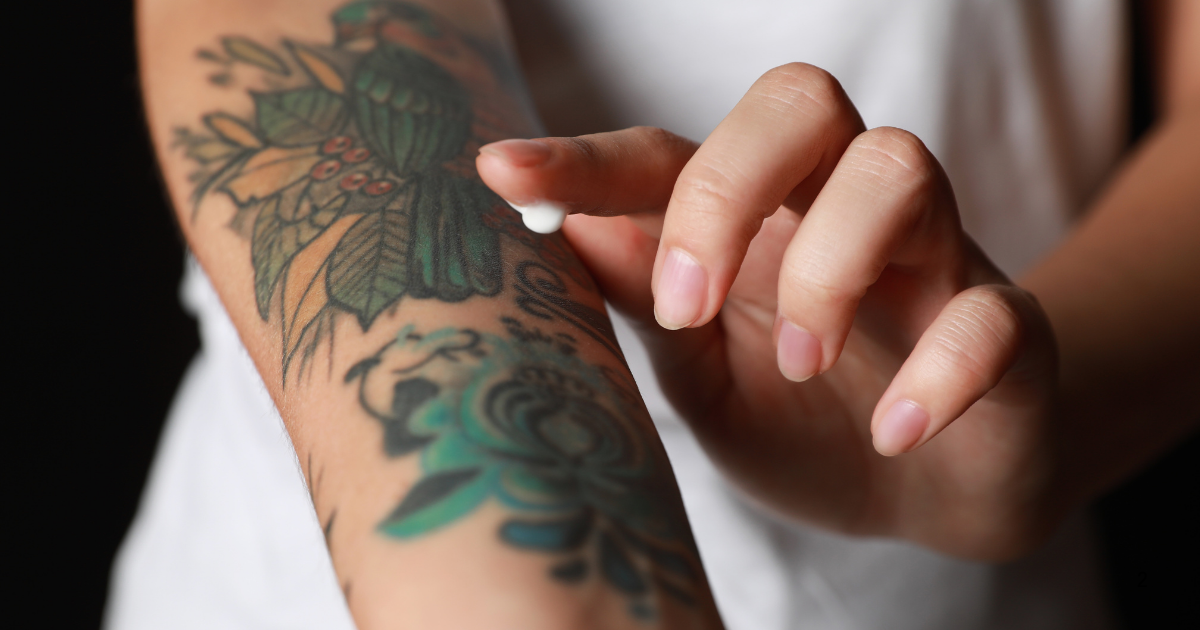
Moisturize regularly. Not for the ink, for the skin above it. Well hydrated skin is more transparent and lets the tattoo read clearly. Dry, flaky skin over a perfectly good tattoo makes it look faded when it is not.
Get the linework refreshed when it needs it, not when it is desperate. A piece that has softened can be brought back by an artist going over the lines. Done early it is a short session. Left until the design is hard to read it becomes a much bigger job, and sometimes a redesign.
When to Come Back to Us
Send us a photograph rather than making the trip if you are unsure whether something needs work. Most of the time the answer is that it looks entirely normal for its age.
Come in if the linework has softened to the point where the design is losing its shape, if colour has dropped out unevenly in patches, or if you want to build on an existing piece and need it tidied first.
If you have had a piece for years, are happy with it, and it simply looks like a tattoo of its age, that is not a problem to be solved.
What We Would Tell a Friend
Strip everything above away and the advice is four sentences.
Put sunscreen on it when it is out in the sun, every time, and keep doing that for as long as you have it. Moisturize it as part of whatever you already do rather than as a separate chore. Do not read too much into how it looks on a dry day in February. Get the lines refreshed when the shape starts to go, and not before.
Everything else on this page is context for why those four things are the ones that matter.
Bottom Line
Sun does nearly all the damage. Everything else on the list is minor by comparison, and most of it comes down to keeping the skin above the ink in good condition rather than protecting the ink itself.
Sunscreen, moisturizer, sensible placement away from constant friction, and a linework refresh every decade or so if you want it sharp. That is the whole of tattoo maintenance.
Bring us a photograph any time you are unsure and we will tell you honestly whether it needs anything.
FAQ
Will swimming fade my tattoo?
Not meaningfully once it is healed. Chlorine and salt dry the skin, which makes a tattoo look duller, and rinsing and moisturizing deals with that. The sun you get while swimming does far more damage than the water.
Do I really need sunscreen on a tattoo every time?
Whenever it is exposed, yes. Ultraviolet light breaks pigment into fragments small enough for your body to remove, and it damages the structure holding the ink in place.
Is tattoo specific sunscreen worth buying?
No. Any good high factor sunscreen works. The important part is applying it and reapplying it.
Will going to the gym affect my tattoo?
Sweat does nothing. Repeated friction from equipment or straps in the same spot can roughen the skin over time, which is worth knowing when choosing placement.
My tattoo looks dull but I have not been in the sun much. Why?
Usually dry skin rather than faded ink. Regular moisturizing often brings a tattoo back noticeably within a fortnight.
How often should a tattoo be touched up?
There is no schedule. Have the linework refreshed when the design starts losing its shape, which for most well placed pieces is a matter of many years.
Does weight change ruin a tattoo?
Gradual changes usually have little effect. Large or rapid changes distort designs, most noticeably on the abdomen, hips and upper arms.
Can I use a tanning bed with tattoos?
Cover them. The exposure is concentrated and it does more harm in less time than ordinary sun.