Ear Stretching and Gauges

Ear Stretching, Honestly
Stretching an earlobe is one of the few body modifications where the outcome depends almost entirely on patience. Done slowly it is safe, comfortable and reversible for a surprisingly long way. Done in a hurry it causes damage that does not undo.
Almost everything below is a version of go slower than you want to.
The Vocabulary
Gauge is the measurement, and it runs backwards — the higher the gauge number, the thinner the jewellery. A standard lobe piercing is usually 20g or 18g. Stretching goes 16g, 14g, 12g, 10g, 8g, 6g, 4g, 2g, 0g, 00g, and then it switches to millimetres and inches and gets larger from there.
A Plug is solid. A Tunnel is Hollow. Both do The Same Job.
A taper is the tool used to move up a size — a cone that goes in narrow and widens.
The Rules That Actually Matter
One size at a time. Never skip. Skipping is the single most common cause of permanent damage. The jump between sizes is small for a reason.
Wait at least a month between sizes, and longer as you get bigger. Six weeks and then two months is a more realistic pace past 2g. Your lobe needs to fully settle at each size before it is asked to do anything else — not just feel fine, but genuinely recover.
It should never hurt. Pressure, yes. A stretching sensation, yes. Pain means stop. Pain is tissue tearing, and tearing is how you get scar tissue, which stretches badly and unevenly forever after.
No blood. Ever. If you see blood, you have gone too fast. Go back down a size and wait.
Lubricate. Jojoba oil or a similar unscented oil on the taper and the jewellery. Dry stretching tears.
Never force a taper through. If it does not go with gentle, steady pressure, you are not ready.
What Not To Do
Do not use tape wraps as a shortcut. Taping — adding thin layers of PTFE tape to a plug to creep up gradually — is a legitimate method used carefully, and it is also how impatient people make micro-tears they cannot feel. If you use it, add one layer at a time and wait between.
Do not stretch a fresh piercing. A new lobe needs to be fully healed first — months, not weeks.
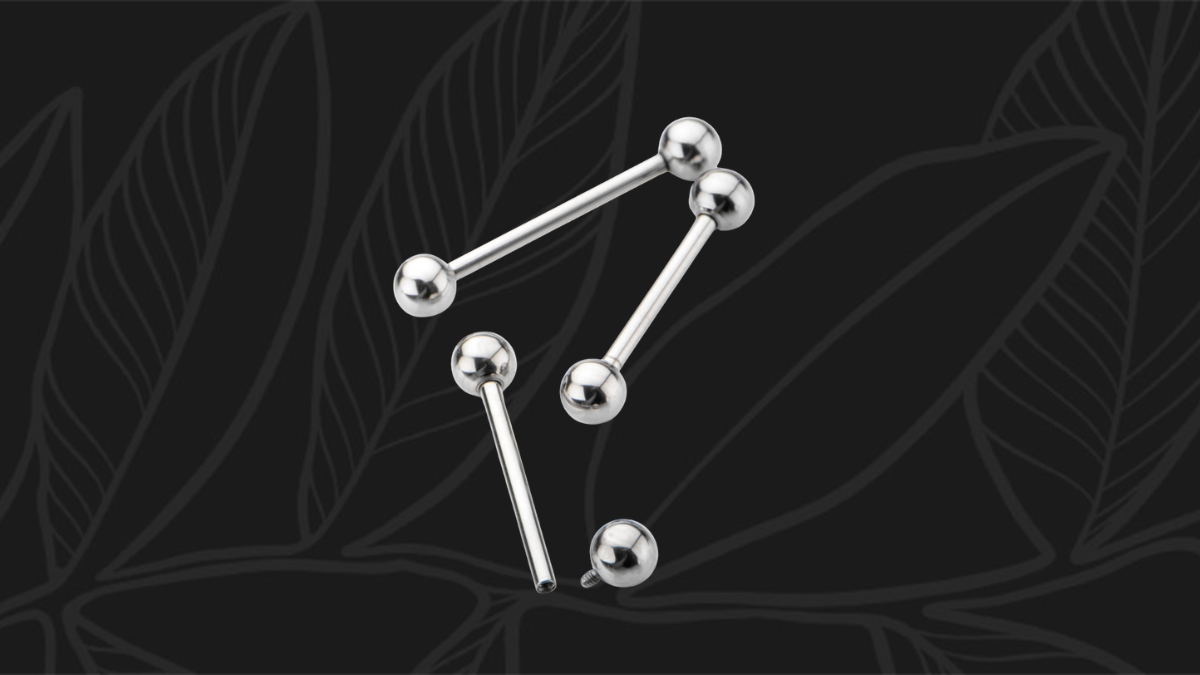
Do not use acrylic or silicone while stretching. Acrylic is porous and can crack; silicone grips the tissue and prevents air getting to it. Both are fine in a fully healed, settled lobe. Neither belongs in a lobe that has just been sized up. Use implant-grade titanium, surgical steel of a stated grade, or single-flare glass for stretching and for the settling period after.
Do not sleep in heavy jewellery early on. Weight stretches the bottom of the lobe unevenly and thins it.
The Blowout, Which Nobody Warns You About
This is the specific injury of stretching, and it is worth being able to recognize.
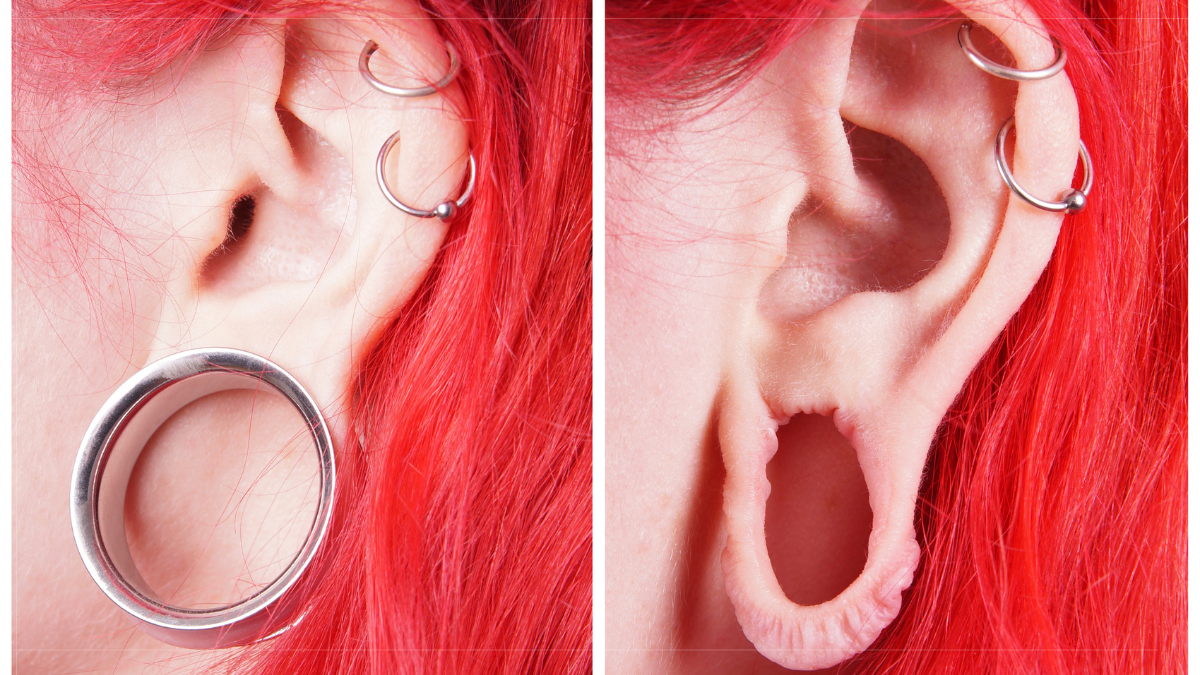
A blowout is when the inside of the piercing channel gets pushed out through the front, forming a raised lip of tissue around the outside of the hole — it looks like a small flesh-coloured ring turned inside out.
It is caused by going too fast, skipping a size, or forcing a taper. It is not an infection.
If you get one: take the jewellery out or go back down a size immediately, massage the lobe with oil, and wait. Caught early many blowouts recede. Left in place and pushed further, they scar permanently.
The Point of No Return
This is the fact people most want and are least often told plainly.
Up to somewhere around 0g to 00g, most lobes will shrink back close to normal if you take the jewellery out and give it months. Not always to invisible — often a slightly thickened or slightly larger hole — but close.
Past that, most will not. Somewhere in that region the lobe stops having enough elasticity to recover, and closing it becomes a surgical repair rather than a matter of waiting.
The exact point varies by person, and nobody can tell you yours in advance. Treat 0g as the honest decision point, and go past it knowing it is probably permanent.
Looking After Stretched Lobes
Massage them. Oil, two or three minutes, most days. It keeps the tissue supple and it is the single best thing you can do for the long-term health of a stretched lobe.
Clean them. Stretched lobes accumulate dead skin and oil — the smell people joke about is real and it is just hygiene. Warm water and unscented soap, and take the jewellery out to wash it.
Watch the thickness at the bottom. If the lobe is thinning below the hole, stop stretching. That is the tissue telling you it is at its limit, and pushing past it is how lobes tear through.
Downsizing and Going Back
If you want to come back down, do it as gradually as you went up. Drop a size, wait, drop again.
Massage matters more here than anywhere.
At Perfect Image
We can talk you through a stretching plan, tell you honestly whether your lobes look like good candidates, and sell you properly specified jewellery at each size rather than a mystery-metal kit.
Come in if something looks wrong. A blowout caught early is usually recoverable. A blowout that has been pushed through two more sizes is not. There is nothing to pay for a look.
We would also rather do the stretch for you at the sizes where it matters than have you force a taper at home.
Bottom Line
One size at a time, a month minimum between, never any pain and never any blood, always lubricated, and implant-grade metal or glass rather than acrylic while you are moving. Treat 0g as the point past which it is probably permanent. And massage them — it is the thing that decides how your lobes look in twenty years.
FAQ
How long does it take to stretch to 0g?
Realistically a year or more if you do it properly. Faster than that is how damage happens.
Will my ears go back to normal?
Usually up to around 0g. Past that, often not.
Does stretching hurt?
It should not. Pressure yes, pain no. Pain means stop.
What is a blowout?
The inside of the channel pushed out through the front. Caused by rushing. Go down a size immediately.
What jewellery should I stretch with?
Implant-grade titanium, stated-grade steel, or single-flare glass. Not acrylic or silicone.
Can I stretch a new piercing?
No. It must be fully healed first — months.