Helix Piercings: What You Should Know

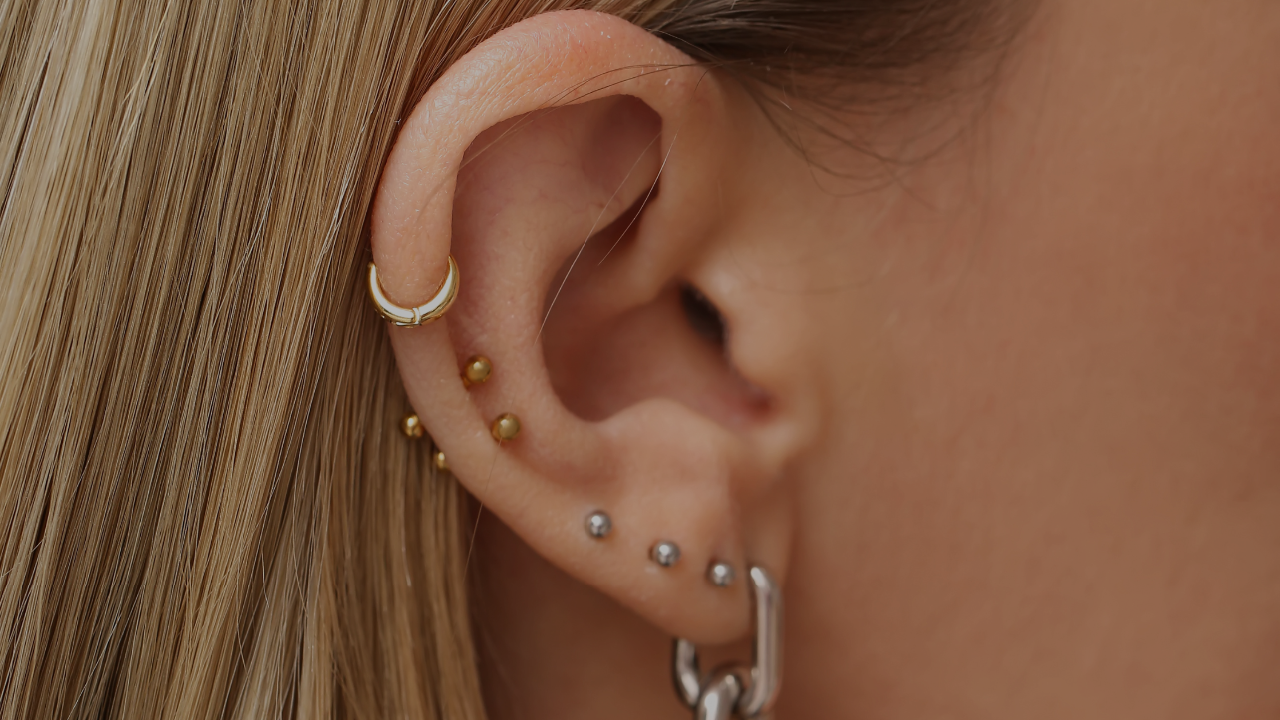
A helix piercing goes through the upper outer rim of the ear. It is the most popular cartilage piercing there is, it suits almost every ear, and it takes six to nine months to heal rather than the few weeks people expect from a lobe.
That last part is the whole article. Everything that goes wrong with a helix goes wrong because somebody treated a nine month heal like a six week one.
We pierce a great many of these across our studios, and the ones that settle beautifully and the ones that give trouble are separated by about four decisions, all of which are made in the first fortnight.
Where it Sits, and its Variations
The helix is the curved outer rim of the ear, running from just above the lobe all the way round to where it meets the head. That is a long stretch of cartilage, which is exactly why the piercing is so flexible.
Standard helix. Anywhere along the upper outer rim. The default, and the most popular option.
Forward helix. The short section of rim at the front of the ear, closest to your face, sitting above the tragus. A different piercing with a different character, covered properly below.
Double and triple helix. Two or three piercings along the rim, spaced deliberately. Almost always better done in one sitting than added one at a time, for reasons of spacing that matter more than they sound.
Flat helix. Strictly a different placement, on the flat plane of cartilage inside the rim rather than on the rim itself. Often grouped with helixes in conversation.
There is no correct height. Where a helix looks best depends on the shape of your ear, where your rim is most pronounced, and what else you have or plan to have. This is worth thirty seconds with a mirror and a piercer rather than a decision made from a photograph of somebody else's ear.
"Cartilage Piercing" VS "Helix Piercing"
Worth clearing up first, because it confuses a lot of people and the words get used as though they were alternatives.
Cartilage is a material, not a placement. It is the firm tissue that gives the upper ear its shape. Everything above the soft lower lobe is cartilage.
Helix is a specific placement, on the upper outer rim, and it happens to be made of cartilage.
So a helix piercing is a cartilage piercing. So is a conch, a rook, a daith, a tragus, an industrial and a flat. When somebody says they are getting "a cartilage piercing" they almost always mean a helix, because it is the most common one by a wide margin, but the phrase does not name a location.
Why the distinction is worth having. If you ask for "a cartilage piercing" you have not told a piercer where you want it, and there are ten or more answers. Naming the placement gets you a better conversation and a better result. If you are not sure which placement you want, our guide to ear piercing types goes through every one of them with a chart.
The one thing the confusion does get right is the important part. Every one of those placements behaves like cartilage rather than like a lobe, and that is what the next section is about.
Why Cartilage is a Different Proposition
Your lobe is soft tissue with a generous blood supply. It heals in six to eight weeks and forgives most things.
The helix is cartilage. Cartilage is firm, and it has a poor blood supply, which means the cells that repair damage and fight infection arrive slowly and in smaller numbers. That single fact produces every practical difference.
It takes six to nine months, not six weeks. And that is the visible part. The channel continues maturing underneath after the outside looks settled.
It is less forgiving of being knocked. A lobe absorbs a bump. Cartilage responds to repeated pressure by producing scar tissue, which is what a piercing bump usually is.
It punishes bad jewellery harder. Poor material or the wrong length causes a reaction in cartilage that a lobe would have shrugged off.
It cannot be rushed and cannot be undone quickly. A cartilage piercing that goes badly leaves a mark on the visible rim of your ear, and cartilage that dies from a serious infection changes the ear's shape permanently. That is uncommon and it is the reason we use needles rather than anything blunt, which our comparison of needles and piercing guns goes through in full.
Sleeping is Hard, and Nobody is Prepared for it
Ask anybody who has healed a helix what the difficulty was and they will not say the piercing. They will say the pillow.
You spend a third of your life pressing one side of your head into something, and a fresh helix sits exactly where that pressure lands. Sustained pressure is the single biggest cause of a helix migrating, developing a bump or simply staying angry for months.
Three things help and they are worth doing from night one.
Pierce the side you do not sleep on. If you consistently sleep on your right, get the left done. This is the easiest decision in the whole process and it is available only before you are pierced.
Use a travel pillow. The doughnut shaped kind, with your ear in the hole. It looks ridiculous and it works better than anything else. People who do this heal noticeably more smoothly than people who do not.
Change your pillowcase often. More often than feels necessary. It is against your healing piercing for eight hours a night.
If you want two helixes and you sleep reliably on one side, doing them both on the other ear is a genuinely sensible plan.
The Jewellery Decides the Outcome
More helix problems trace back to jewellery than to anything the piercer did.
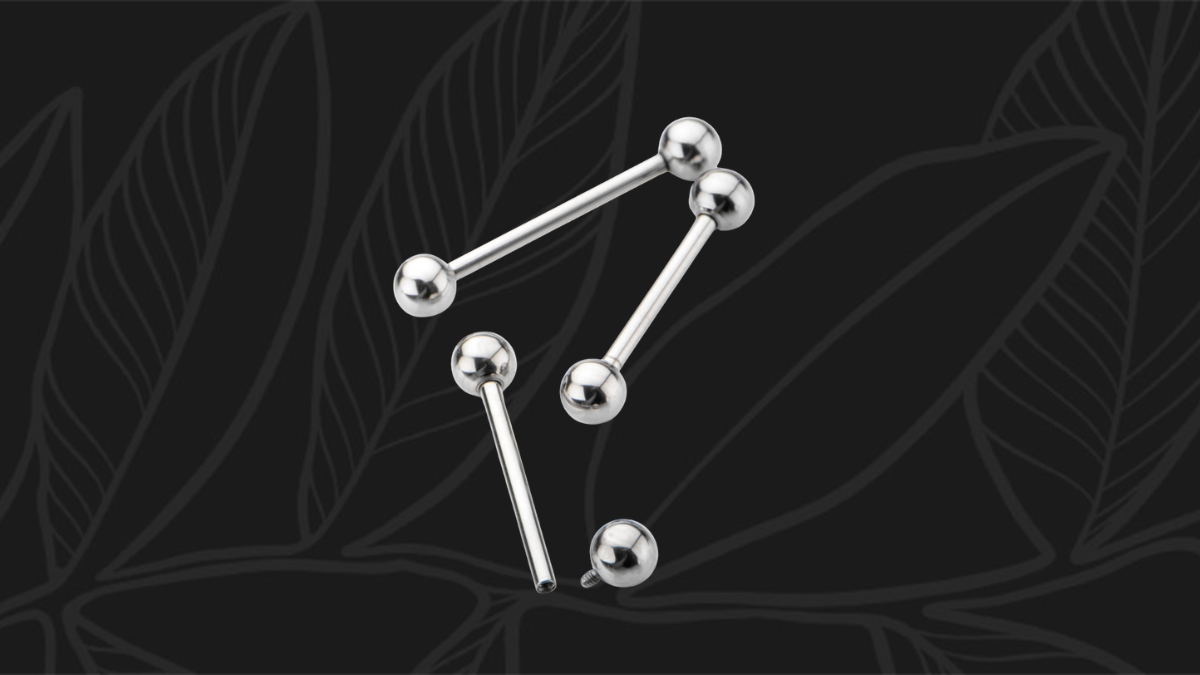
A flat back labret, not a ring. A fresh helix should be pierced with a flat back stud. A ring moves constantly as the ear moves and as it catches, and that movement is what irritates a healing channel. It also enters and exits at an angle that the healing channel has to accommodate. Rings are for healed piercings and they look excellent then. Wait.
Long enough for swelling, then shortened. The initial post is deliberately longer than the one you end up with, because cartilage swells and the swelling needs somewhere to go. Jewellery that is correctly sized on day one is too short by day three and presses into the tissue on both sides. Once the swelling has resolved, you come back and it is swapped for a shorter post. That appointment is short and it is the difference between a piercing that behaves and one that develops a bump.
Implant grade material. The standard worth asking for by name is ASTM F136 titanium. It contains no nickel in its composition and forms a stable oxide layer, which is the actual reason it sits so well in fresh cartilage. Our comparison of titanium, steel and gold goes through the alternatives.
Threadless or internally threaded. Externally threaded jewellery has the screw thread on the part that passes through your piercing, dragging over healing tissue every time it goes in or out. It is a small detail with a real effect.
The Forward Helix
The forward helix sits on the short front section of rim, above the tragus, facing forward rather than sideways.
It is a beautiful placement, particularly stacked in twos or threes, and it is one of the more reliably good looking arrangements available. It also asks more of you.
It needs the anatomy. You need a pronounced enough fold at the front of the rim. Some ears have a generous ridge there and some barely have one. A piercer will look and tell you honestly, and if yours is shallow the piercing will sit under tension and is more likely to migrate.
It heals more slowly than a standard helix, often taking closer to a year. The tissue is tighter and there is less room around it.
It is in the firing line. Glasses arms, masks, hair, headphones and the side of a pillow all pass directly over it.
Stacked ones should be done together. Spacing two or three evenly on a short section of rim is a single design decision. Adding the second later means matching against a piercing that may have settled a millimetre from where it started.
What Normal Healing Looks Like
Knowing the normal version is what stops people panicking and, more usefully, stops them ignoring something real.
First week. Tender, a bit swollen, pink around the entry and exit. Some clear or straw coloured fluid that dries into a crust. This is the piercing behaving correctly.
Weeks two to six. Swelling settles. Crusting continues on and off. It stops being something you notice constantly.
Two to six months. It looks finished. It is not finished. This is the stage where people change the jewellery, sleep on it or start twisting it, and it is where most trouble begins.
Six to nine months. The channel matures internally. Now jewellery can change, and a ring becomes an option.
Throughout, the rule is the same. Clean it with sterile saline, leave it otherwise alone, and do not turn or twist it. Turning jewellery was standard advice a generation ago and it is now understood to tear the delicate tissue trying to form the channel.
Bumps, a Common Complaint
Sooner or later a lot of helixes develop a small bump beside the piercing. It causes a great deal of worry and it is usually the least serious thing it could be.
Irritation bumps are the common kind, caused by pressure, movement, a knock, jewellery that is too long or the wrong angle. They are a response to a mechanical problem. Remove the cause and they resolve, though slowly.
Keloids are genuinely rare, are a different tissue response, keep growing, and need medical attention. Most things called keloids online are irritation bumps. Our article on keloids and piercing covers the distinction.
The important part is that a bump is information. It means something is repeatedly disturbing the piercing, and the useful response is to work out what rather than to attack the bump. Come in and have it looked at. Ninety percent of the time the answer is jewellery that needs shortening or a sleeping position, and both are fixable.
Where a Helix Sits in a Bigger Plan
Most people getting a helix are not getting only a helix, even if they think they are today. It is worth two minutes of thought before the first one, because the rim is the part of the ear everything else is arranged around.
A helix anchors the upper ear. Where you put the first one sets the spacing for anything that follows along the rim, and it also sets the height that a flat, a conch or a forward helix will read against. A helix placed without any thought about the rest is the most common reason a second piercing later has to sit somewhere slightly awkward.
Spacing is easier to design than to match. Two piercings placed in one sitting are measured against each other on a live ear. A second placed a year later is measured against a piercing that has settled, possibly a fraction from where it began, and the eye is remarkably good at catching an uneven pair.
Say what you might want, even if you are not booking it. Telling a piercer "I may want a second one and eventually a conch" costs nothing and changes where they place today's piercing. It is the single most useful sentence at a helix consultation and almost nobody says it.
Our guide to ear piercing types goes through every placement and how a full ear is planned in order.
What it Costs You in Practical Terms
Not money, which varies. Time and habit.
Nine months of not sleeping on that side. Nine months of being careful pulling jumpers over your head. A change of pillowcase habit. One return visit for the downsize, and one more when it is fully healed if you want to move to a ring. Care with hair dryers, towels and anything that catches.
None of that is hard. All of it is longer than people plan for, and planning for it is most of what separates a good outcome from a frustrating one.
Bottom line
A helix suits almost everybody and asks for patience rather than skill from you. Pierce the side you do not sleep on, take the flat back stud rather than the ring you actually want, come back for the downsize when you are told to, and leave it alone for considerably longer than it looks like it needs.
If you want two or three, have them done in one sitting so the spacing is designed rather than matched. If you want a forward helix, have somebody look at whether your ear has the ridge for it before you set your heart on it.
And if a bump appears, do not go looking for a cure online. Bring it in. It is almost always telling you something simple about pressure or jewellery length, and that is a five minute conversation rather than a problem.
FAQ
How much does a helix piercing hurt?
A brief sharp pinch, noticeably more than a lobe because cartilage is firm, and over in about a second. Most people find the anticipation worse than the event. The days afterwards are a dull soreness rather than pain.
When can I change the jewellery?
Not until it is fully healed, which is six to nine months. The downsize appointment, where a shorter post replaces the longer starter one, happens much earlier and is done by your piercer rather than by you.
Can I get a ring straight away?
We would advise against it. A ring moves as the ear moves and catches on things, and that movement is what irritates a healing cartilage channel. Rings look excellent in a healed helix.
Can I do two or three at once?
Yes! However, there is more swelling in one area at once, so it makes the first fortnight more demanding.
Why does my helix have a bump?
Almost always irritation from pressure, movement or jewellery that is too long, rather than anything serious. Have it looked at rather than treating it, because the useful fix is removing whatever is disturbing it.
Which side should I get pierced?
The side you do not sleep on, if you have a strong preference. It makes more difference to your healing than any other single choice available to you.
Can I wear headphones?
Over-ear ones press directly on a helix and are worth avoiding early on. Earbuds are generally fine for a helix, though they sit right on a tragus, so it depends which piercing you have.
Will it close if I take the jewellery out?
A healing cartilage piercing can close surprisingly fast, within hours early on. A fully healed one is more stable but still not permanent. If you need it out temporarily, ask about a retainer rather than leaving it empty.