Keloids and Bumps: What Is Actually Going On

If you have a lump beside a piercing and you have been searching for what it is, here is the most useful sentence you will read today. It is almost certainly not a keloid.
True keloids are uncommon. The bumps that appear next to cartilage piercings are overwhelmingly one of two other things, both of which are far more manageable and neither of which is permanent. People panic because the internet uses the word keloid for everything, and that panic leads to bad decisions, most commonly taking the jewellery out at exactly the wrong moment.
Here is what the different bumps actually are, how to tell them apart, and what to do.
Things People Mistake For a Keloid
1. Irritation Bumps
This is what you almost certainly have.
An irritation bump is a small, soft, sometimes reddish or purplish lump sitting right beside the piercing hole. It appears because the piercing is being physically disturbed, and it is your body reacting to repeated trauma rather than to the jewellery itself.
They are extremely common on cartilage. Helix, conch, tragus and daith piercings all produce them regularly, usually somewhere between week three and month four, and usually because of something entirely mundane.
The good news is that they resolve. Remove the cause and the bump goes away over weeks. They do not scar permanently and they do not mean the piercing has failed.
2. Hypertrophic Scars
A hypertrophic scar is raised scar tissue that forms in response to prolonged irritation. It sits on the piercing site itself rather than beside it, it is firmer than an irritation bump, and it stays within the boundary of the original wound.
These take longer to settle, sometimes many months, and they can flatten considerably once whatever was irritating the piercing is dealt with. They are more stubborn than an irritation bump and far less serious than a keloid.
Actual Keloids
A true keloid is scar tissue that keeps growing beyond the original wound. That is the defining feature. It spreads past the edge of the piercing site into skin that was never injured, it is firm and rubbery, it is often shiny, it can be considerably larger than the piercing that started it, and it does not resolve on its own.
Keloids do not appear in a fortnight. They develop over months and continue growing. They are strongly influenced by genetics, they run in families, they are more common in some skin tones than others, and they occur far more often on the chest, shoulders, upper back and earlobes than on other areas.
If you have never had one from any previous wound, surgery, vaccination or piercing, your chances of one appearing now are low.
How to Tell Them Apart
Ask yourself three questions.
1. Is it beside the hole or on it? Beside suggests irritation. On the site itself suggests scar tissue.
2. Is it staying within the area of the original piercing, or spreading past it? Staying within is hypertrophic at worst. Spreading beyond, into undamaged skin, is what makes something a keloid.
3. How long has it taken to appear and is it still growing? Something that arrived in a few weeks and is stable is almost certainly irritation. Something that has been growing steadily for months and shows no sign of stopping needs a doctor.
If you can answer those, you probably already know which one you have.
What Causes these Common Bumps
Nearly every irritation bump we see traces back to one of these.
Sleeping on it. By far the most common cause for ear piercings. Eight hours a night of pressure against a pillow is more trauma than anything else in a piercing's life. A travel pillow with the hole positioned over the ear solves it.
The jewellery is too long. After the initial swelling goes down, the extra length that saved your piercing in week one becomes a lever that catches on everything. This is why downsizing matters and why we ask you to come back for it.
The jewellery is the wrong material. Nickel bearing jewellery keeps the site irritated indefinitely, and no amount of aftercare fixes a metal problem.
Angle and pressure. A piercing placed at an angle the anatomy does not support puts constant pressure on one side. That is a placement problem and it shows up as a bump on the side taking the pressure.
Over cleaning. Cleaning three or four times a day, or with anything harsher than saline, keeps the site perpetually irritated. Twice a day with sterile saline is enough.
Everyday snagging. Hairbrushes, jumpers, towels, headphones, masks, glasses arms and phone screens all catch cartilage piercings constantly.
What to do About a Bump
Do not take the jewellery out. This is the instinct and it is usually wrong. Removing jewellery from an irritated piercing can let the surface close over tissue that is still inflamed, trapping the problem underneath, and it usually means the piercing is lost.
Find the cause rather than treating the bump. Almost every effective fix is mechanical. Stop sleeping on it, downsize the jewellery, change the material, stop catching it. Bumps disappear when the thing causing them stops.
Come in and let us look. We can tell you in a minute whether the jewellery needs shortening, whether the angle is the problem, or whether it is simply time and patience. There is no charge for looking.
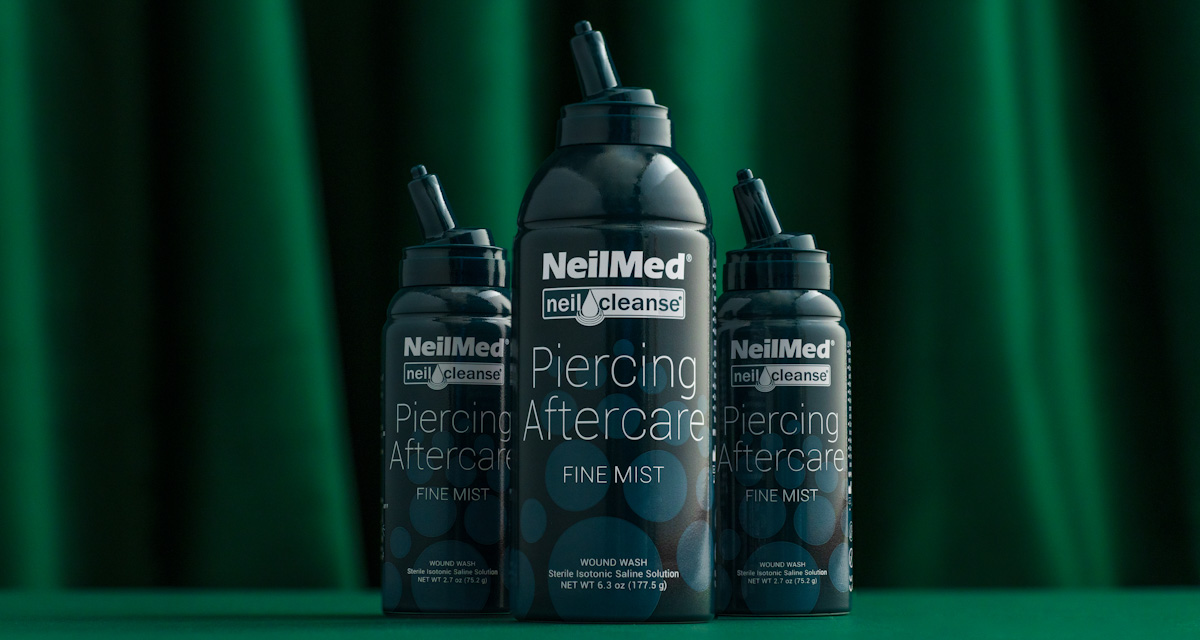
Leave saline as your only product. Sterile saline twice a day. Nothing else. Not tea tree oil, not alcohol, not peroxide, not aspirin paste, not any of the remedies that circulate online. Every one of them irritates tissue that is already irritated, and several of them do real damage.
Give it weeks, not days. Irritation bumps take a few weeks to settle once the cause is removed. Nothing makes them vanish overnight and anything claiming to will make things worse.
Why the Internet Makes this Worse
It is worth understanding why almost everybody arrives at this subject frightened, because the fear itself causes bad decisions.
Search for a bump next to a piercing and you will be shown photographs of the worst outcomes anyone has ever posted. That is not a conspiracy, it is simply how images spread. Nobody photographs the ordinary bump that showed up in week six and had gone by week ten, because there is nothing to say about it. The dramatic ones get shared, saved and reposted for years, and they become the whole visual record of the subject.
The word itself compounds the problem. Keloid gets used loosely for any raised lump anywhere near a piercing, in comment threads, in captions and in a great many articles written by people who have never seen one. Once you have the word in your head, everything you find confirms it.
Then the advice arrives, and the advice is where the real damage happens. Crushed aspirin, tea tree oil, apple cider vinegar, chamomile compresses, pressure discs bought online, and a general instruction to be more aggressive with cleaning. Every one of those irritates tissue that is already irritated. A bump caused by trauma being treated with more trauma is the most common way a small problem becomes a long one.
The person with a two month old irritation bump who has been treating it with three products for six weeks has usually made it considerably worse than the person who did nothing at all.
A Short Timeline for What Normal Actually Looks Like
Knowing the expected shape of things stops a lot of unnecessary worry.
Week one to two. Swollen, tender, some clear fluid that dries into crust. Normal. The jewellery looks too long because it is meant to be.
Week three to six. Swelling settles. This is when the jewellery should be downsized. It is also the window where irritation bumps most commonly appear, usually because the piercing is being slept on or caught.
Month two to four. Tenderness comes and goes rather than steadily improving. That is normal for cartilage and surprises people who expected a straight line. Odd flare ups after a knock, a haircut or a bad night's sleep are expected.
Month four to twelve. Gradual settling. Cartilage takes far longer than people are told, and a piercing that still objects occasionally at eight months is not failing.
Beyond a year. Fully settled for most cartilage placements. Jewellery can be changed freely.
Against that timeline, a bump at week five is unremarkable. A firm lump that has been growing steadily since month three and is now larger than the piercing is the one that needs a doctor.
When to See a Doctor Rather Than Us
We can look at anything and tell you what we think it is. There are things that are not ours to treat.
See a doctor if the lump has been growing continuously for months and has spread beyond the original piercing site. See one if there is spreading redness, heat, thick coloured discharge, pain that is increasing rather than fluctuating, or a fever, because that is infection rather than irritation and it needs treating properly. See one if you have a known history of keloids and something is forming.
Come to us for everything mechanical. Jewellery that is the wrong length, the wrong material, the wrong shape or sitting at the wrong angle is our job, and it is the cause of most bumps.
If You are Genuinely Prone to Keloids
Some people are, and it is worth planning around rather than gambling on.
Tell your piercer before anything is done. That is the whole of the advice. It changes which placements are sensible, it changes the conversation about jewellery, and it may change whether a particular piercing is a good idea at all.
Earlobes and cartilage on the ear are among the more common sites for keloids in people who form them. If you have keloided from a previous ear piercing, a second attempt at the same area is a real risk.
A dermatologist is the right person for an existing keloid. There are treatments, they work with varying success, and none of them is something a piercing studio should be attempting.
None of this means you cannot be pierced. It means the decision should be made with the information on the table.
What We Do to Reduce the Odds of a Bump
We fit jewellery long enough for swelling and then bring you back to downsize it, because a long bar left in place is the single most common mechanical cause of bumps.
We use implant-grade titanium so the material is never the problem.
We assess the angle and the anatomy before piercing, because a piercing placed where the tissue does not support it will be under pressure from the first day.
We tell people to sleep with a travel pillow for the first few months, and the people who actually do it have noticeably fewer problems than the people who nod and forget.
One Thing Worth Buying,
A travel pillow. The kind with a hole in the middle, sold for long flights.
Put your ear in the hole and the piercing touches nothing all night. It removes the single largest source of trauma for every ear piercing there is, and it costs less than any of the creams and oils people buy instead.
We mention it in the studio and roughly half the people who hear it actually do it. The half who do have visibly fewer problems at their downsize appointment than the half who do not, and that difference is consistent enough that it is the first thing we suggest whenever somebody comes in with a bump on a helix or a conch.
Bottom Line
Most piercing bumps are irritation, not keloids. Irritation bumps sit beside the hole, appear within weeks, and disappear when whatever is disturbing the piercing stops. Hypertrophic scars are firmer, sit on the site, and settle more slowly. True keloids spread beyond the original wound, keep growing over months, and need a doctor.
Do not remove the jewellery. Find the mechanical cause. Use saline and nothing else. Come and see us before you try anything you read at two in the morning.
FAQ
Is the bump next to my cartilage piercing a keloid?
Almost certainly not. Keloids are uncommon and spread beyond the original wound over months. A bump that appeared within weeks and sits beside the hole is an irritation bump.
Should I take the jewellery out?
No. Removing jewellery from an irritated piercing can trap the inflammation under a closing surface and usually costs you the piercing. Find the cause instead.
Will tea tree oil, aspirin paste or chamomile help?
No, and several of them cause harm. Sterile saline twice a day is the only thing that should touch it.
How long does an irritation bump take to go?
Usually a few weeks once the cause is removed. It will not disappear overnight and anything promising that will make it worse.
Why does sleeping on it matter so much?
Eight hours a night of steady pressure is more trauma than a piercing gets from anything else. A travel pillow with your ear in the hole removes the problem entirely.
I keloided from an earring years ago. Can I be pierced again?
Tell your piercer before anything is done. It changes which placements are sensible and whether a particular piercing is wise. It does not automatically rule everything out.
Can a keloid be removed?
That is a question for a dermatologist. Treatments exist with varying success. It is not something a piercing studio should attempt.
Does downsizing really prevent bumps?
It prevents a large share of them. A bar that is too long once swelling has gone catches on hair, clothing and pillows constantly, and that repeated snagging is what produces the bump.