Navel Piercings: What You Should Know

A navel piercing does not go through your navel. It goes through the fold of skin at the upper rim of it, and whether you have a suitable fold is the whole question.
That is the part people are least often told and it matters more than anything else here. This is not a piercing everybody can have, it is not a piercing that suits every body shape, and the ones that fail almost always failed at the assessment stage rather than during aftercare.
If you do have the anatomy, expect six months to a year of healing and a lot of thought about waistbands.
The Navel Ridge
Stand in front of a mirror and look at the top edge of your navel. What a piercer needs is a defined lip or fold of skin there, deep enough that jewellery can pass through it and sit inside it with the tissue closing comfortably around both ends.
A well defined upper fold means the piercing sits inside a natural pocket, supported on both sides, with minimal tension. Those settle well.
A shallow or absent fold means the jewellery has nothing to nestle into. It sits proud, under tension, catching on everything, and the body treats it as a foreign object sitting on the surface rather than passing through a supported channel. Those migrate.
An outward navel generally cannot be pierced conventionally, because there is no upper fold in the usual sense for the jewellery to pass through and sit inside. It is worth having looked at rather than assumed, since navels described as outward vary a great deal and some still carry a usable lip at the top edge.
How the navel sits when you are standing, sitting and bending are three different pictures, and a piercer should look at more than one. A piercing that sits beautifully standing and folds into a crease when you sit down will have a difficult year.
This is genuinely a five second assessment for somebody experienced, and it is the single most valuable part of the appointment. It is also free, and you are under no obligation to book anything once you have the answer.
Why it Heals So Slowly
Six months to a year, and often at the longer end. Three things conspire.
It sits in a hinge. Your midsection bends, twists and folds constantly. Every one of those movements moves the jewellery slightly in the channel. Piercings in areas that move heal more slowly than piercings in areas that do not, and there is very little you can do about needing to sit down.
It is under clothing all day. Every waistband, every seam and every movement of fabric passes across it.
It is a surface adjacent placement. It passes through a fold of skin rather than through cartilage or a substantial mass of tissue, which means the body has an easier time pushing it out if anything encourages that. Migration is the characteristic failure of this piercing, not infection.
Jewellery, and Mistakes People Make
A navel piercing takes a curved barbell. The curve follows the fold, and it is the reason the jewellery sits comfortably rather than levering against the tissue.
Mistake one: too thin. A fine gauge bar in tissue that moves constantly behaves like a wire under tension, concentrating pressure on a small area. A reasonably substantial gauge distributes that pressure and is a large part of why some navel piercings settle and others do not. Thinner is not daintier here, it is riskier.
Mistake two: dangly jewellery too early. The decorative hanging pieces are the reason a lot of people get this piercing, and they are the worst possible thing to put in a healing one. They swing, they add weight, they catch on waistbands, and they pull downward on the lower exit point every time you move. Wait until it is fully healed, then enjoy them.
Implant grade titanium for anything fresh. ASTM F136 by name. Our comparison of titanium, steel and gold covers what the alternatives really are.
Long enough for swelling, then shortened. Standard everywhere, and here the downsize also removes the extra length that a waistband would otherwise catch.
What You Wear Matters
This is the part that decides your first three months.
A jeans waistband sits precisely where a navel piercing is. Sitting down pushes it directly into the piercing. Bending forward folds the skin over it. Standing up drags it back across.
Wear high waisted or low waisted, not mid. The one height to avoid is the one that sits exactly on the piercing. High enough to clear it entirely or low enough to sit below it both work.
Soft fabrics for the first weeks. Stiff denim across a fresh navel piercing is a slow grinding irritation.
Be careful sitting down. Bending at the waist compresses everything, and doing it in tight clothing pushes the jewellery around inside the channel.
Seatbelts. A lap belt crosses exactly there. Worth a folded scarf or a soft layer underneath for long drives in the early weeks.
Bags with a cross body strap sit at the same height and rub with every step. Switch shoulders, or switch bags, for the first month.
Sports, Swimming and the Gym
Anything with a waistband or a bend is worth thinking about. Sit ups, rowing, cycling in a forward position, yoga with a lot of folding. None is forbidden and all of them move the piercing, so expect them to slow healing.
Swimming is out until healed. Pools, hot tubs, lakes and the sea all introduce bacteria into an open channel, and a hot tub is the worst of them because warm water is exactly what bacteria want. This is the piercing where the restriction bites hardest, because it heals for up to a year and it is the one people most want to be showing off in summer.
That timing point is worth taking seriously. If you want this healed and wearing nice jewellery for a summer, get it done in autumn. Getting it done in May means the awkward months land in swimming season.
Pregnancy
The straightforward version. As the abdomen stretches, a navel piercing comes under tension it was never designed for. Many people remove the jewellery at some point during pregnancy, and a healed piercing generally reopens or can be re-pierced afterwards. Some use a flexible retainer instead of removing it entirely.
A piercing that is still healing when pregnancy begins is a different situation and worth a conversation with us and with your own midwife or doctor.
What Normal Healing Looks Like
First fortnight. Tender, a little swollen, pink at the entry and exit, with clear or straw coloured fluid drying into a crust. Sitting down and bending both remind you it is there. Sleeping on your front is uncomfortable.
Weeks two to eight. Settles considerably. Crusting continues intermittently. The downsize to a shorter bar usually happens somewhere in here once swelling has fully resolved.
Two to six months. It looks completely finished and is not. This is where people change to dangly jewellery, go back to their normal jeans and stop the saline, and it is where most late problems start.
Six months to a year. Quiet maturation. Occasional tenderness after a knock or a long day in stiff clothing is normal and settles within a day or two.
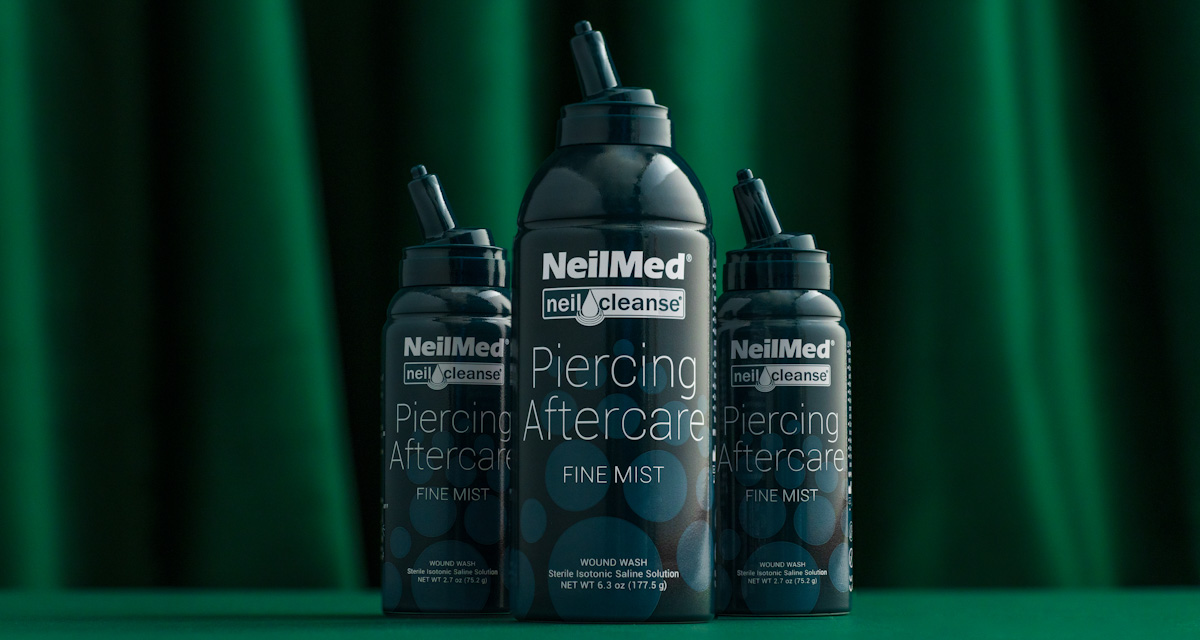
Sterile saline twice a day, and otherwise leave it alone. Do not turn the jewellery, and do not apply creams, oils or antiseptics, all of which sit in the channel and do more harm than the bacteria they are aimed at.
Different Variations
Lower navel. Through the fold at the bottom rim rather than the top. Far less common, because most navels have a much less defined fold at the bottom, so the anatomy requirement is stricter still. Some people have both, top and bottom.
Double navel. Two piercings through the upper fold, or one top and one bottom. Best done in one sitting for spacing, and it doubles the swelling in a small area during the hardest fortnight.
Floating navel. A shallower version where the bar sits closer to the surface with a smaller visible top. Whether it suits you depends entirely on the depth of your fold, and it is worth asking about specifically if a standard placement was ruled out.
Surface piercings around the navel are a different proposition entirely and behave like any surface piercing, meaning a higher rate of migration. Our comparison of dermal anchors and surface piercings covers why.
What Can Go Wrong
Migration is the characteristic problem. The jewellery slowly moves toward the surface, the skin above it thins, and eventually it works its way out. The causes are insufficient fold, jewellery too thin, heavy or dangly jewellery too early, and constant waistband pressure. Caught early, changing the jewellery can sometimes settle it. Left, it will leave two small scars.
How to spot it early. The amount of skin covering the bar is visibly reducing. The jewellery sits closer to the surface than it did. The entry and exit points are moving toward each other. Our article on why piercings reject and migrate goes through the warning signs in full.
Irritation bumps. Mechanical, same as anywhere, and here the cause is nearly always clothing.
Genuine infection is less common than migration and looks different. Spreading redness, heat, increasing rather than decreasing swelling, thick yellow or green discharge, or a fever. That is a doctor, promptly, and do not take the jewellery out first.
If you have been turned down before
A fair number of people arrive having been told no somewhere else, or having had one migrate out years ago, and both are worth a fresh look rather than being treated as settled.
A no is about today's anatomy, not a permanent verdict. Bodies change. A navel that had no usable fold at nineteen may have a perfectly good one later, and the reverse is also true. It costs nothing to be looked at again.
A migrated piercing does not rule out a second attempt. Once the original has fully healed and the scar tissue has softened, which takes months rather than weeks, a re-piercing is often possible, sometimes at a slightly different angle or depth that avoids the old channel. The important part is working out why the first one failed. If it was thin jewellery, dangly pieces too early, or a waistband, those are all fixable. If it was insufficient fold, repeating it will repeat the result.
Scar tissue behaves differently and that is worth knowing. A re-piercing through or near an old scar can be less predictable, since scar tissue is firmer and less forgiving than the original. Our article on tattooing over scars covers the same tissue behaviour from the other side of the trade.
Bring it in and let somebody look properly. It is a two minute conversation and it answers a question a lot of people have quietly given up on.
Bottom Line
Come in and have the fold assessed before you plan anything. That single check is what separates a navel piercing that settles quietly from one that spends a year migrating, and it takes seconds.
If you have the anatomy, take the plain curved bar rather than the dangly piece you actually want, get the gauge right rather than the daintiest option, come back for the downsize, and think properly about your waistbands for three months.
And book it for autumn if you can. A navel piercing wants a long quiet stretch with no swimming and soft clothing, and that is the opposite of summer.
FAQ
Can everybody get a navel piercing?
No. It needs a defined fold of skin at the upper rim of the navel to sit inside. Without that, the jewellery sits under tension and will most likely migrate. A piercer can tell you in seconds.
Does it go through the navel itself?
No. It passes through the fold of skin above it. The navel itself is not pierced.
How much does it hurt?
Most people report it as a brief, sharp pinch, generally milder than expected and easier than cartilage. It is a quick piercing.
How long does it take to heal?
Six months to a year, often at the longer end, because your midsection moves constantly and it sits under clothing all day.
When can I wear a dangly one?
Once fully healed. Hanging jewellery adds weight and swings, which pulls on the channel and is one of the more reliable ways to cause migration in a piercing that is still settling.
Can I swim?
Not until healed. That is a long time with this piercing, which is why autumn is a better time to get it than spring.
What happens if I get pregnant?
Many people remove the jewellery at some point as the abdomen stretches, or switch to a flexible retainer. A healed piercing usually reopens or can be re-pierced afterwards.
Can a migrated navel piercing be redone?
Often yes, once the original has fully healed and the scar tissue has settled, and sometimes in a slightly different position. It needs looking at in person, and it is worth working out why the first one migrated before repeating it.