Nipple Piercings: What You Should Know

A nipple piercing takes six to twelve months to heal, which is considerably longer than most people are told, and it is one of the piercings most sensitive to getting the jewellery wrong. Those two facts account for nearly everything that goes well or badly.
It is also a piercing with a lot of misinformation around it, some of it alarming and most of it wrong. This is the straightforward version, covering anatomy, healing, clothing, jewellery, sensation and the questions people are often too awkward to ask in the studio.
If you would rather ask any of this in person and privately, that is entirely normal and our piercers have the conversation every week.
Anatomy Comes Fiirst
Not everybody is suited to this piercing, and a piercer should look before agreeing to anything.
The piercing passes through the base of the nipple itself, behind it rather than through the areola. What is needed is enough tissue to hold jewellery comfortably without it sitting under tension. Nipples vary enormously in size, projection and shape, and some sit flatter or more inverted than others.
Flat or inverted nipples are not automatically ruled out. In some cases the piercing is still perfectly viable and in others it is not, and it depends on how the tissue behaves rather than on how it looks at rest. This genuinely cannot be judged from a description, which is why it is an in person conversation.
A piercer who says no is doing the job. Placing a piercing in tissue that cannot support it means near certain migration, which means the jewellery slowly works its way out and leaves scarring on a sensitive area. There is no version of this where pushing ahead is the kind answer.
Both at once or one at a time. Most people have both done in the same appointment, and symmetry is easier to achieve that way. The trade off is that everything below applies twice over for the first fortnight, and some people prefer to do one, learn how they heal, and come back.
The Piercing Itself
It is quick. The sensation is sharp and brief, and it is over, and most people describe it as considerably less bad than they had braced for.
Placement is marked and agreed while you are sitting up, because tissue sits differently when you lie down and a piercing marked lying flat can end up sitting wrong. You should be shown the marks in a mirror and be able to ask for them to be moved.
Angle matters more here than in most placements. The piercing normally sits horizontally, though the correct angle follows your anatomy rather than a rule, and a good piercer chooses it based on how your tissue sits rather than on a default.
Straight barbells, not rings. A fresh nipple piercing should have a straight barbell. Rings move constantly, put pressure on the channel from an angle, and catch on clothing far more. Rings become an option once it is healed, and plenty of people prefer them then.
Long enough for swelling. Nipples swell substantially in the first days, and the initial barbell is deliberately longer to allow for it. Once swelling settles you return and it is swapped for a shorter one. Skipping that downsize leaves a bar long enough to snag on everything, and snagging is the main cause of trouble.
Healing, Honestly
Six to twelve months, and it is not a steady line. Nipple piercings are known for settling, seeming fine, then flaring up again for a week for no obvious reason. That pattern is normal and not a sign of failure.
First fortnight. Tender, swollen, and sensitive to any pressure or contact. Clear or straw coloured fluid that dries into crust. Sleeping on your front is uncomfortable and worth avoiding.
One to three months. Settles considerably. Still tender if knocked. The crusting reduces but does not stop.
Three to twelve months. Long, quiet, unremarkable. It looks finished well before it is finished, and the internal channel is still maturing.
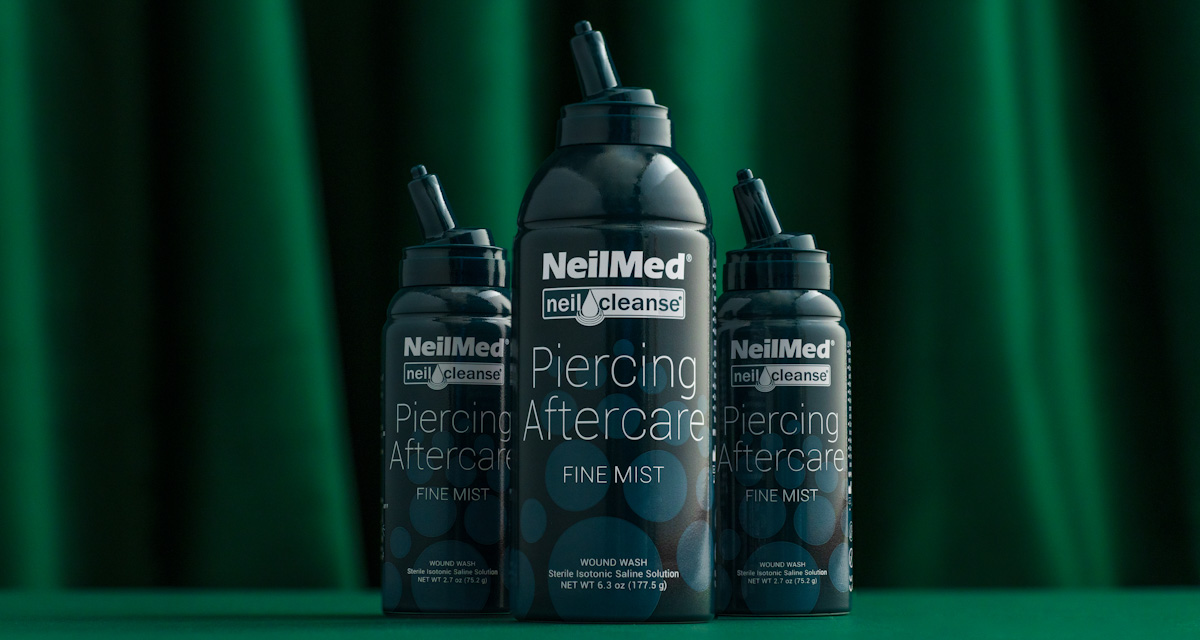
Aftercare is the same as anywhere. Sterile saline, twice a day, and otherwise leave it alone. Do not turn the jewellery. Do not use alcohol, peroxide or tea tree oil, all of which do more harm than good on healing tissue.
One thing specific to this placement. Because it heals slowly and sits under clothing, people frequently stop caring for it at three months on the reasonable assumption that it is done. That gap between looking healed and being healed is where most late problems begin.
What You Should Wear While Your Piercings Heal
Something soft and snug for the first weeks. Not tight, which presses, and not loose, which lets fabric drag across the jewellery with every movement. A soft cotton bralette or a fitted undershirt is close to ideal. The goal is holding things still.
Avoid lace, seams and anything textured near the piercing early on. Lace in particular catches the jewellery, and a snagged barbell in a fresh nipple piercing is genuinely painful and sets healing back.
Sleep in something. Most people find a soft layer at night more comfortable than nothing, because it stops bedding catching.
Be careful undressing. Pulling a top off over your head is the single most common way people snag a fresh nipple piercing. Slow down for a few weeks.
Jewellery
Gauge matters here, and thinner is not better. A nipple piercing wants a reasonably substantial bar rather than a fine one. Thin jewellery in tissue that moves acts like a cheese wire over time, concentrating pressure on a small area and encouraging the body to push it out. Most of the migration we see traces back to jewellery that was too thin rather than to anything about the piercing.
Implant grade titanium for anything fresh. The standard to ask for by name is ASTM F136, which contains no nickel in its composition and forms a stable oxide surface. Our comparison of titanium, steel and gold goes through why that matters and what the alternatives really are.
Threadless or internally threaded. Externally threaded jewellery carries the screw thread on the section that passes through the piercing, which drags across healing tissue on every insertion. On a piercing this slow to heal, that is worth avoiding.
Flat discs and smooth ends. Whatever sits on the ends should be smooth and low profile while healing. Decorative ends with texture, gems in raised settings or anything with an edge give clothing something to catch on, and catching is the main enemy here.
Rings later, and they are worth waiting for. A great many people want rings and rings look excellent in a healed nipple piercing. In a fresh one they rotate, tug and press at angles the channel is still trying to form around.
Timing It Well
Two things about when to have this done, both of which people wish they had considered.
Season matters more than you would think. Healing runs across six to twelve months either way, but the first month is much easier in cool weather, when clothing is soft and layered and swimming is not on the agenda. Getting this done at the start of summer means the awkward fortnight lands during beach and pool season, and a fresh nipple piercing cannot go in water at all.
Avoid the run up to anything you cannot dress freely for. A wedding, a holiday, a competition. The piercing is fine under clothing after the first weeks, but the first weeks want soft fabric and no lace, and that constrains what you can wear at exactly the wrong moment.
There is no rush on any of this. A piercing you waited two months to book heals exactly the same as one booked in a hurry, and the wait costs nothing.
Sensation, and the Questions People Do Not Ask
Does it change sensitivity? Most people report increased sensitivity, particularly during healing when the area is simply more responsive to everything. Long term experiences vary and there is no single answer. Reduced sensation is uncommon and usually associated with a piercing that has been damaged rather than one that healed cleanly.
Does it hurt afterwards? Tender rather than painful, easing steadily. Cold weather can make a healing nipple piercing ache, which surprises people.
Can I exercise? Yes, with support. A well fitted sports bra or a fitted top holds everything still, which is exactly what a healing piercing wants. Swimming is the exception worth avoiding until it is healed, since pools, lakes and hot tubs all introduce bacteria into an open channel.
Breastfeeding, which comes up constantly
Two separate questions get tangled together here, so it is worth taking them apart.
Can you breastfeed with healed nipple piercings? Generally yes. The piercing passes behind the nipple and does not remove milk ducts. Many people breastfeed without difficulty afterwards.
Should the jewellery be removed for feeding? Yes, without exception, every time. Jewellery in a nipple during feeding is a choking hazard and can injure the baby's mouth. It comes out for each feed.
Two honest caveats. Milk can occasionally leak from the piercing channels during feeding, which is harmless but surprising. And a piercing that healed badly, migrated, or produced significant scar tissue can in some cases affect milk flow. That is an argument for having it done properly rather than an argument against having it done.
If you are planning a pregnancy soon, it is worth knowing that a piercing needs to be fully healed before that stage, and that many people remove the jewellery during pregnancy as the tissue changes. Talk to us and to your own midwife or doctor rather than deciding from a forum.
What Can Go Wrong
Snagging. The most common problem by a distance, and almost always clothing rather than anything more dramatic. It causes a setback of a week or two rather than a disaster, and the fix is jewellery of the right length, smooth ends, and slowing down when you take a top off over your head.
Migration. The jewellery slowly moves as the body pushes it toward the surface. Usually caused by insufficient tissue, jewellery that is too thin, or repeated snagging. Caught early it can sometimes be settled by changing the jewellery. Left, it will work its way out and scar.
Irritation bumps. Same as anywhere. A response to pressure, movement or the wrong jewellery, not an infection, and the fix is removing the cause.
Actual infection. Less common than people fear and distinguishable by character rather than degree. Spreading redness, heat you can feel from a distance, swelling that increases rather than decreases, thick yellow or green discharge, or a fever. That is a doctor rather than a piercer, and promptly rather than after a few days of waiting to see. Do not remove the jewellery first, because a closing channel traps infection inside where it has nowhere to drain, and that turns a treatable problem into a worse one.
Bottom Line
Get the anatomy assessed in person, accept a straight barbell rather than the ring you may want, come back for the downsize when the swelling has gone, and plan for something soft and snug against it for the first month.
Then be patient for considerably longer than it looks like it needs. This is a six to twelve month piercing that looks settled at three, and the gap between those two numbers is where most of the trouble lives.
If anything about this is awkward to ask over a counter, phone us or ask when you come in and we will take it somewhere private. It is a routine piercing for us and there is no question here we have not answered before.
FAQ
How much does it hurt?
Sharp and brief. Most people report it being considerably less bad than expected, and the anticipation is usually the worst part. Afterwards it is tender rather than painful.
Can I get both done at once?
Yes, and most people do, because symmetry is easier to achieve in one sitting. It does make the first fortnight more demanding, so doing one first is a reasonable choice if you would rather learn how you heal.
How long until I can change the jewellery?
Fully healed means six to twelve months. The downsize, where a shorter bar replaces the longer starter one, happens far earlier and is done by your piercer.
Can I wear a bra?
Yes, and something soft and snug is better than either tight or loose. What you want is to hold the jewellery still, since movement and snagging cause most problems.
Will it affect breastfeeding?
Generally not, since the piercing passes behind the nipple rather than removing ducts. Jewellery must be removed for every feed without exception. A piercing that healed badly or scarred significantly can affect flow, which is a reason to have it done well.
What if only one heals properly?
It happens, and it is not unusual for one side to be more settled than the other. Usually this will happen if you're a side sleeper and favour one side over the other! The piercing on that side has more pressure being put on it, and can take longer to heal. Have the difficult one looked at rather than assuming it will catch up; the cause is sometimes jewellery length or a snagging habit.
Can I swim?
Not until it is healed. Pools, hot tubs, lakes and the sea all introduce bacteria into an open channel, and a nipple piercing is open for a long time.
What if it starts migrating?
Come in early rather than waiting. Caught soon enough, changing the jewellery can sometimes settle it. Left too long it will work its way out and leave a scar.