Septum Jewellery: Clickers, Rings and Retainers

A septum piercing goes through a small patch of soft tissue between the two walls of cartilage in your nose, not through cartilage itself. That patch is thin, it is well supplied with blood, and it heals well.
What it does not tolerate is weight and movement, which makes the jewellery choice more consequential here than in most piercings.
If you are still deciding whether to get one, our article on septum piercings covers the placement, the pain and the healing. This one is about what to put in it.
Styles of Septum Jewelry
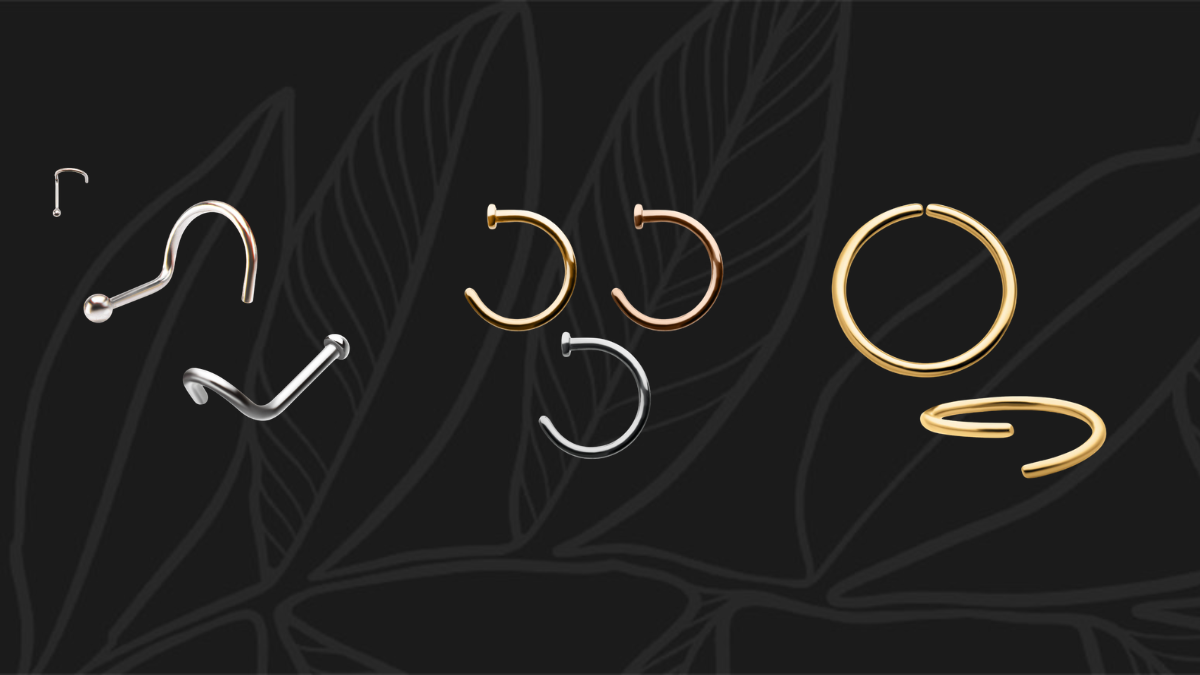
Clicker. A hinged ring where a segment swings open and snaps closed. It is the most popular septum jewellery by a wide margin and for good reason. It is easy to fit, it closes securely, and because the decorative part is the ring itself the weight is spread rather than hanging off one point. Most of the ornate septum pieces you have seen are clickers.
Circular barbell, usually called a horseshoe. An incomplete circle with a ball screwed onto each end. Simple, cheap, and it has one property nothing else has, which is that you can rotate it upwards so the visible part disappears inside your nose. That is the flipping everybody asks about.
Captive bead ring. A full circle with a ball held in place by the tension of the ring. Secure, unfussy and genuinely awkward to change on yourself, because the bead has to be pressed back in against that tension.
Seam ring. A plain circle with no visible join, opened by twisting the ends past each other. Minimal and elegant. Easy to distort if you pull instead of twist.
Retainer. Jewellery designed not to be seen. Usually glass, sometimes a plain titanium piece shaped to sit up out of sight. This is the one people come looking for and often do not know exists.
Flipping it Up
The reason a lot of people choose a septum is that it can be hidden, and that is true, with conditions.
A horseshoe flips up. Rotate it so the curve sits inside your nostrils and the balls tuck up out of view. From the front, most of the time, there is nothing to see. It is not invisible from underneath and anybody looking up your nose will find it, which in practice means almost nobody.
A clicker generally does not flip well. The hinge and the decorative face are shaped to sit downward, and turning one up is uncomfortable and often visible anyway.
A retainer is the proper answer if hiding it matters. A glass retainer sits in the piercing and does essentially nothing visually. Ask for glass rather than plastic. Plastic is porous and scratches, and the scratches hold bacteria. Glass does neither and it is not expensive.
And do not flip a fresh piercing. Rotating jewellery through a healing channel is exactly the movement that keeps it from settling. Wait until it is genuinely quiet, which for most people is a couple of months.
The Two Measurements
Gauge, the thickness of the wire. Septums are commonly pierced at 16g or 14g, and 14g is common because a slightly thicker piece sits more stably in that soft tissue. The two are not interchangeable.
Diameter, the width of the circle measured across the inside. This is the one that decides whether a piece looks right on your face, and it varies more between people than any other piercing. Most people land between 8mm and 10mm. Too small and it presses. Too large and it hangs low, swings, and pulls.
Weight is the third thing and it does not come with a number on it. Heavy ornate clickers look magnificent and they hang on that thin patch of tissue all day. In a well healed septum that is usually fine. In one that is still settling, or one that has ever had trouble, weight is the first thing to reduce.
Have the first piece fitted in person. Diameter on a septum is very hard to guess from a photograph of somebody else's face.
What to Wear While It Heals
Most studios fit a septum with a titanium horseshoe or a plain clicker, and there is a reason for the plainness. Smooth, light and easy to clean is what a healing piercing wants, and there is nothing decorative to catch.
Leave it alone. No flipping, no changing, no swapping to the ornate piece you have already bought, however tempting. Two months is a reasonable minimum and longer is better.
The first change is best done by whoever pierced you, partly because they will check the fit and partly because a septum can be surprisingly awkward to change the first time.
When to Wear a Retainer
Most people meet retainers because somebody told them to take their jewellery out, and they panicked about the hole closing.
Work. Kitchens, laboratories, healthcare, some schools and plenty of customer facing roles have rules. A glass retainer generally satisfies them because there is nothing visible.
Sport. Contact sport with a ring through your septum is a hazard to you and to whoever collides with you. Many leagues simply forbid it. A retainer, or nothing at all if the piercing is old and stable, is the sensible answer.
Medical imaging. Metal comes out for an MRI. Glass usually does not have to, though tell the radiographer what it is and let them decide rather than assuming.
Anything where you want it gone for a day. A wedding, a family occasion, a photograph, a job interview. A retainer takes the decision out of it.
The important part is what a retainer prevents. A septum that has been open for years is fairly stable, but in the first year the channel can shrink noticeably in a day and close in a few. Taking jewellery out and hoping is how people lose a piercing they liked, and a retainer costs a fraction of getting pierced again.
Stretching
Septums are stretched more often than most piercings, usually to take heavier or more ornate jewellery, and it is done badly more often than not.
The tissue is thin and it has less to give than a lobe. Going up one size at a time, waiting months between, and using proper tapers rather than forcing larger jewellery in are the difference between a stretch that works and a permanent thin patch of scar.
If you are considering it, the honest advice is to have the first size done by a piercer rather than ordering a taper set. Watching it done once teaches you more than any article, and the first size is the one where enthusiasm does the most damage.
Buying Jewelry Online
Septum jewellery is sold more on photographs than almost any other kind, because the decorative clickers photograph beautifully. Three things decide whether a piece is any good and most listings mention none of them.
The material with a standard attached. ASTM F136 titanium, or solid gold at fourteen carat or above. "Surgical steel" on its own is a phrase rather than a specification.
The two measurements. Gauge and inside diameter. A listing with only a diameter is not enough, and a listing with neither is a photograph with a price on it.
The weight. Almost never stated, and it is the thing most likely to cause you trouble. If a piece looks substantial in the photograph, it is. That is fine in a settled septum and a poor idea in one that has ever complained.
One more thing worth knowing. Hinges vary enormously in quality. A cheap clicker hinge loosens, and a loose clicker opens in your sleep. If a hinge feels slack in your fingers in the shop, it will not improve.
Materials
Implant-grade titanium for anything healing, with the standard printed. ASTM F136. Our article on titanium, steel or gold covers the full picture.
Solid gold once healed, fourteen carat or above, yellow rather than white or rose.
Titanium can be coloured by anodizing, which thickens the metal's own oxide layer until it produces colour. Nothing is added and nothing can wear through, because there is nothing underneath but the same titanium.
For anything gold coloured, ask what is underneath the surface. It is a fair question, it takes one message, and any seller buying properly will answer it plainly.
When Your Septum is Not Centred
Very few people have a perfectly symmetrical nose, and a noticeably deviated septum is common enough that it comes up constantly.
It does not usually prevent the piercing. The piercing does not go through the cartilage wall itself, it goes through the soft patch in front of it, and that patch is often more forgiving than the cartilage behind it. What a deviation changes is placement, because a piece sited to look level on your face may not be sited symmetrically inside your nose, and the two are different goals.
A good piercer will look, tell you which of those they are aiming for, and be honest if the answer is that a piece will always sit very slightly off. Most people would rather know that before than notice it after.
It matters for jewellery too. If your piercing sits a little to one side, a very large diameter hoop will make that more obvious rather than less, and a smaller piece that sits close is usually the kinder choice.
Changing Jewelry Yourself
Over a towel, on a table, with clean hands, and not in a hurry.
Clicker. Press the hinged segment until it releases, swing it open, take it out. Put the new one in and close it until you hear the click. If it has not clicked, it is not closed, and it will fall out.
Horseshoe. Unscrew one ball anticlockwise, slide the piece out, thread the new one through and screw the ball back on. Both balls are small and both are excellent at disappearing, which is what the towel is for.
Captive bead. The bead comes out with a firm push against the tension of the ring. Getting it back in is the hard part and there is a tool for it. If you are fighting it, stop.
Seamless. Twist the ends past each other sideways. Never pull them apart.
If the Piercing is Sore...
A septum that becomes tender without an obvious cause is usually reacting to weight, to being knocked, or to being flipped repeatedly.
The tissue is thin, and jewellery that hangs constantly on the underside of a healing channel can pull it out of shape. If a piece is heavy, swap it for something light for a few weeks and see whether the problem goes away. In our experience it very often does.
A soreness that comes with heat, swelling that spreads, or any discharge is a different thing and it should be looked at rather than waited out.
At Perfect Image
We fit every septum with implant-grade titanium and we stock clickers, horseshoes, captive beads and glass retainers. We will size you in person, which matters more here than almost anywhere else, and we are happy to change jewellery you bought elsewhere.
If you need it hidden for work, a wedding, a photograph or a scan, come and ask about a retainer. It is a small, cheap piece of glass and it solves a problem people otherwise spend months worrying about.
Bottom Line
Wear something plain and light while it heals and leave it alone. Choose a clicker if you want it seen and a glass retainer if you want it hidden, because a flipped horseshoe is a compromise rather than a solution. Get the diameter fitted on your own face. And when a settled septum turns sore, look at the weight of what you put in it.
FAQ
Can you really hide a septum piercing?
Yes. A horseshoe flips up and disappears from the front, and a glass retainer is close to invisible. Neither survives somebody deliberately looking up your nose.
How soon can I change my septum jewellery?
Around two months at the earliest and longer is better. Have the first change done for you so the fit gets checked.
What size septum jewellery do I need?
Usually 16g or 14g, and most commonly between 8mm and 10mm across. Diameter varies a lot between people, so have the first piece fitted.
Why is a clicker better than a horseshoe?
It is not better, it is different. A clicker is easier to fit and spreads the weight. A horseshoe is cheaper and it flips out of sight. Pick by what you need.
Is a plastic retainer alright?
We would recommend glass. Plastic is porous and it scratches, and scratches in a piercing hold bacteria.
My septum has started hurting and I have not changed anything.
Look at the weight of the jewellery first, then at whether it is being knocked or flipped often. Heat, spreading swelling or discharge needs looking at rather than waiting out.