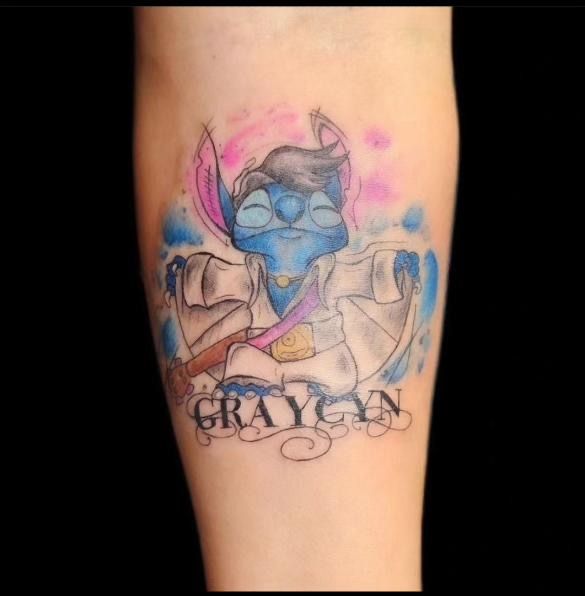
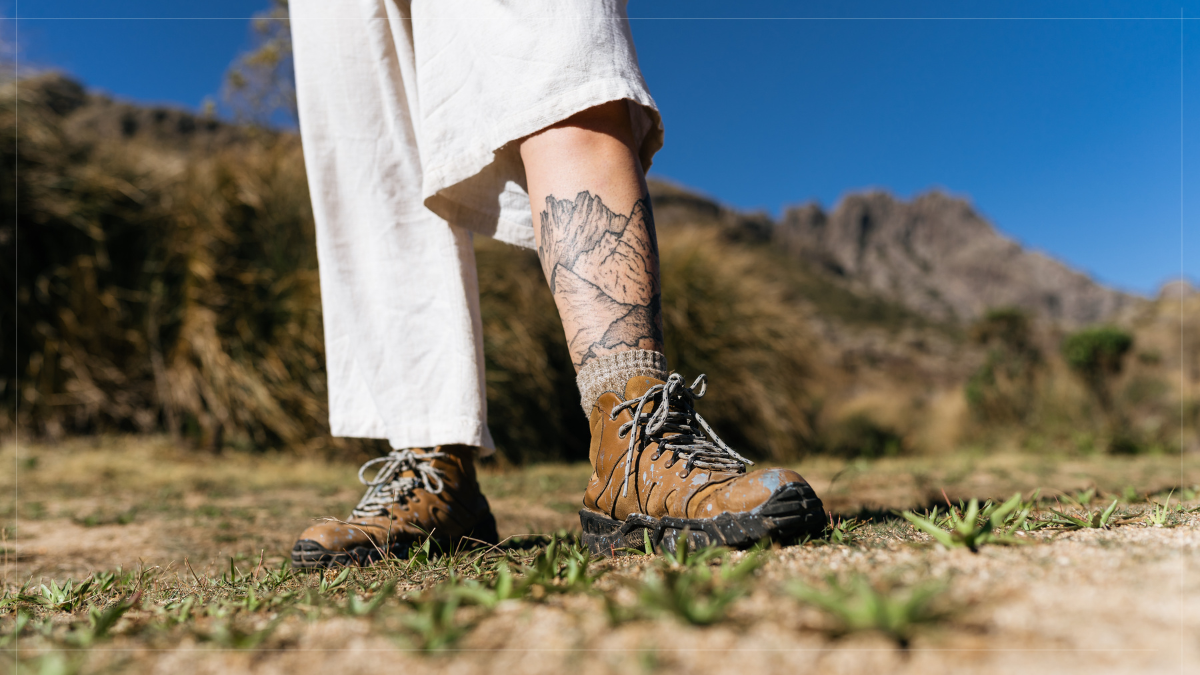
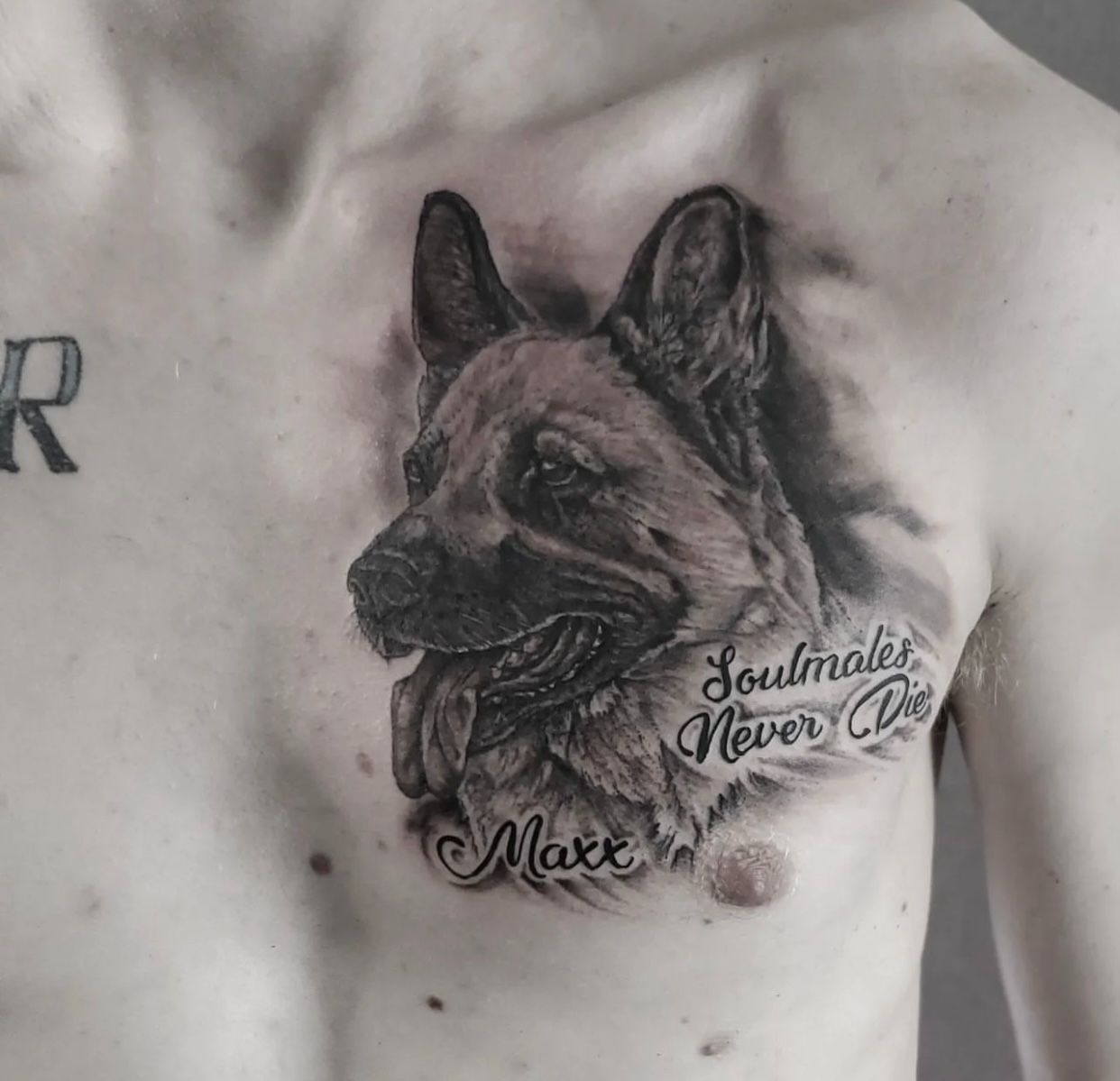
Tattoo Cover-Ups and Rework, and What Is Actually Possible

A cover-up does not erase anything. It puts a new design on top of an old one, and everything about that new design is shaped by what is underneath it. Whether yours will work comes down to three things, and you can assess all three yourself before you speak to anyone.
How dark and how saturated the old piece is. How much bigger you are willing to go. And how much freedom you are prepared to give up on the new design.
If the old piece is light, you are willing to go noticeably larger, and you are open about the subject, almost anything is possible. If the old piece is a solid black block, you want the same footprint, and you have one exact idea you will not move from, then the honest answer is probably not, and we would rather say so at the enquiry than after you have paid a deposit.
This is a conversation people put off for years because they are embarrassed about the tattoo they are trying to cover. There is nothing to be embarrassed about. A meaningful share of the work in any established studio is covering somebody's decision from a decade ago, and none of us think less of anyone for it.
What a Cover-Up Actually is
Ink sits in the dermis, the layer below the surface of the skin. New ink goes into the same layer. It does not sit neatly on top like paint on a wall, and it does not replace what is there. The two mix optically, and what your eye reads afterwards is the combination.
That single fact explains every rule that follows. You are not painting over. You are adding to. The old design keeps contributing colour and darkness forever, and the job of the new design is to give your eye something more interesting to look at so it stops reading the old shape.
The best cover-ups do not hide the old tattoo so much as make it irrelevant. Somebody who knows it is there can often still find traces in the right light. Somebody who does not know will never see it, because their eye is busy following the new design.
Accepting that distinction early makes the whole process go better. People who want a cover-up to be invisible under all conditions are usually disappointed. People who want to stop seeing the old tattoo when they look in the mirror are almost always delighted.
The Three Things That Decide Whether Yours Will Work
1. How Dark it is
This is the dominant factor and it is not close. Ink cannot be lightened by adding more ink. If there is solid black in the old piece, that area will read as at least that dark in the new one, no matter what goes over it. The new design has to be built so that darkness is doing a job, which means the artist has to find somewhere in the composition where a heavy dark area makes sense.
Light and faded work is the easiest thing in the world to cover. A thin grey outline from twenty years ago that has softened into the skin gives an artist almost complete freedom. A heavy black tribal band gives them very little, and the design will have to be built around where those blacks fall rather than drawn first and fitted after.
Old work is often easier than recent work for exactly this reason. Twenty years of sun and settling has usually taken the contrast down.
2. How Much Bigger You Will Go
A cover-up is essentially always larger than what it replaces, and usually by more than people expect. The reason is geometric. To stop the eye reading an old shape, the new design needs enough surrounding material to build a different shape out of. If the new design has the same outline as the old one, your eye has nothing to do except compare them, and it will find the old one. Going larger gives the artist room to place the old dark areas inside something. A heavy black patch becomes the shadowed side of a flower, the dark water under a wave, the deep part of a background. Confined to the same footprint, that same patch has to be the whole subject, and options collapse fast. How much larger varies enormously and depends on the first factor. Somebody with a small faded piece may need very little extra room. Somebody with a solid dark piece may need to go several times the area. An artist can tell you at a consultation, and it is the number that most often changes people's plans.
3. How Flexible the Design is
The third factor is you. A cover-up is a design problem with constraints already set. Someone who arrives with a fixed image, a fixed size and a fixed placement is asking an artist to solve a puzzle with no free variables, and often there is no solution. Someone who arrives with a direction rather than a picture, dark florals, a natural scene, something bold and abstract, gives the artist room to design around the specific shape of what is underneath. Those cover-ups are consistently the ones that come out best. This is the single most useful thing you can bring. Not a design. A direction, and a willingness to let the drawing follow the constraint.
What Covers Well, and What Does Not
Certain kinds of design are simply better tools for this job, and it is worth knowing why rather than being handed a list.
Things with natural dark areas. Florals with deep shadow, animals with dark markings, water, smoke, night scenes, anything where a large dark region is part of the subject rather than an intrusion into it. These give the artist a legitimate home for the old blacks.
Things with busy internal texture. Feathers, scales, foliage, fur. Texture breaks up the eye's ability to track a smooth old outline, because there is too much local detail competing for attention.
Things with strong organic shapes. Curves that cross the old design at an angle rather than following it. A shape that runs parallel to the old outline invites comparison. A shape that cuts across it destroys the reference.
What does not work well. Anything with large areas of light, empty skin inside the design. Portraits, where the eye is extraordinarily sensitive to small irregularities in a face and the old work will show through as unevenness in a cheek. Fine line work, which has nowhere near enough pigment to compete with what is underneath. Anything that needs accurate light colours, since yellows, whites and pale pastels are the weakest pigments and will simply not read over dark ink.
That last one disappoints people regularly. A pale watercolour piece is a wonderful thing on clean skin and one of the worst possible choices over an existing tattoo.
Why Colour Choice Narrows
Tattoo pigments are semi transparent. Light colours over dark ink do not produce light colours. They produce a slightly muddied version of the dark ink underneath.
The practical rule is that a cover-up moves toward darker and more saturated colour than you might have chosen otherwise. Deep greens, dark blues, heavy reds, rich purples and black all have the density to assert themselves. Yellows, oranges and pale skin tones generally do not, and an artist promising you a pale colour palette over a solid black piece is promising something the pigment cannot deliver.
There is one important exception, which is that heavy black in the new design can act as a boundary. A strong black outline or a solid black background beside a lighter area gives the eye a hard edge, and hard edges make neighbouring areas read cleaner than they are. Good cover-up artists use this constantly.
When Laser Lightening Comes Fiirst
There is a middle path that a lot of people do not know exists, and it is often the right one.
You do not have to choose between covering a tattoo as it is and removing it completely. Laser can be used to partially fade a piece, taking it from dark to light over a handful of sessions, at which point it becomes far easier to cover and the new design gets most of its freedom back.
This is a different goal from full removal and takes considerably fewer sessions, because you are not trying to clear the ink, only to bring the density down. It costs time, since laser sessions are spaced weeks apart to let the body clear the broken up pigment, and the whole process can run across several months before the cover-up is even started.
It is worth it when the old piece is dark and your new idea is one you are not willing to compromise on. It is not worth it when the old piece is already light, or when you are happy with a design that works with the constraint rather than against it.
Perfect Image to complete: one sentence here on whether you offer laser lightening in house or refer clients out for it, so people know what to do next.
Placement
Where the old tattoo sits affects a cover-up more than it affects a fresh piece, because you have lost the option of simply choosing somewhere better.
Areas with room around them are the easiest. Upper arms, thighs, backs, chests and calves all have space in every direction, which means going larger is a real option rather than a theoretical one. Most successful cover-ups happen in these places for that reason alone.
Areas that run out of room are harder. A wrist, an ankle or a neck piece cannot expand far before it hits an edge, a joint or a place you are unwilling to have tattooed. The constraint on size is the constraint that matters most, so a small dark piece on a wrist can be genuinely more difficult than a much larger piece on a thigh.
Areas that hold ink poorly are harder again. Hands, fingers and feet shed and regenerate skin faster than anywhere else, and they take more friction from daily use, so ink placed there fades, spreads and blurs more quickly than it does anywhere with thicker, more stable skin. Covering an old piece in those places means putting dense new work into skin that is already not ideal at holding it, and the result needs realistic expectations and probably a touch-up later.
Areas that stretch and move need thinking about. Skin over a joint, or across the stomach, changes shape constantly. A cover-up design there has to work in more than one position, which is a real design constraint and one an artist should raise with you rather than discover halfway through.
None of this makes a cover-up impossible in a difficult spot. It changes what is realistic, and it is the sort of thing worth hearing before you have set your heart on a particular design.
Why Cover-Ups Cost More Than They Look Like They Should
People are sometimes surprised at the quote, so here is the honest breakdown of where it goes.
The design takes longer. A fresh tattoo can be drawn freely and placed afterwards. A cover-up has to be designed against a specific existing shape, usually with a photograph of your actual skin underneath the drawing, and usually through more than one revision. That is hours of work before you sit down.
It is a bigger piece. This is the largest part of the difference and it is simple arithmetic. If the new design has to be two or three times the area, it takes two or three times as long in the chair.
Some areas need a second pass. Working over dense old ink, the first pass sometimes does not hold the way it would on clean skin. A conscientious artist goes back over those areas, which adds time to the session and is the reason you would rather they did.
There may be a touch-up afterwards. Most artists include a touch-up on a cover-up as part of the job rather than charging separately, because they expect one on this kind of work and would very much rather you came back for twenty minutes than quietly lived with a patch you were not happy with.
Our article on what a tattoo costs in Ontario covers how pricing generally works. A cover-up sits at the higher end of that for the reasons above, and an artist who quotes you the same as they would for a fresh piece of the same visible size has probably not thought it through.
If One Artist Says "No"
You may be told no, and it is worth knowing how to read that.
A refusal for a real reason comes with an explanation. The blacks are too dense for the size you want. The scarring will make the result uneven. The design you are asking for needs light colours that will not read. In every one of those cases the artist should also be able to tell you what would change the answer, whether that is more size, laser lightening first, or a different subject.
Getting a second opinion after that is entirely reasonable, and no professional will be offended by it. Cover-up work is a specialty within a specialty, and an artist who does two a year will genuinely see fewer options than one who does two a week.
What to be careful of is the opposite. If several artists have told you a piece needs lightening first and somebody offers to do it as it is, right now, without raising any of the constraints the others raised, that is not confidence. That is the version of this that produces a dark muddy area and fewer options than you had at the start. The artists who say the difficult thing are usually the ones worth booking.
Cover-up or rework, because they are not the same thing
Not every unwanted tattoo needs covering. Some need fixing, and that is a much smaller job.
Rework means keeping the existing design and improving it. Tightening lines that have blown out. Adding shading that gives a flat piece some depth. Correcting a shape that was slightly wrong from the start. Extending a piece so it sits better on the body. Recolouring something that has gone dull.
An enormous number of people who ask us about cover-ups turn out to want rework. They do not dislike the subject of their tattoo. They dislike how it was executed, or how it has aged, and the underlying idea is one they still want on their body.
Rework is cheaper, faster, keeps the meaning of the original and does not commit you to going bigger. It is always worth asking about first, and any honest artist will tell you when it is the better route, because it is the smaller booking.
The rule of thumb is straightforward. If you still like what the tattoo is of, ask about rework. If you no longer want the subject on your body at all, you are in cover-up territory.
Names, and the Particular Problem with Them
The most common cover-up request in the trade is a name, and it carries a specific difficulty worth naming.
Lettering is usually small, usually dark and usually laid out in a long thin band. That combination is close to the worst case. There is not much area to work with, the ink is dense, and the shape is a line, which means any new design has to be either long and thin as well, or considerably larger than the text in every direction.
The good news is that the amount of ink is generally low compared to a solid piece, so lettering responds well to a few laser sessions. Fading a name first and then covering it opens up far more options than working over it as it stands.
The other thing worth saying. There is no urgency requirement here. A great many people rush a cover-up in a difficult month, choose something they do not love, and end up with a second tattoo they want dealt with. If the piece you are covering is emotionally loaded, that is an argument for taking longer over the decision, not less.
What Happens at the Consultation
A cover-up consultation is longer and more involved than a standard one, and it should be.
The artist will want to see the tattoo in person, in good light, not in a photograph. Photographs flatten contrast and lie about how dark something really is. They will look at how the ink sits, whether it has spread, how the scarring feels if there is any, and how the piece sits on the muscle underneath.
They will ask what you want, and then almost certainly propose something different. This is not them ignoring you. It is them fitting your direction to the constraint in front of them.
They will tell you how much bigger it needs to go, and this is where most people have to adjust. They will be clear about what will not be possible, and about whether laser lightening first would give you a materially better result.
Expect the drawing to take longer than for a fresh piece, since it is being designed around a specific existing shape rather than drawn freely and placed after. Expect to be shown the design overlaid on a photograph of the actual tattoo rather than on its own, because on its own it tells you very little.
And expect an honest artist to occasionally say no. A cover-up that will not work is worse than no cover-up, because it leaves you with a muddy area and fewer options than you started with.
How Many sessions, and How it Heals
Cover-ups usually take longer in the chair than a fresh piece of the same size. There is more ink going in, and areas over dense old work often need a second pass to hold properly.
Because more pigment is being packed into the same skin, healing tends to be a little more demanding. Slightly more swelling, slightly longer before it settles, and occasionally a spot where the old ink resists and needs a touch-up once everything has healed.
That touch-up is normal and expected. It is not a sign that anything went wrong. Judging a cover-up before it is fully healed is a mistake, because the old work often shows through more in the first few weeks than it will once the new ink has settled and the swelling has gone.
Our article on how a tattoo heals week by week covers the general timeline, and a cover-up follows the same shape with slightly more of everything.
When the Honest Answer is Removal
Sometimes the right advice is not to cover it.
If the old piece is very dark and very large, if the placement leaves no room to expand, if you have one specific design you will not move from, or if what you actually want is clear skin, then covering is the wrong tool. Laser removal is slow and it is a commitment, and for the right case it is still the correct answer.
There is also a specific case where covering is clearly wrong, which is heavy scarring. If the original tattoo left raised or textured scar tissue, ink behaves unpredictably in it, and adding a large new piece over it can look uneven no matter how skilled the artist. Our article on tattooing over scars goes through what is realistic there.
An artist who will only ever recommend the thing they are selling is not giving you advice. If we think laser is a better answer than anything we can put on top, we will tell you.
Bottom Line
Cover-ups work far more often than people expect, and they work best when you arrive with a direction rather than a picture. Go in knowing three things. The new piece will be larger than the old one. The palette will lean darker than you might have chosen. And the design will be shaped by what is already there.
Give an artist those three concessions and the range of what becomes possible is genuinely surprising. Refuse all three and you are asking for something the pigment cannot do.
Before you commit to anything, get the piece looked at in person and ask two specific questions. Would rework be enough, since you may still like the subject more than you think. And would a few sessions of laser lightening first give you a materially better result, because for dark work the answer is often yes.
If you have been putting this off, bring it in and let somebody look at it properly. The assessment costs nothing, and most people leave with more options than they walked in expecting.
FAQ
Can any tattoo be covered?
Almost any, given enough size and the right design. What varies is the cost of the covering, in area, in how dark the new piece has to be, and in how much freedom you give up on the subject. Solid black work and heavy scarring are the two cases where the honest answer is sometimes no.
Will I still be able to see the old tattoo?
Someone who knows it is there can often find traces in strong side light. Someone who does not know is very unlikely to notice, because their eye follows the new design instead. Aiming for total invisibility under all conditions usually leads to disappointment. Aiming to stop seeing it yourself almost never does.
How much bigger does the new tattoo need to be?
It depends almost entirely on how dark the old one is. Faded work sometimes needs barely any extra room. Solid dark work can need several times the area. An artist can tell you specifically once they have seen it in person.
Is a cover-up more painful than a normal tattoo?
Usually a little, because more ink is being packed into the skin and some areas take a second pass. It is a difference of degree rather than a different experience.
Can I get a colourful cover-up over a black tattoo?
You can get a colour cover-up, but the palette will run darker and more saturated than it would on clean skin. Pale colours, yellows and whites do not have the density to read over dark ink and should not be promised to you.
How long should I wait after laser before covering?
Several weeks at minimum after the final session, so the skin has fully recovered and the body has finished clearing the broken up pigment. The artist doing the cover-up will give you a specific timeframe, since it depends on how many sessions you had and how your skin responded.
Can you cover a tattoo done somewhere else?
Yes, and it is a large part of what cover-up work is. Where the original was done makes no difference to what we can do with it.
What if I only dislike part of my tattoo?
Then you are probably looking at rework rather than a cover-up, which is smaller, cheaper and keeps what you still like. Ask about it before assuming the whole piece has to go.