The Vertical Labret: What You Should Know

The Vertical Labret and Why It Sits Differently from Every Other Lip Piercing
Almost every lip piercing has one end inside your mouth. A standard labret stud has a flat disc resting against your gum, and that disc is in contact with tissue and teeth every hour of every day for as long as you wear it.
The vertical labret does not. It enters through the front of the lower lip and exits through the top edge of the same lip, so both ends sit on the outside. Nothing is in your mouth at all.
That single difference is why a good number of people who were talked out of a lip piercing end up with this one.
What it Actually Is
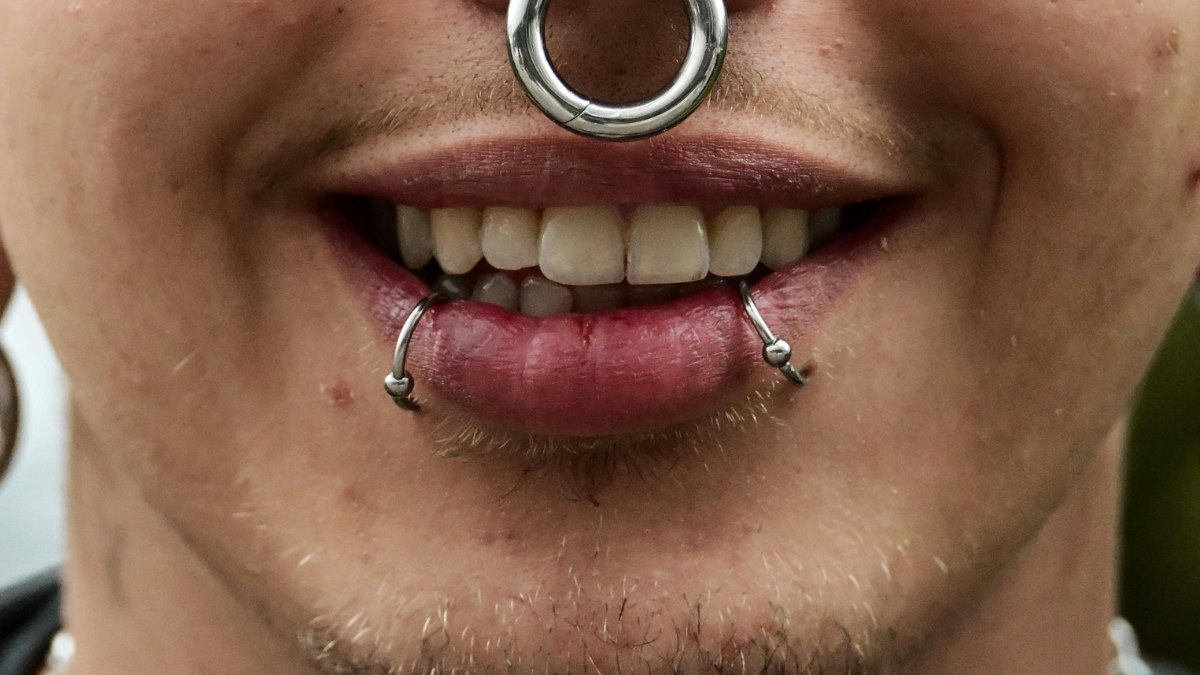
A curved barbell passes vertically through the lower lip. The bottom ball sits on the front of the lip, roughly where a standard labret stud would be. The top ball sits on the lip itself, on the upper edge, visible when your mouth is closed.
The jewellery follows the natural curve of the lip, which is why it is always a curved bar and never a straight one.
It is usually placed centrally, though slightly off centre versions exist and there is a variation with two done side by side.
The Advantage
Standard lip and cheek piercings put metal against gum tissue and against the back of your teeth. Over years, jewellery in constant contact with a gum line is associated with the gum receding at that spot, and contact with enamel can wear it. A flat disc and correct sizing reduce it considerably, but they do not remove it, and it is the single most common reason a dentist will ask a patient to reconsider a lip piercing.
A vertical labret has nothing inside the mouth. That entire category of concern does not apply.
It is worth being accurate about what that does and does not mean. It does not make the piercing risk free, and it is not an argument that lip piercings are dangerous. It means that if the dental question is the thing that has been stopping you, this is the placement that answers it.
Whether Your Anatomy Suits it
This is a real question rather than a formality, and it is why the appointment starts with somebody looking at your face rather than at a chart.
The piercing needs enough depth in the lower lip for a bar to pass through comfortably from front to top edge. A full lower lip gives plenty. A thin one gives less, and if there is not enough tissue the bar sits under tension, which is what leads to migration.
The shape of your lip when it is relaxed matters too, because the top ball has to sit on the lip rather than be swallowed into the join between lip and mouth.
A piercer will look, press gently, and tell you. If the answer is no, that is worth far more than an appointment where somebody takes your money and pierces it anyway. Our guide to facial and oral piercings covers how these assessments work across all the lip placements.
The Process
The piercing itself is quick. One pass with a needle, and most people report it as sharp rather than severe. The lip has a good blood supply and plenty of nerve endings, so it is felt, and it is over in a second or two.
There is usually some blood. Lips bleed readily and it looks more dramatic than it is.
It should be done with a needle, never a gun. A gun cannot be properly sterilized, it blunt forces jewellery through tissue rather than removing a channel, and it cannot fit the curved bar this piercing needs. No reputable studio would attempt a lip piercing with one.
The Swelling, Which is the Part People are Unprepared for
Lips swell. Substantially, and quickly.
For the first two to four days a fresh vertical labret will look considerably larger than the piercing you agreed to, and it can be uncomfortable to eat and slightly odd to talk. That is normal and it passes.
Your piercer will fit a bar that is deliberately longer than the finished piece needs to be, precisely so there is room for that swelling. Without the extra length, a swollen lip closes around the jewellery and that is how a piercing becomes embedded.
Cold helps. Ice against the outside of the lip, or something cold in your mouth, for short periods. Sleeping slightly propped up for the first couple of nights makes a noticeable difference.
The extra length has to come out once the swelling has gone, and that appointment is called downsizing. It is usually due somewhere between four and six weeks. Skipping it is the most common single reason a lip piercing that healed fine still ends up sitting crooked, because a bar with slack in it moves every time you speak.
Healing
Most vertical labrets are settled within six to eight weeks, which is fast compared with cartilage. Lips are well supplied with blood and they repair quickly.
Fast healing does not mean carelessness is fine. The first fortnight is the part that decides how it goes.
Eating is awkward for a few days. Small bites, nothing that requires opening wide, and be careful with anything hot until the swelling settles because a swollen lip is less sensitive than you think.
Talking feels strange and then does not. Most people stop noticing within a week.
Kissing and anything mouth to mouth should wait until it is healed. Another person's mouth is a large quantity of bacteria applied directly to an open channel.
Smoking slows healing meaningfully for any oral or lip piercing.
Spicy food, alcohol and very acidic things sting on a fresh one. That fades.
Cleaning it
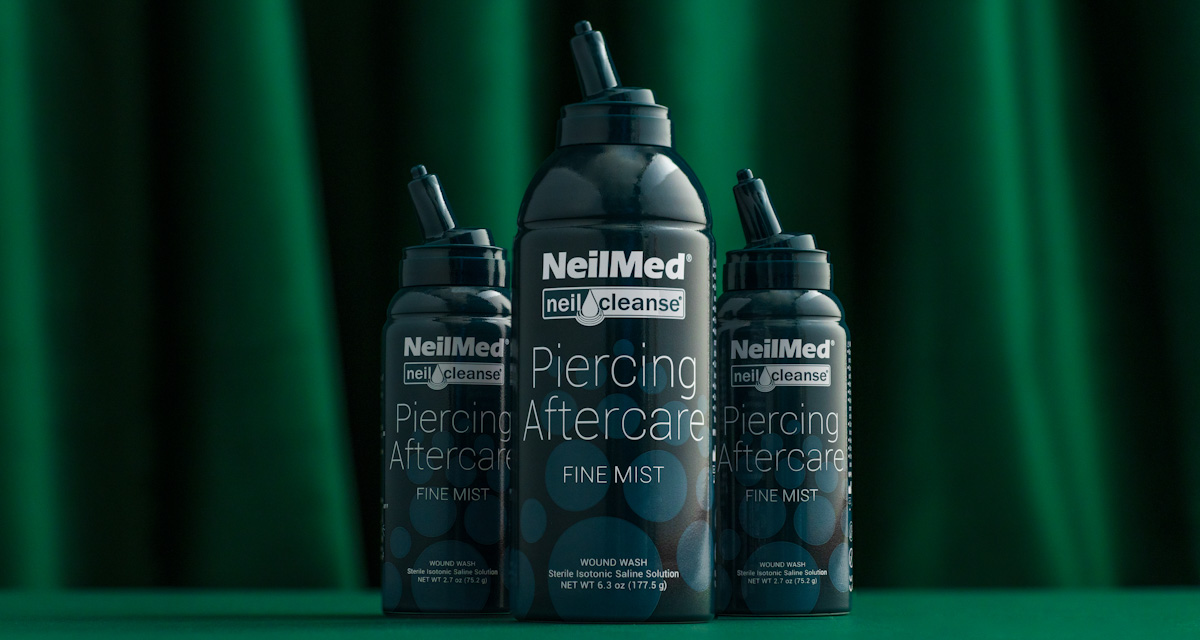
Twice a day with sterile saline on the outside, and that is essentially it. Since nothing sits inside your mouth, this piercing does not need the mouthwash routine that a standard labret does.
Do not pick at crust, do not twist the jewellery, and do not clean it more often on the theory that more is better. Our article on aftercare products covers what to buy and, more usefully, what to avoid.
Lipstick, balm and anything else you put on your lips should stay off the piercing for the first several weeks. That is a genuine irritation source and it is the one people forget.
The Jewellery
A curved barbell, always. A straight bar cannot follow the curve of a lip and puts pressure on both openings.
Implant-grade titanium for anything healing, with the standard actually stated. ASTM F136 is what to look for, and our article on titanium, steel or gold explains why it matters here more than most places, since this is a piercing you will be moving constantly by talking.
Internally threaded or threadless, never externally threaded. On a lip piercing you will be changing jewellery reasonably often and a threaded post dragging through the channel each time does real damage.
Once healed, a ring through a vertical labret is possible in some anatomies and not in others. Ask rather than order one.
Migration, and What to Watch For
This piercing is better anchored than a true surface piercing, because it passes through a solid piece of lip rather than skimming under flat skin. It is not immune though, and the things that cause migration are mechanical.
A bar left too long after the swelling has gone. Constant knocking or playing with it. Too little tissue for the piercing in the first place.
The sign to watch for is the openings looking like they are moving closer together, or the tissue over the bar thinning. If you see that, get it looked at rather than waiting. Our article on why piercings reject and migrate explains what is happening underneath.
Combining it With Other Piercings
A vertical labret sits comfortably alongside a philtrum, which is the one above the upper lip in the centre, and alongside a septum or nostril.
Two vertical labrets side by side is a look people ask about and it works where there is enough lip. Do them one at a time rather than together, because healing two piercings in one lip at once asks a great deal of it and makes eating genuinely difficult.
If you already have a standard labret and want to switch, the channels are different and one does not become the other. You would be retiring one and getting the other.
Changing the Jewellery Yourself
Wait until it is properly healed, and let your piercer do the first change at the downsizing appointment. After that it is straightforward, with a few things worth knowing.
Do it over a towel on a flat surface with clean hands. The balls on a curved barbell are small and they are excellent at disappearing.
Unscrew the bottom ball rather than the top one, because the bottom is easier to reach and easier to see. Slide the bar out downwards, thread the new one in the same direction, and screw the ball back on firmly enough that it will not work loose while you talk.
If a ball is stuck, do not force it with anything metal. A small square of rubber glove gives enough grip and will not scratch the finish. If it still will not move, bring it in rather than damaging the threads.
Check the balls are tight every few days for the first while. A lip piercing moves constantly, and jewellery that works loose overnight is the most common way people lose a piece.
How Fast It Closes
Lip piercings close quickly, which surprises people who have only had ears done.
In the first year a vertical labret can shrink noticeably within a day of the jewellery being out, and can close within a few days. Even a well established one will tighten within a week or two.
That matters practically. If you have to remove it for a scan, a job or a sport, ask about a retainer rather than taking it out and hoping. A retainer keeps the channel open and is inexpensive, and it is far cheaper than being pierced again.
If you do decide to retire it, take the jewellery out and leave it alone. It will usually close on its own, and the two small marks fade over months, though they often remain faintly visible.
Who Should Think Twice?
Not many people, and the honest list is short.
If your lower lip is thin enough that a piercer cannot find enough depth, this is not the piercing for you and no amount of wanting it changes the anatomy.
If you play a wind instrument seriously, a piece of metal through your lower lip will change your embouchure and it is worth discussing with your teacher before rather than after.
If you are in a contact sport, anything through a lip is a hazard during play. A retainer for training and matches solves it.
And if you are in the middle of dental work, particularly anything involving the lower front teeth, finish that first.
At Perfect Image
Our piercers will look at your lip and tell you honestly whether the anatomy supports this piercing, and if it does not, they will say so rather than take the booking. Every piercing is fitted with implant-grade titanium, and the downsizing appointment is part of the price rather than an extra.
If you are considering this specifically because a dentist has warned you off a standard labret, say so at the consultation. It is a good reason and it changes what we would recommend.
Bottom Line
The vertical labret is the lip piercing with nothing in your mouth, which removes the concern that stops most people. It needs enough lip to work, it swells dramatically for a few days and then settles quickly, and the appointment that decides how it looks in a year is the downsizing one at four to six weeks.
Common Questions
Does a vertical labret touch your teeth?
No. Both ends sit on the outside of the lip, which is the main reason people choose it.
How much does it hurt?
Sharp and quick. Lips have plenty of nerve endings and an excellent blood supply, so it is felt and it is over fast.
How long does it take to heal?
Usually six to eight weeks, which is quick as piercings go. The first fortnight is the part that matters.
Will it swell a lot?
Yes, for two to four days, and more than most people expect. You will be fitted with a longer bar to allow for it.
Can I get a ring in it?
Sometimes, once healed, depending on your anatomy. Ask before you buy one.
Can I get one with a thin lower lip?
Possibly not. There has to be enough depth for the bar to pass through without tension, and a piercer should tell you honestly if there is not.
Is it the same as a standard labret?
No. A standard labret goes from outside the lip through into the mouth. A vertical labret goes through the lip and back out the top edge, with nothing inside.
Can I eat normally?
Not for the first few days. Small bites, nothing needing a wide mouth, and care with hot food while it is swollen.