Tragus Piercings: What You Should Know

The tragus is the small flap of cartilage sitting in front of your ear canal, the one you press on to block out sound. Pierced, it takes six to twelve months to heal and it sits in one of the most practically inconvenient spots on the whole ear.
It is also one of the most flattering small piercings there is, which is why people put up with the inconvenience.
Two things decide how it goes. Whether you have enough tragus to work with, which is not universal, and whether you can leave earbuds alone for the better part of a year.
Not Every Ear Has The Ideal Anatomy
This is the honest first question and it is not one you can answer from a photograph.
A tragus varies enormously between people. Some are broad, prominent and thick, which gives a piercer plenty to work with. Others are shallow, flat against the head, or thin enough that jewellery would sit under tension from the moment it went in.
What a piercer is checking. Enough depth to hold jewellery without pressure, enough projection that the piercing does not sit flush against the side of your head, and a shape that allows a clean entry and exit angle.
If yours is too small, the answer is no. Piercing an inadequate tragus means jewellery under constant tension, which means migration, which means it slowly works its way out and leaves a mark on the front of your ear where everybody can see it. There is no aftercare regime that overcomes insufficient tissue.
There are alternatives worth asking about. An anti tragus, on the ridge opposite, or a forward helix just above, can give a similar visual effect in a different spot. If your tragus is not suitable, ask what is rather than accepting a flat no.
Surface tragus is a different thing. Occasionally people ask for a piercing across the flat front face of the tragus rather than through it. That is a surface piercing rather than a cartilage one, it behaves quite differently, and our comparison of dermal anchors and surface piercings covers why those are a harder proposition.
The Piercing Itself
It is quick and most people find it less bad than the anticipation.
Two things about it are worth knowing in advance so they do not startle you.
You will hear it. The tragus sits directly in front of your ear canal, which means the sound of the needle passing through cartilage is conducted straight into your ear. It is a brief crunch and it is entirely normal. People who are not warned about it find it far more alarming than people who are.
The piercer works in a tight space. There is not much room between the tragus and the side of your head, and a small barrier is usually placed behind it to protect the ear canal. That is standard rather than a sign of difficulty.
The sensation itself is a sharp pinch, over in about a second. Tragus cartilage is thick relative to its size, so it is a firmer press than a helix, and it is still a very short event.
Jewellery, and Why a Flat-Back Matters
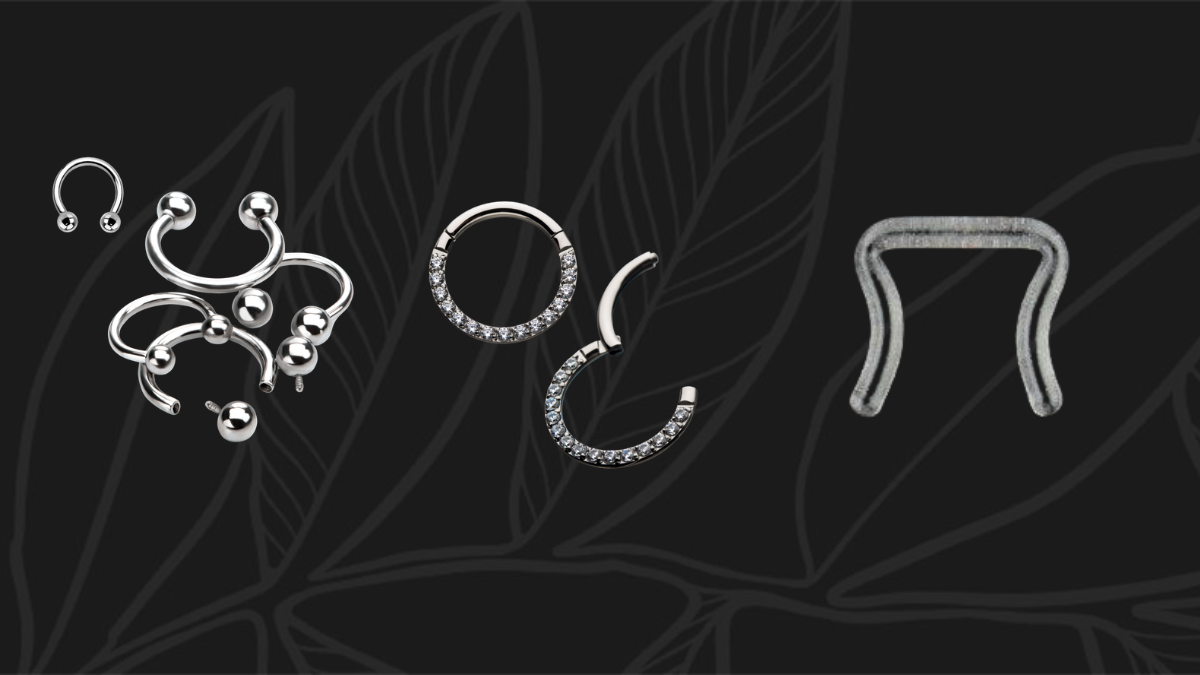
A tragus should be pierced with a flat back labret stud. Not a ring, and not a barbell with a ball behind it.
The reason is geometry. The back of the jewellery sits inside the ear, against the entrance to the canal, in a confined space. A flat disc lies smoothly against the tissue. A ball protrudes into that space, presses, catches and is genuinely uncomfortable to sleep on.
Long enough for swelling, then shortened. As everywhere in cartilage, the starter post is deliberately longer to allow for swelling, and it is swapped for a shorter one once that settles. On a tragus this downsize matters more than most, because a bar longer than it needs to be is exactly what an earbud will catch on.
Implant grade titanium. ASTM F136 is the standard to ask for by name. Our comparison of titanium, steel and gold covers what the alternatives really offer.
Rings much later, if at all. A ring in a healed tragus can look excellent, and it is worth knowing that it sits close to the head and catches more than a helix ring does. Plenty of people try one and go back to a stud.
Earbuds Are a Real Problem
This is the section that decides most tragus outcomes.
An earbud sits precisely where a tragus piercing is. Not near it, on it. Every time you push one in, you press against a healing cartilage piercing and rotate the jewellery slightly. Doing that twice a day for months is how an irritation bump forms.
For the first few months, use something else. Over-ear headphones that clear the tragus entirely are the easy answer. If they press on your helix instead, and you have a helix piercing too, then a bone conduction set or simply speakers become the sensible choice for a while.
Wired earbuds that hang rather than seal are gentler than sealing ones, since sealing designs push in and expand against exactly the wrong spot.
If you must use them, clean them. An earbud is a warm object that lives in a pocket and then sits against an open wound. Wipe them.
Be honest with yourself about this before booking. If your job or your commute genuinely requires earbuds every day, that is a real argument for choosing a different placement, or for accepting a slower and bumpier heal.
The Other Daily Obstacles
Phones. A phone screen presses directly against the tragus during a call. Use the other ear, use speaker, or use headphones.
Sleeping. Same rule as any ear piercing. Pierce the side you do not sleep on, and a doughnut shaped travel pillow makes the first months substantially easier.
Masks and glasses are less of a problem here than for a forward helix, since the tragus sits below where an arm passes, but a mask loop can catch.
Hair. Long hair catches on a tragus stud more than people expect, particularly when tying it up.
Other Ear Piercings, and Why People Confuse Them
Three placements sit within a couple of centimetres of the tragus and get mixed up constantly, so it is worth knowing which one you actually want.
Anti tragus. The small ridge directly opposite, sitting above the lobe on the inner edge. Thicker cartilage, an awkward angle for jewellery, and slower to heal than a tragus. It is the placement most often suggested when a tragus is too shallow, and it has its own anatomy requirement, so it is not an automatic substitute.
Daith. The fold at the entrance to the ear canal, deeper inside than the tragus and above it. Reads completely differently, since a daith shows a ring curling out of the interior of the ear rather than a stud on its face.
Forward helix. On the rim above the tragus, facing forward. Often mistaken for a tragus in photographs because both sit at the front of the ear, but it passes through the outer rim rather than the flap.
If you have arrived with a photograph, bring the photograph. It removes the guesswork entirely and it is common enough that nobody will find it odd.
Where it fits in a bigger ear
A tragus is one of the placements that changes how everything else reads, because it sits on the face of the ear rather than around its edge.
It balances the rim. An ear with several helix piercings along the top can look weighted toward one side. A tragus adds a point of interest lower and forward, which brings the composition back into balance.
It pairs well and crowds easily. A tragus with a daith works. A tragus with an anti tragus and a daith and a conch begins to look busy in a small space, and the interior of the ear has far less room than the rim.
Say what you might want eventually. Even if you are only booking one, telling a piercer that a daith or a conch is on your list changes where and at what angle they place today's tragus. Our guide to ear piercing types goes through planning a full ear in order.
Healing, and What Normal Looks Like
Six to twelve months, sometimes longer, and the same pattern as any cartilage piercing.
First fortnight. Tender, swollen, pink at the entry and exit, with clear or straw coloured fluid that dries into crust. Sleeping on that side is uncomfortable.
Weeks two to eight. Swelling settles, crusting continues on and off, and it stops being something you notice all day.
Two to six months. It looks completely finished. It is not. This is where earbuds come back, jewellery gets changed early, and problems begin.
Six to nine months. The channel matures internally and jewellery can safely change.
Sterile saline twice a day, and otherwise leave it alone. Do not turn it. One thing specific to this spot is that saline can run into the ear canal if you are not careful, which is uncomfortable rather than harmful. Tilt your head so it runs away from the canal rather than into it.
After It's Healed
The reward for patience is that a variety of jewelry is suitable for a healed tragus.
Small flat back studs remain the everyday choice, and this is a placement where a single well chosen stone reads far better than something large. The tragus is small and sits against a busy background of ear, so scale matters more than sparkle.
Clusters and small decorative ends work here precisely because the placement is compact. A three stone cluster on a tragus reads as considered where the same piece on a lobe can disappear.
Rings, with the caveat above. A small hoop hugging the tragus looks excellent. It also sits close to the head, catches hair, and is the piece most often abandoned after a few weeks of practical annoyance.
Gold, once healed. Solid gold is a genuine option in a settled piercing and a poor one in a fresh piercing. Our comparison of titanium, steel and gold explains why the distinction is about healing rather than about quality.
The other thing that changes at the healed stage is that you can finally take it out for an evening, a scan or a job interview without much anxiety. Do not push that too far, since a tragus channel is narrow and can tighten within a day, but the constant vigilance of the first months is over.
Bumps, and What They are Telling You
Tragus piercings develop irritation bumps more readily than helixes, and the reason is almost always mechanical rather than mysterious. Something is pressing on it repeatedly.
Work through the list before doing anything else. Earbuds. Phone against that ear. Sleeping side. Jewellery that was never downsized. Hair catching. In the large majority of cases one of those five is the answer.
An irritation bump is not an infection and does not need antibiotics, antiseptics or any of the home remedies that circulate. It needs the cause removed, and then time. Our article on keloids and piercing covers the distinction between a common irritation bump and the genuinely rare thing people fear it is.
Bottom Line
Get the anatomy checked before you set your heart on it, because a shallow tragus is a real reason to choose a different placement and no aftercare will compensate.
If it suits you, take the flat back stud, come back for the downsize, and give up earbuds on that side for a few months. That last one sounds trivial and it is the single biggest factor in whether this piercing settles quietly or gives you nine months of small problems.
Come in and let somebody look at your ear. It takes a minute, it is free, and it is the only way to answer the question this article opens with.
FAQ
Does a tragus piercing hurt?
A brief sharp pinch, firmer than a lobe because the cartilage is thick for its size. Most people find the crunching sound more startling than the sensation, since it is conducted straight into your ear canal.
Can everybody get one?
No, and that is the honest answer. It needs enough thickness and projection to hold jewellery without tension. A piercer will look and tell you, and if yours is unsuitable there are nearby placements that give a similar effect.
Can I still wear earbuds?
Not comfortably, and not without cost, for the first several months. An earbud sits exactly where the piercing is. Over-ear headphones are the straightforward answer while it heals.
How long until I can change the jewellery?
Six to nine months for a full change. The downsize to a shorter post happens much earlier and is done by your piercer.
Can I get a ring in it?
Once healed, yes. Be aware it sits close to the head and catches on hair and clothing more than a helix ring, and plenty of people prefer a stud in the end.
Why has it developed a bump?
Almost always pressure or movement, and the usual culprits are earbuds, phone calls on that side, sleeping on it, or jewellery that was never shortened. Remove the cause and it settles.
Can I get both tragus piercings at once?
You can, and the practical difficulty is that you then have no comfortable side to sleep on for several weeks. Most people find one at a time considerably easier.
Will it affect my hearing?
No. The piercing passes through the flap of cartilage in front of the canal, not through anything involved in hearing.