Why Tattoos Blur With Age, and the Design Choices That Slow It

Every tattoo softens. Lines thicken slightly, fine detail closes up, and the sharp edge of a fresh piece gives way to something a little rounder. That is not a failure of the artist, the ink or the aftercare. It is what happens when you put pigment inside living tissue and then live in it for twenty years.
What you can control is how much, and how fast. Most of that is decided before the needle touches you, in the design and the size and the placement, and a good artist will steer you on all three if you let them.
Here is what is actually happening, and what to do about it.
Where the Ink Actually Sits
A tattoo is not painted on. The needle carries pigment through the epidermis, the outer layer that sheds and rebuilds itself constantly, and deposits it in the dermis underneath, which is stable tissue that stays put for life.
Your immune system treats the pigment as an intruder. Cells arrive to engulf and remove it, and they succeed with the smallest particles, which get carried off through the lymphatic system. The larger particles are too big to move, so the cells that swallowed them simply stay where they are, holding the pigment in place. When one of those cells eventually dies, a neighbouring cell picks the pigment up again.
That handover is where blurring comes from. Each time pigment changes hands it does not land in precisely the same spot. Over decades, the accumulated drift of millions of tiny handovers is what turns a crisp line into a slightly softer one.
Nothing stops that process. It is your body doing its job.
Four Things That Decide How Fast Blurring Happens
1. Sunlight, Which is Most of it
Ultraviolet light breaks pigment particles into smaller fragments. Smaller fragments are exactly what your immune system can finally carry away, so sun does not simply fade a tattoo, it actively converts permanent pigment into removable pigment.
This is the single largest factor and the one entirely within your control. A tattoo on a shoulder that has spent thirty summers uncovered and a tattoo on a thigh that has spent thirty summers under clothing will not have aged remotely alike, even if they were done on the same day by the same hand.
Sunscreen on healed tattoos, every time you are out in it, is the whole intervention. Not once the piece looks faded. From the moment it has finished healing.
2. How Tightly the Design is Packed
Two lines placed a hair apart will meet eventually, because both are drifting outward by a fraction of a millimetre a decade. Two lines placed a comfortable distance apart will still drift and will still read as two lines in thirty years.
This is why an experienced artist pushes back on cramming a lot of detail into a small space. A design that looks astonishing at three centimetres wide on the day can become an indistinct dark shape by the time you are fifty, and there is no aftercare that prevents it. The only fix is size.
3. Size, Which is Really the Same Point
Making a design bigger does not slow the drift. It makes the drift a smaller proportion of the whole. A quarter millimetre of spread on a line that is two millimetres apart from its neighbour is invisible. The same quarter millimetre on lines half a millimetre apart closes the gap entirely.
When an artist tells you a piece needs to be larger to work, this is almost always what they mean. They are not upselling you. They are telling you what it looks like in twenty years.
4. Where on the Body it Lives
Skin is not uniform. The places that age tattoos fastest are the ones that move constantly, get the most sun, and have the thinnest skin over the least fat.
Hands and fingers are the hardest of all. The skin is thin, it is washed dozens of times a day, it is exposed to sun permanently, and the outer layer replaces itself faster than almost anywhere else. Finger tattoos commonly need touching up within a couple of years, and some never hold cleanly at all. Any artist who tells you otherwise before doing one is not being straight with you.
Feet are similar for different reasons, mostly friction inside shoes. Elbows and knees stretch constantly. The inside of the wrist is thin and sees a lot of sun.
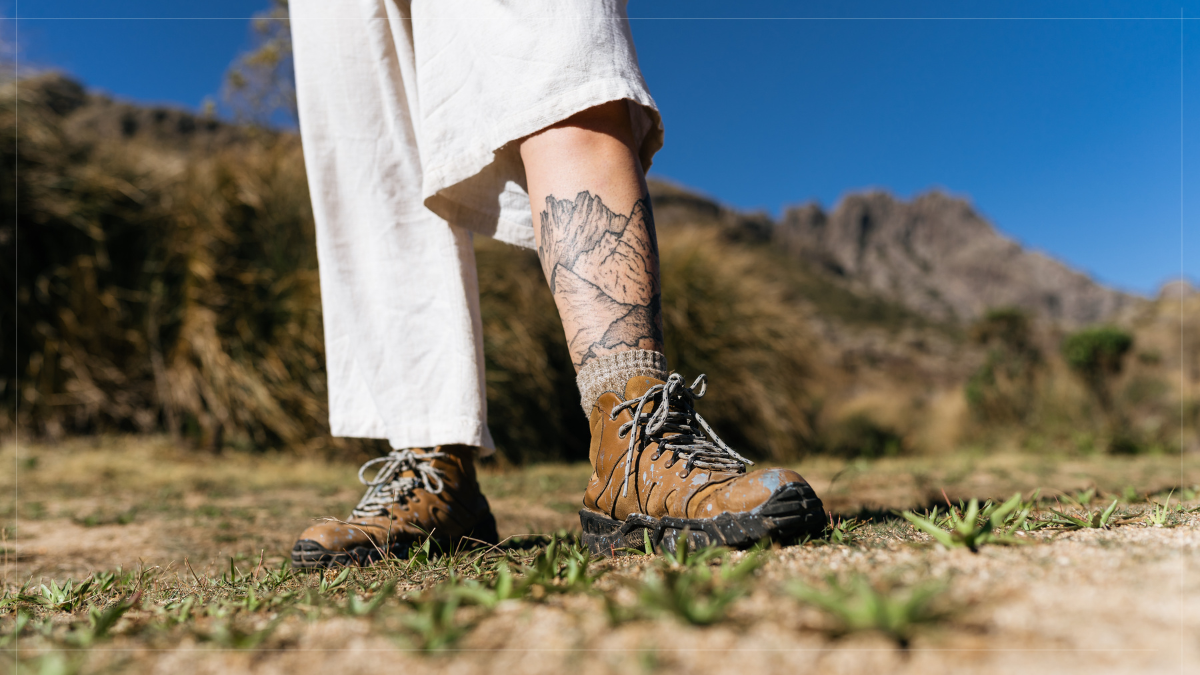
The outer arm, the outer thigh, the back and the calf are all far more forgiving.
What Ages Well, and What Does Not
This is the practical part, and it is why traditional tattooing looks the way it does.
Bold lines age well. A thick line that spreads slightly is still a thick line. A hairline that spreads slightly is a smudge. This is not aesthetic conservatism, it is a hundred years of people watching what survived.
Solid black holds. It is the most stable pigment, it has the most contrast against skin, and when it softens at the edges it still reads as black.
Space inside a design is what keeps it readable. A tattoo that leaves clean skin between its elements still has clean skin between them decades later. A tattoo that fills every gap has nowhere to drift into.
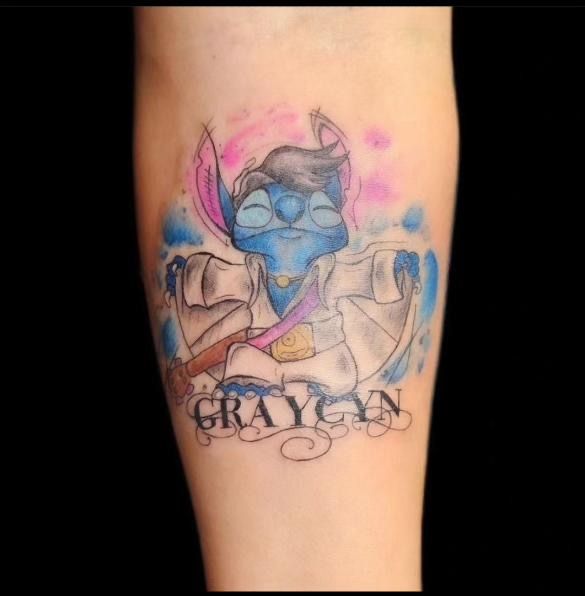
Fine line work is beautiful and it does not last the same way. That is not a reason to avoid it. It is a reason to know what you are choosing, to accept that it will soften faster, and to expect to have it refreshed at some point if you want it to stay crisp. Plenty of people are entirely happy with a fine line piece that goes soft and grey. The problem is only ever the person who was not told.
Colour behaves differently by shade. White fades fastest and often disappears entirely. Pale yellows and pastels are next. Deep reds, greens and blues hold considerably better. Colour on darker skin tones needs an artist experienced in exactly that, because the pigment sits under a layer that changes how it reads.
Very small text does not survive. Script at a size where the letters nearly touch will close up. Larger script with room around it can look excellent at fifty.
What You Can Actually Do
Wear sunscreen on it. If you take one thing from this, take that.
Moisturize. Not because it affects the pigment, but because dry, dull skin over ink reads as a dull tattoo. Well kept skin makes an old piece look considerably better than it otherwise would.
Do not smoke, if you were looking for another reason. Smoking restricts blood flow to the skin and degrades collagen, and skin with poor structural support holds a tattoo less crisply.
Keep your weight reasonably stable. Significant changes stretch or slacken skin, and a tattoo stretches with it. This matters most on areas prone to change and least on places like the outer arm.
Get it refreshed rather than replaced. A piece that has softened can usually be brought back by an artist going over the linework rather than starting again. It is far less work than people assume, and the right time to do it is before it becomes hard to read, not after.
Take a photograph now. Almost nobody does this and everybody wishes they had. A clear photograph of a fresh, healed tattoo is what an artist needs in fifteen years to restore it faithfully.
The Myth About "Quality Ink" Doing the Work
People ask which ink lasts longest, expecting the answer to be a brand. It is not.
What matters about pigment is particle size and chemistry, and reputable manufacturers are broadly comparable on both. A studio using well made ink from any serious supplier is not handing you a tattoo that will outlast one from a different serious supplier in any way you would notice across a lifetime.
What genuinely differs is the artist's hand. Pigment placed at a consistent depth stays crisp. Pigment placed too shallow in places sheds with the surface skin and leaves patchy areas within months. Pigment driven too deep spreads sideways through looser tissue and blurs quickly no matter what it is made of.
That consistency is invisible to you on the day, because a fresh tattoo covers a multitude of inconsistencies. It becomes visible at five years, which is why looking at an artist's healed work rather than their fresh work is the single most useful thing you can do before booking.
Cheap ink is a genuine problem, and it is a safety problem more than a longevity one. Unregulated pigment can carry contaminants and can provoke reactions that a well made one will not. That is a reason to care about where a studio buys, not a reason to believe an expensive bottle buys you an extra decade.
Black and Grey Against Colour, in the Long Run
If longevity is your priority above everything else, black and grey wins and it is not close.
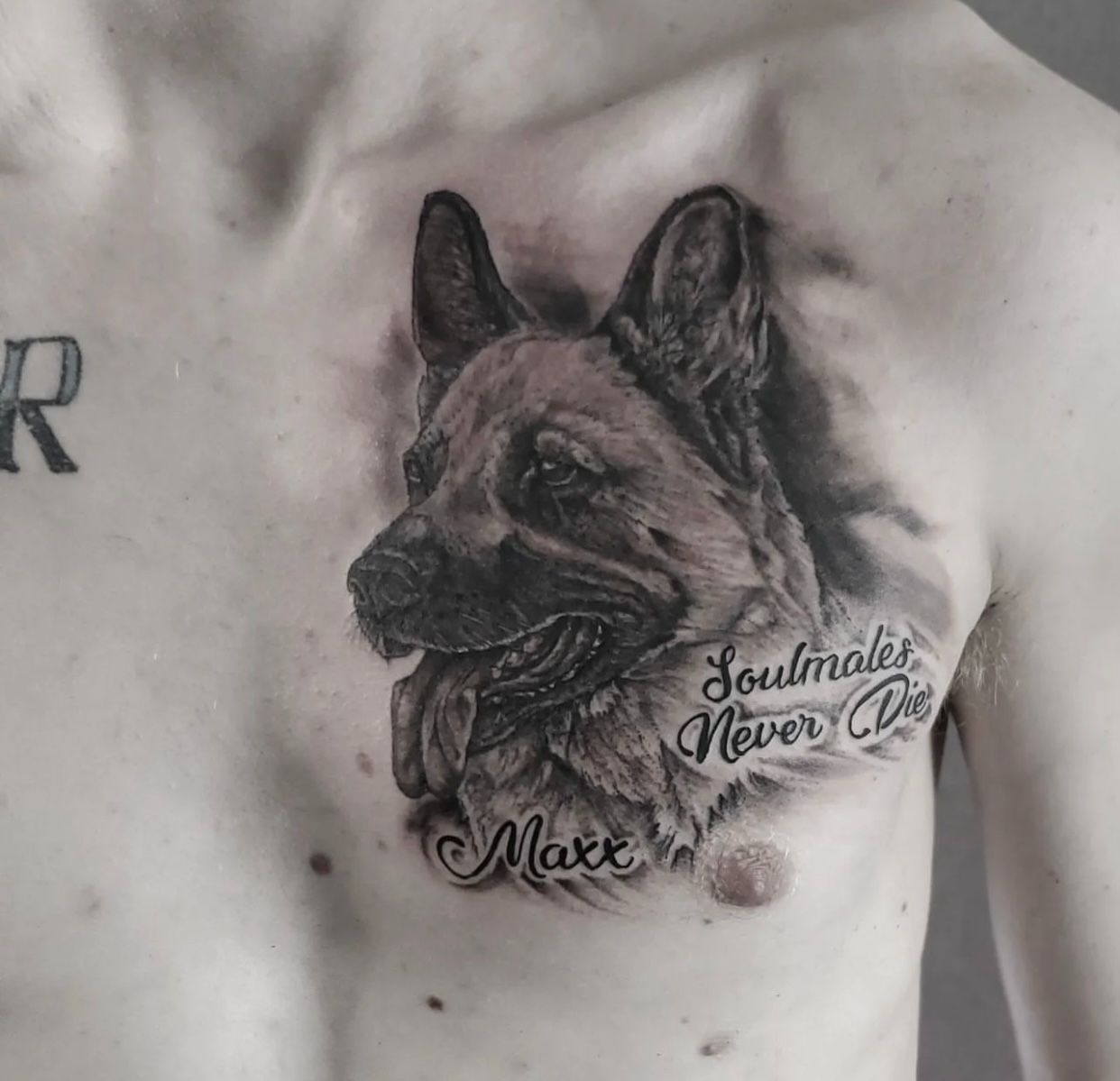
Black pigment is the most stable, has the strongest contrast against every skin tone, and degrades most gracefully. A black and grey piece at twenty five years has usually softened rather than changed character. The composition still reads.
Colour is more complicated. The stable colours, deep reds, forest greens, strong blues, hold decently. The unstable ones are the pale end. White is used for highlights and very often disappears entirely within a few years, taking the sense of depth with it. Yellows and pastels lift considerably.
That is worth knowing because a colour piece which relies on white highlights to create dimension is a piece whose whole structure depends on the least durable pigment in it. An experienced colour artist builds the composition so it still works once the white has gone, using the darker tones to carry the shape. An inexperienced one does not, and the piece flattens out.
None of this is an argument against colour. It is an argument for asking your artist how they expect this specific piece to look in fifteen years, and taking a straight answer seriously.
What a Piece Looks Like at Thirty Years, Honestly
Set expectations properly and you will be far happier with your tattoo than somebody who was promised permanence in the wrong sense.
At thirty years a well designed, well placed, sun protected piece will still be clearly the thing it was. The lines will be a little heavier. The smallest details will have closed. Colour will be quieter. The whole thing will read slightly softer, in the way an old photograph reads softer than a new one, and a great many people find that they like it more rather than less.
What it will not be is identical. Anyone selling you identical is selling you disappointment.
The pieces that age into something unreadable are almost always the ones that were too small for their own detail, or placed somewhere that was never going to hold, or lived their whole life in direct sun. All three of those decisions were made before the first line went in.
The Conversation Worth Having Before you Book
Tell the artist how you actually live. Somebody who works outdoors, swims daily or spends every summer on a lake is making different design decisions from somebody who works in an office. Neither is wrong, but the person outdoors should be steered towards bolder work with more space in it.
Ask directly how the specific design will age. A good artist has watched their own work heal for years and can tell you with some precision. If you are told a heavily detailed piece the size of a matchbox will look the same forever, you are being sold something.
Ask about placement alternatives. The same design six inches further up an arm may age noticeably better, and that suggestion costs nothing.
Bottom Line
Tattoos blur because pigment is passed between living cells that never put it back in exactly the same place, and because ultraviolet light breaks the particles into pieces small enough to be carried away. Neither can be stopped, and both can be slowed considerably.
Sunscreen does more than everything else combined. After that it is design: bolder lines, more space inside the piece, enough size that a fraction of a millimetre does not matter, and placement somewhere the skin is thick and stable.
Come in and talk it through before you commit to a design. Anything we would change, we would rather tell you now than in twenty years.
FAQ
How long before a tattoo starts to look different?
Most pieces still look essentially new at five years with reasonable care. Noticeable softening is usually a matter of ten to twenty years, sooner on hands, feet and heavily sun exposed areas.
Does expensive ink last longer?
Quality matters for safety and consistency, but pigment particle size and sun exposure drive longevity far more than brand. No ink is immune to ultraviolet light.
Will sunscreen really make that much difference?
Yes. It is the single most effective thing you can do, and the difference between a covered tattoo and an uncovered one over decades is dramatic.
My fine line tattoo is already softening after two years. Was it done badly?
Not necessarily. Fine line work softens faster by nature, particularly in small sizes and on high movement areas. A refresh of the linework usually restores it.
Can a blurred tattoo be fixed?
Usually. An artist can go over the linework to sharpen it, and in some cases rework the design to open up areas that have closed. It is far less work than starting again.
Do finger tattoos ever hold properly?
Some do and many do not. The skin is thin, constantly washed and constantly exposed. Expect touch ups and choose an artist who will tell you that honestly beforehand.
Does skin tone change how a tattoo ages?
It changes how pigment reads rather than how fast it drifts. Colour choices in particular need an artist experienced with your skin tone, because the same ink looks different under different amounts of melanin.
Should I get a touch up on a schedule?
No. Get one when the piece stops reading the way you want it to. For most people that is a long way off, and for fine detail it may be sooner.