Your First Tattoo, From Idea to Fully Healed

Almost everything that decides whether you are happy with your first tattoo happens before the needle. The design, the size, the placement, the artist. The tattooing itself is the easy part, and the healing is mostly a matter of leaving it alone.
This is written for somebody who has never done this and does not know what they do not know. It covers the whole thing in order.
Deciding What You Actually Want
You do not need a profound reason. A great deal of good work exists because somebody liked it. Meaning is welcome and it is not a requirement, and a tattoo you chose because it is beautiful will not feel less valid in ten years.
Take longer than you think. The usual advice is to sit with an idea for six months, and it is decent advice not because your taste is untrustworthy but because it separates the idea you keep thinking about from the one you saw last week.
Collect references rather than a single image. Bring five or ten things that show the feel you are after, the level of detail, the weight of line, the mood. That gives an artist something to work with. A single image asks them to copy somebody else's work, which good artists will decline and which produces a worse result anyway.
Do not bring another artist's finished tattoo and ask for it exactly. It is somebody else's piece. Bring it as a reference for style by all means.
Think about what you want it to look like at sixty, not at the appointment. That single question resolves most design arguments.
Size and Placement, Which Matter More Than the Design
This is where first timers most often go wrong, and where an artist's advice is worth the most.
Almost every first tattoo should be bigger than the client wants. Not to charge more. Because detail closes up over decades, and a design crammed into a small space becomes an indistinct shape. When an artist says a piece needs to be larger, they are describing what it will look like in twenty years.
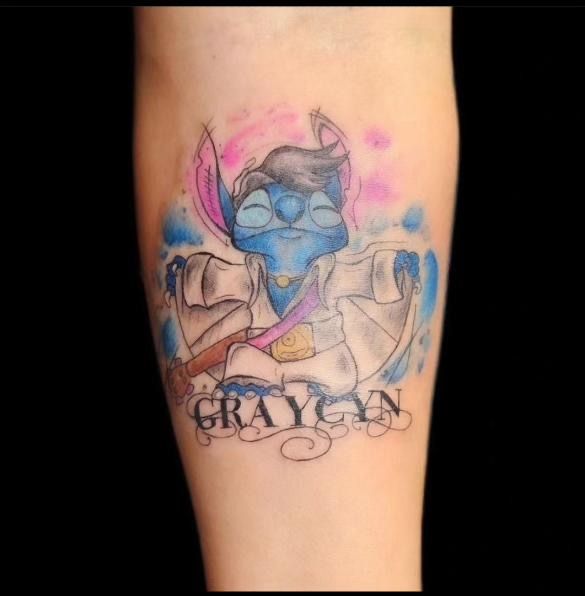
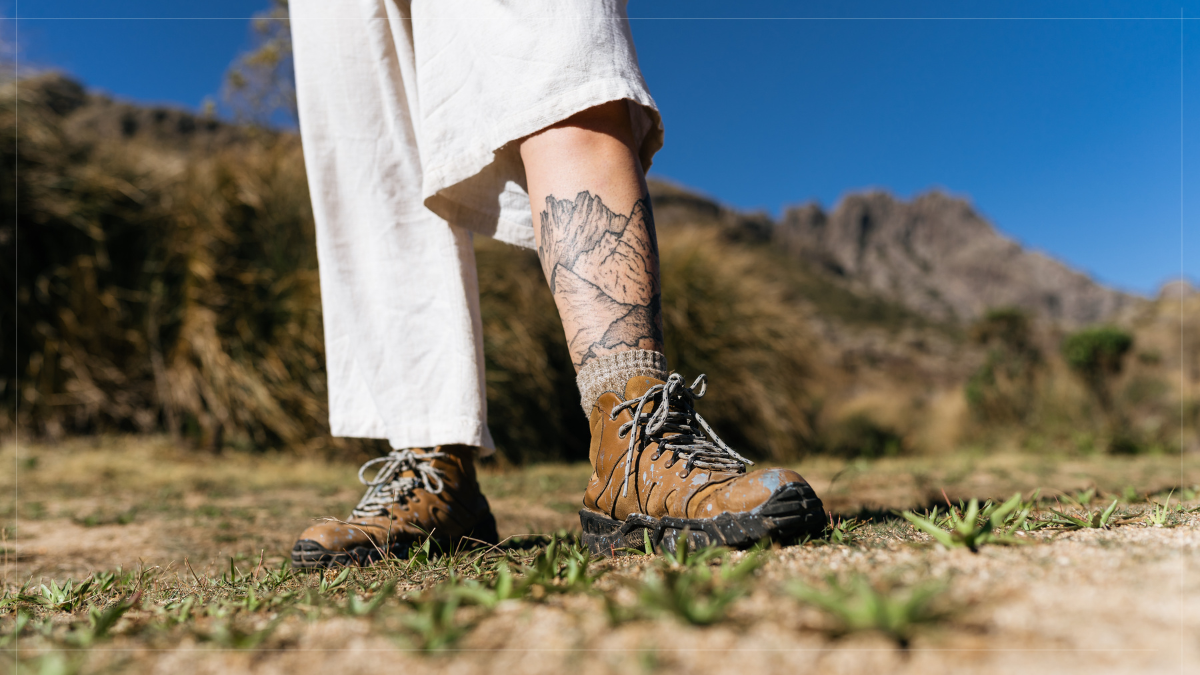
Pick a forgiving placement for a first piece. Outer thigh, outer upper arm and outer forearm are comfortable to sit for, heal easily, age well and are easy to keep out of the sun. Ribs, feet, hands and inner arms are harder in every respect.
Think about visibility honestly. Not because visible tattoos are a problem, but because you should choose deliberately rather than discovering the consequences later. Hands, necks and faces carry practical implications that are difficult to picture at twenty two.
Consider whether it will grow. A great many first tattoos become the start of something. An artist who knows that is possible will place and design it so it can extend rather than boxing it in.
Bending areas move. Elbows, knees and the inside of the wrist all fold constantly, which affects healing and how a design reads.
Choosing an Artist, Which Matters More Than Choosing a Studio
Look at healed work, not fresh. This is the single most useful thing in this guide. Fresh tattoos look good on everybody, because swelling and wet ink hide a multitude of problems. Healed photographs, at six weeks or later, show whether the lines held, whether the shading is even, whether the ink stayed where it was put.
Any artist proud of their work has healed photographs. An artist whose portfolio is entirely fresh is showing you the flattering version.
Match the artist to the style. Nobody is good at everything. Somebody whose linework is beautiful may not be the person for colour realizm. Look for an artist who does a lot of what you want rather than one who does a little of everything.
Look for consistency. A portfolio with five superb pieces and twenty mediocre ones tells you about the mediocre ones.
Read how they talk about their work. An artist who explains their thinking, who talks about ageing and placement, is one who will steer you well.
Do not choose on price. The cheapest quote is the most expensive tattoo if it needs covering later.
Do not choose on availability. A good artist is usually booked. Waiting three months for the right person is the correct decision on something permanent.
Custom, Flash or Something Inbetween
Three different routes to a tattoo, and first timers often do not know the options exist.
Custom means a design drawn specifically for you. You bring an idea and references, the artist draws it for your body at the size and placement agreed. It costs more because drawing time is real work, it takes longer to arrange, and it produces something nobody else has. For anything meaningful or anything large, this is the route.
Flash means designs the artist has already drawn and is willing to tattoo, usually displayed as sheets in the studio or posted online. It is quicker, usually cheaper, and often available at short notice. It is not lesser work. Flash is a long tradition and an artist's flash is frequently their best drawing, done without a client's constraints. Many people get an excellent first tattoo this way.
Adapted flash sits between the two. You pick a flash design and the artist adjusts the size, the placement or an element to suit you. Cheaper than full custom, more personal than straight flash.
For a first tattoo, flash or adapted flash is a genuinely good idea. It removes the hardest part of the process, which is deciding, it gets you tattooed by a good artist doing something they already love, and it costs less while you are finding out how you feel about the whole experience.
Deposits, Cancellations and the Etiquette Nobody Explains
Small practical things that make you easy to work with and prevent awkwardness.
Deposits are normal. Almost every studio takes one and it usually comes off the final price. It exists because a no show costs an artist an entire day they cannot fill.
Rescheduling has rules. Most studios need notice, often a week, to move an appointment without losing the deposit. Ask what the policy is when you pay rather than when you need it.
Turning up late matters. Appointments are booked in blocks and being half an hour late can mean the piece cannot be finished.
Do not bring a group. One person for company is welcome. A group standing over the chair makes the artist's job harder and makes most clients more self conscious.
Do not haggle. Discuss scope if the budget is tight. An artist will happily suggest a simpler or smaller version. Asking for the same work for less is asking them to rush.
Do not ask them to copy another artist's tattoo exactly. It is somebody else's work and most artists will decline.
Tipping is customary in this trade in Ontario. There is no fixed expectation and it is worth factoring in.
Say thank you and send a healed photograph. Artists rarely see how their work settles, and a photograph at six weeks is genuinely valued. It also means they have healed work to show, which is what the next person will judge them on.
What a Good Studio Looks Like When You Walk In
You will be assessing a studio on instinct, so it helps to know what actually matters.
Packaging opened in front of you. Needles, tubes and ink caps come out of sealed wrappers at the start of your appointment, not before you arrive.
Surfaces wrapped or wiped. The chair, the armrest, the lamp handle and the tray are either covered in disposable barrier film or disinfected between clients.
Gloves changing. Not just worn, but changed whenever the artist touches something outside the work area.
A sharps container. Rigid, labelled, not overflowing.
The public health inspection notice on display. You are entitled to ask about it and about when the autoclave was last spore tested, which is the laboratory check proving sterilization is actually working.
Nobody rushing you. A studio that pressures you to decide today, or to add to a piece on the spot, has told you something about itself.
Questions welcomed. The best signal of all. A studio that is pleased you asked is a studio that is confident in its answers.
What does not matter is how fashionable the interior is. Some superb studios look unremarkable and some beautiful ones are careless.
The Consultation
Most studios will see you before the appointment, and for anything beyond the simplest piece you should insist on it.
What happens. You describe what you want, show your references, discuss size and placement, and the artist tells you what will work and what will not. For custom work they will draw afterwards and show you before the appointment or on the day.
Bring the medical information. Medications, conditions, allergies, anything affecting healing or bleeding. There is a full article on this and the short version is that almost nothing rules you out, but surprises on the day cause problems.
Ask questions freely. How long will it take. How many sessions. What is included. Is a touch up covered. What is the deposit and what happens if I need to reschedule.
Expect to be told no sometimes. An artist declining a design at a size, or a placement, or a piece entirely, is doing their job.
Expect to leave without being tattooed. For custom work that is the correct outcome.
The Week Before
Sleep properly, particularly the night before.
Eat a proper meal before you come. This is the advice people ignore and then regret.
Drink water in the days beforehand, not just on the morning.
No alcohol the night before. It thins the blood, which means more bleeding, poorer ink retention and a patchier heal, and it dehydrates you.
No anti-inflammatory painkillers. Same reason. Paracetamol is fine if you want something.
Do not sunburn the area. A tattoo cannot go over burnt skin and you will lose the appointment.
Shave or do not, as instructed. Most studios prefer to do it themselves.
Wear something practical. Loose, gives access to the area, and that you do not mind getting ink on.
Bring headphones and something downloaded. Three hours passes far more easily with a series than with a ceiling.
The Appointment Itself
Paperwork first. Identification, consent form, medical questions. Answer them honestly.
The stencil. A transfer of the design is applied to your skin so you can see the placement before anything permanent happens. This is your moment. Look at it in a mirror, from the front and from the side, standing up and sitting down. Ask for it to be moved, rotated or resized as many times as you need. Nobody minds. Every artist would far rather move a stencil four times than tattoo something in the wrong place.
Setup. You will see packaging opened in front of you. Needles, tubes, ink caps, barriers, gloves. That is what a properly run studio looks like.
The first minutes are the worst. Your body is deciding how alarmed to be. Most people settle within five or ten minutes and find it entirely manageable.
Breathe normally and try to relax the area. Tensing makes it harder for both of you.
Say something if you need to. If you feel hot, dizzy, sick or shaky, say so immediately. It is common, it is not dangerous, and lying down for five minutes with something sugary fixes it. Nobody will think anything of it.
Ask for breaks. Any time. Every artist expects them.
It will be sore afterwards in a dull, sunburn like way.
The First Two Weeks
Follow your artist's specific instructions, because studios use different coverings and the instructions genuinely differ.
Days one to three. An open wound. It will weep a mix of plasma and ink, it will be warm and pink, and it may swell. All normal. Wash gently with clean hands and unscented soap, pat dry with something clean, and apply the thinnest possible layer of aftercare product. Thin is the word people ignore. A thick layer traps heat and slows everything down.
Days four to fourteen. It flakes, and the flakes carry colour, which convinces everybody their tattoo is falling out. It is not. That is surface skin shedding. The itching is genuinely difficult and scratching it will pull pigment out. Slap gently, moisturize, keep it out of the sun.
Around day ten it will look cloudy and dull. A new layer of skin sitting over the ink before it becomes transparent. It clears. This stage worries people more than any other.
No soaking. No baths, swimming or hot tubs until it has fully closed. Showers are fine.
Do not pick. Anywhere you pull skin early can heal with a pale patch where the ink did not stay.
Weeks Three to Six, and the First Year
The cloudiness lifts and the tattoo sharpens week by week. By six weeks you can judge it properly.
Start sunscreen the moment it is healed and never stop. Ultraviolet light breaks pigment into fragments small enough for your body to remove. Sun is the single biggest factor in how a tattoo looks in twenty years and it is entirely within your control.
Keep moisturizing. Skin over a healed tattoo is drier than the skin around it for a while, and dry skin reads as a dull tattoo.
Expect it to settle for months. Fine detail continues to find its final position well beyond six weeks.
Touch ups. If a small area did not hold, that is normal on a proportion of pieces and not a complaint. Wait at least a month, usually longer, before booking one. Ask at the consultation whether they are included.
What Might Go Wrong, and What to Do
Normal. Weeping for a few days, swelling, warmth, flaking with colour, itching, cloudiness around day ten, feeling tired after a long session.
Not normal. Pain that increases after day three, redness spreading outward in streaks, heat you can feel from a distance, thick yellow or green discharge, a fever. Any of those means a doctor promptly, not a wait and see.
Tell the studio either way. We want to know, we will look at it without charging, and we would far rather see something early.
A reaction to one colour, most often red, shows as persistent itching or raised texture confined to that colour alone. That needs a doctor rather than more aftercare.
The Worries Almost Every First Timer Has
Collected from the questions people ask quietly at the counter rather than in an email.
"What if I regret it?" Some people do and most do not. The regret that happens is overwhelmingly about pieces chosen quickly, at the wrong size, in a visible place, for an occasion or a person. The way to avoid it is the whole first half of this guide. And a piece you tire of can be reworked, extended or covered, so even the worst case is not what people imagine.
"What if I cannot sit still?" Almost everybody can. You are allowed to move, talk, look at your phone and take breaks. Nobody expects statue like stillness, only that you keep the working area steady when asked.
"What if I faint?" It happens, it is not dangerous, and it is almost always about nerves or an empty stomach rather than pain. Eat beforehand and tell us if you faint at blood tests, and we will lay you down from the start.
"What if I do not like it when I see it?" This is exactly what the stencil is for. Nothing permanent happens until you have looked at the placement in a mirror and said yes. If the drawing itself is not right, say so before the stencil goes on. Artists would far rather redraw than tattoo something you are unsure about.
"Is it rude to ask about hygiene?" No, and a good studio is pleased you asked.
"What if I cry?" Plenty of people do and nobody cares. It is a physical response as often as an emotional one.
"Am I too old for a first tattoo?" No. People get their first at sixty and love it. Skin ages, which affects fine detail more than bold work, and that is a design conversation rather than a barrier.
"Will it look stupid when I am old?" It will look like a tattoo on an older person, which is a thing that has existed for thousands of years. The people who mind are rarely the people who have them.
A Realistic First Year
Week one. Sore, weeping, covered. You will look at it constantly.
Week two. Flaking and itching. It looks worse than it did. This is the low point and it is entirely normal.
Week three to four. Cloudy phase clearing. The piece starts to look like itself.
Week six. The first honest assessment. Judge it now rather than earlier.
Month three. Fully settled. Fine detail has found its position. Book a touch up if a small area needs it.
Month six. You have stopped noticing it daily, which is when it genuinely becomes yours.
Month twelve. Provided you have used sunscreen, essentially unchanged. This is also the point at which most people start planning the next one, which is worth knowing about yourself in advance.
The first year teaches you how you heal, what you can tolerate and what you actually like on your own skin. That knowledge makes every subsequent piece a better decision.
Bringing Somebody With You, and Other Practical Logistics
One person, not four. A friend for company is welcome at every studio. A group is not, and it is worth knowing before you invite everyone. Studios are working environments with limited space, other clients being tattooed nearby, and an artist who needs to concentrate.
Getting home. Most people are entirely fine to drive after a first tattoo. For a long session, a difficult placement, or if you know you get lightheaded, arrange a lift. A leg piece can make driving uncomfortable for the trip home.
What you will leave with. A covering over the tattoo, written aftercare instructions, and usually the aftercare product if the studio sells it. Keep the instructions rather than relying on memory.
Timing your day. Do not book a tattoo before something important. You will be sore, possibly tired, and you will want to go home rather than to dinner. Give yourself the evening.
The following day. Most people work normally. If your job involves heavy lifting, dirty environments or a uniform rubbing the area, think about which day you book.
Clothing afterwards. Loose over the area for a fortnight. A waistband, bra strap or watch strap sitting directly on a healing tattoo will pull pigment out of it.
When a First Tattoo Turns Into More
A large proportion of people who get one get another, and there is a sensible way to let that happen.
Do not plan a sleeve on the strength of one small piece. Live with the first for six months. You will learn how you heal, how you feel about the sensation and whether you actually like ink on your own skin, which is different from liking it on other people.
Place the first one so it can be built on. Tell the artist you may want more later, even if you are unsure. It costs nothing and it changes where a piece sits and how its edges are drawn.
Stay with an artist you liked. Continuity matters, particularly if pieces will eventually connect. An artist who did your first piece and remembers your skin is worth going back to.
Do not fill gaps for the sake of it. The same principle as a curated ear. Space is part of the composition, and an arm covered in unrelated small tattoos reads very differently from one that was planned.
Expect your taste to change. That is normal and it is fine. Most heavily tattooed people have early pieces they would not choose now and are perfectly happy to keep them, because they are a record of when they were.
Bottom line
Spend your effort before the appointment. Sit with the idea, gather references rather than a single image, and go bigger than instinct suggests. Choose the artist on healed work and match them to the style you want. Pick a forgiving placement for a first piece.
On the day, eat, skip the alcohol and the anti-inflammatories, and take as long as you need over the stencil.
Afterwards, wash gently, moisturize thinly, do not pick, stay out of the water and stay out of the sun. Judge it at six weeks, not at ten days.
Then wear sunscreen on it for the rest of its life, which is the one habit that decides how it looks in twenty years.
Come in and talk it through with us before you book anything. The conversation is free and it is where the good decisions get made.
FAQ
How do I know if I am ready?
If you have wanted the same thing for months rather than weeks, and you are choosing it for yourself rather than for an occasion or a person, you are in good shape.
How big should my first tattoo be?
Almost certainly bigger than you think. Detail closes up over decades, and a design crammed small becomes an indistinct shape. If an artist suggests going larger, that is what they are protecting you from.
Where should I get it?
Outer thigh, outer upper arm or outer forearm for a first piece. Comfortable to sit for, heals easily, ages well and easy to keep out of the sun.
How do I choose an artist?
Look at healed work rather than fresh, match them to the style you want, and do not choose on price or availability. Waiting three months for the right person is the correct decision.
Does it hurt?
Yes, and it is entirely manageable. The first few minutes are the worst. Placement matters more than anything, and most people say afterwards it was easier than they had imagined.
Can I change my mind about the placement on the day?
Yes. That is exactly what the stencil is for. Look at it in a mirror from every angle and ask for it to be moved as many times as you need.
When can I swim again?
Once there is no scabbing and no broken skin, usually two to four weeks depending on placement.
Why does my tattoo look cloudy after ten days?
New skin sitting over the ink before it becomes transparent. It clears over the following weeks and the tattoo sharpens again. Almost everybody worries about this stage.